



"How Were the Results of the Materials, Parts, and Equipment R&D Support Policy on Its 2nd Anniversary?"
 Published2021.07.13 10:50
Sharing achievements in the development of cerium, plating solutions, and hydrogen battery materials, etc.
50 Candidate Future Advanced Materials Announced by Top 10 Future Issues
On the 12th, the Ministry of Science and ICT held a performance report meeting to share the achievements of past policy support and discuss future support directions, marking the second anniversary of the full-scale launch of the materials, parts, and equipment policy.
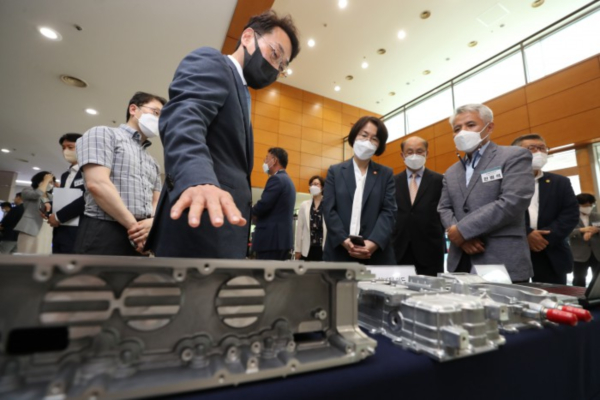
Minister of Science and ICT Lim Hye-sook attending the briefing [Photo: Ministry of Science and ICT]
The Ministry of Science and ICT has directed the pan-governmental R&D policy for materials, parts, and equipment (Sobujang) centered on the Science and Technology Innovation Headquarters and promoted R&D support for key items. First, to secure core technologies for key industries, it is supporting 'National Core Materials Research Groups' to achieve technological self-reliance on 100+85 key R&D items (comparable to Japan and the global market) within five years, including semiconductors, automobiles, and displays. There are currently 57 such research groups.
In addition, support for 'Future Technology Laboratories' is being expanded to secure future-leading items and respond to issues regarding promising materials, with the goal of securing the next generation of materials, parts, and equipment in 5 to 10 years. There are currently 34 such laboratories. At the same time, it is also supporting the promotion of the utilization of nanofabrication and materials research data.
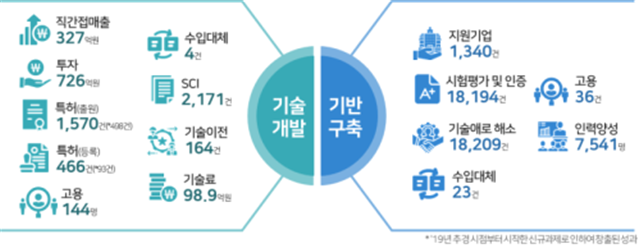
The Ministry of Science and ICT announced that it generated quantitative technical and economic results from 2019 to 2021 through the materials, parts, and equipment support project, in which 924.1 billion won was invested over two years.
First, it produced technical achievements such as 2,171 SCI-level papers, 1,570 patent applications (1,148 domestic, 386 foreign), and 466 patent registrations (407 domestic, 59 foreign).
In addition to direct and indirect sales (32.7 billion won) and investments (72.6 billion won), it also generated economic results such as 164 technology transfers, 10 billion won in royalties, and 36,403 corporate support services. Furthermore, it announced that it achieved results including the training of 7,541 personnel and 27 direct and indirect import substitution supports.
In addition to quantitative results, 20 research achievements that have significance beyond simple technology development were selected, and three of them were introduced as representatives at the presentation. Representative achievements introduced include: ▲ Development of 'Cerium' to partially replace 'Neodymium' for permanent magnets, currently entirely imported (Korea Institute of Materials Science, Sunglim Advanced Industries Co., Ltd.) ▲ Development of copper plating materials for semiconductors, currently entirely imported (Korea Institute of Industrial Technology, demonstration at Company A) ▲ Localization of fluorine-based electrolyte membrane electrode catalysts, electrode carbon, and gaskets for hydrogen fuel cells, which are mostly imported (Korea Institute of Energy Research, relocation to Company H).
◇ National Core Materials Research Groups to be Expanded to 100 by 2025
The Ministry of Science and ICT plans to continue supporting the securing of core technologies, strengthen support for solving technical challenges to secure advanced materials, and promote data- and AI-based support for linking materials, parts, and equipment. First, to secure and advance source technologies for 185 key items in major industries, the Ministry plans to expand the National Core Materials Research Groups to 100 (cumulative) by 2025.
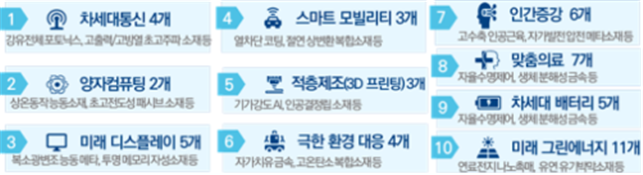
Advanced material candidate proposals [Image = Ministry of Science and ICT]
Next, based on the analysis and prediction of future issues in the materials field, we plan to define technical challenges to secure source technologies for promising advanced materials over the next 10 years and beyond, and establish and operate a support system to solve them. This year, we announced 50 candidates for future advanced materials based on 10 future issues on a trial basis, and based on this, we will proceed with phased support starting next year.
Finally, we plan to strengthen the management system for materials research data through the 'National Materials Research Data Center' to reduce time and costs by more than 50% compared to the existing system.
◇ Materials, Parts, and Equipment Technology at 70% of Leading Countries, Reached 80–90%
On this day, the Ministry of Science and ICT held the 11th Special Committee on Materials, Parts, and Equipment Technology to deliberate on inter-ministerial R&D policies for materials, parts, and equipment, reviewed investment achievements to date, and discussed future directions.
In response to Japan's export restrictions and the restructuring of international supply chains, the Ministry of Science and ICT established a Special Committee on Materials, Parts, and Equipment Technology and formulated a series of R&D strategies starting in August 2019, more than doubling the government's R&D budget for materials, parts, and equipment over the past three years. By product category, investments were concentrated on semiconductors (30%) and electrical and electronic equipment (21%), as well as machinery and metals (21%) and automobiles (12%).
The Technology Special Committee stated that, following this expansion of investment, technological capabilities, which had remained at 70% of the level of leading countries, have improved to over 80%, and that semiconductors and secondary batteries maintain the world's highest level of over 90% compared to leading countries. Lee Kyung-soo, Head of the Science and Technology Innovation Headquarters who chaired the Special Committee on Technology, stated, “In the future, we will strengthen workforce training in key materials, parts, and equipment sectors such as semiconductors and secondary batteries, and actively support the expansion of future supply chains for materials, parts, and equipment, focusing on future leading items.”
Meanwhile, in May, the Ministry of Science and ICT identified future leading items to create and secure a future supply chain for materials, parts, and equipment, and also released data summarizing the overview of the detailed items.
In addition, the remaining 17 research achievements include: △Responsive filter materials for extreme environments in the semiconductor and electronics industries △Materials for MicroLED batch processes △Lightweight metal materials for high-seal, vibration-resistant electric field shields △Low-reflection electromagnetic wave absorption and heat dissipation materials for 5G communication △Emitting materials for printing-based next-generation displays △Key solution process materials for high-stability rollable optoelectronic devices △Absorption and transmission materials for EUV semiconductor photolithography processes △Superlattice semiconductor materials for high-transparency imaging △Key materials for high-capacity, high-safety secondary batteries △Plasma-resistant ceramic materials for reducing contaminant particles in semiconductor processes △Low-loss, low-noise electromagnetic control materials △High-performance grain-oriented piezoelectric polycrystalline materials △Wear-resistant, lightweight, and corrosion-resistant materials for small smart dry vacuum pumps △Oxide semiconductor materials and flexible substrate materials for displays △High-efficiency, ultra-small power semiconductor materials in the kV class △Construction of a 12-inch semiconductor testbed to support technological independence in semiconductor materials, parts, and equipment. Key components of thermal imaging cameras include the mass production of non-cooled ultra-small infrared thermal imaging sensors.
Comments
Related news
Small and Medium Business Policy Fund Exceeds KRW 1 Trillion
The formation of policy funds targeting investment in materials, components, and equipment companies has surpassed 1 trillion won as of June. Additionally, the Ministry of Industry plans to provide up to 3 billion won in linked R&D funding to materials, components, and equipment companies that have successfully attracted investment through New Deal Funds since 2022 and have been recognized for their growth potential and alignment with policy objectives.
2021.06.21by 배종인 기자

Carbon Neutrality in Semiconductors and Displays Requires Solidarity and Cooperation among Device and Material Parts Manufacturers
The semiconductor and display industries reviewed the implementation status of their joint carbon neutrality declaration. At this meeting, executives from semiconductor and display-related companies emphasized that strengthening solidarity and cooperation among device manufacturers and small and medium-sized parts and materials suppliers to activate the industrial ecosystem is more important than anything else for achieving carbon neutrality.
2021.06.29by 배종인 기자
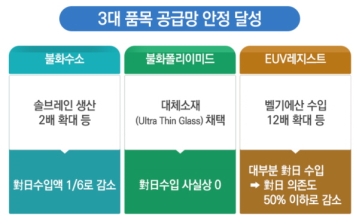
Hydrogen fluoride imports from Japan account for 1/6th of total imports... Small and medium-sized businesses' reliance on Japan drops to 0.9%.
The import value of hydrogen fluoride, which was subject to Japan's export restrictions, has declined to one-sixth of previous levels, and since Japan's export control measures were implemented in July 2019, the rate of decrease in dependence on Japan for ten key strategic materials has accelerated threefold. Additionally, sales of Korean materials, parts, and equipment companies have grown approximately 20.1%, indicating that growth is becoming tangible.
2021.07.01by 배종인 기자
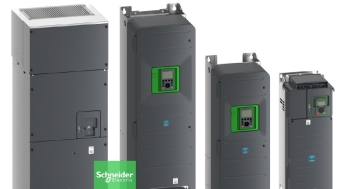
Schneider Aims for Building Energy Savings and Operational Stability with Next-Generation HVAC Drives
Schneider Electric has unveiled its next-generation HVAC drive product line 'Altivar HVAC'. The new product line's key features center on enhanced energy savings, system operational stability, and building management system integration. The products are divided into 'ATH200' for OEM and small equipment applications, and 'ATH600' for environments requiring continuous operation and advanced control. The company plans to expand the application scope from commercial buildings to facilities where HVAC system stability is critical, such as hospitals, airports, and data centers. The announcement includes over 30% energy savings, operation from -10°C to +60°C, Modbus and BACnet support, and compatibility with low global warming potential refrigerants.
2026.03.26by 명세환 기자
Ecolab Expands AI Data Center Cooling Business Through Acquisition of CoolIT
Ecolab has agreed to acquire CoolIT Systems, a liquid cooling company for AI data centers, for approximately $4.75 billion. The transaction is expected to close by Q3 2026, subject to regulatory approvals. CoolIT has been supplying direct-to-chip cooling-based coolant distribution units, cold plates, and manifolds, serving hyperscale data centers and colocation operators as customers. This acquisition is a measure to address the high-heat and high-density server environments created by AI proliferation. Ecolab plans to combine its water management and digital monitoring capabilities with CoolIT's hardware technology to expand its data center cooling business.
2026.03.26by 명세환 기자











