



Memory Market Outlook for the Second Half of 2021: "A Brief Recovery"
 Published2021.07.21 12:18
Intel's IDC CPU launch delays dampen demand for DDR5.
Memory demand could recover in the second or third quarter of 2022.
Demand for memory semiconductors is expected to improve for mobile devices in the third quarter of 2022, and for servers in the second quarter of next year at the earliest, according to a forecast released on the 19th by the Korea Semiconductor Industry Association (KSIA) in its outlook for the memory semiconductor market in the second half of 2021.
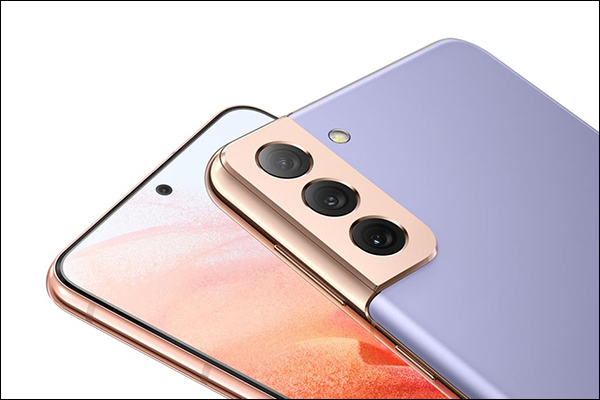
Samsung Electronics Galaxy S21 model [Photo = Samsung Electronics]
Smartphone production increased 28% in the first quarter of this year compared to the same period last year, but grew only 1% in the second quarter. It even decreased by 18% compared to the first quarter. This is due to Samsung Electronics' concentrated release of the Galaxy S/A models in the first quarter, which led to a sharp decline in second-quarter production.
In the third quarter, Apple's production of the 'iPhone 13 (tentative name)' will begin in earnest, and Samsung Electronics' production will also increase, leading to an increase in demand for mobile memory and a decrease in inventory compared to the second quarter. The peak is expected to be in the third quarter, as production volumes from companies other than Apple are not high in the fourth quarter.
In particular, Apple is expected to expand production by more than 12% compared to the same period last year, securing a monopoly position in the Chinese premium smartphone market, which it previously shared with Huawei.
The fourth quarter is a period without Samsung Electronics' strategic phones, so production could decline compared to the third quarter. Production is also expected to focus on mid- to low-priced models. Chinese companies such as Oppo, Vivo, and Xiaomi are also likely to focus on affordable 5G models rather than high-end products.
The increase in demand for mobile memory in the third quarter is expected to be temporary. Samsung Electronics' wireless division's operating profit for the first half of the year reached 7.7 trillion won, exceeding expectations. However, while last year's flagship model, the Galaxy S20 5G, uses 12GB of DRAM, this year's flagship models, the Galaxy S21 5G and S21+ 5G, have downsized to 8GB. Since the Galaxy S20 FE 5G model adopted 6GB of DRAM, there has been a general trend of reducing DRAM usage and allocating more costs to other components. Some argue that the spec competition has disappeared after Huawei's downfall.
Smartphone production and shipments in the second half of this year are expected to be unlikely to increase significantly compared to the previous year, with only Apple expected to perform well. Therefore, a decline in the market share of high-end premium Android smartphones that employ a lot of DRAM is expected.
Demand for mobile memory is expected to begin a full recovery in the third quarter of 2022, coinciding with the launch of Apple's iPhone 14, which is expected to lower prices starting with models released this year, increase sales of Samsung Electronics' foldable phones, and significantly improve camera resolution.
The recovery in memory demand has also been delayed [Photo = Intel]
Demand for server memory appeared poised to rise in the second half of the year, driven by strong capacity expansion from hyperscale companies and the launch of Intel's new DDR5-supporting CPUs. Earlier this year, hyperscale companies, concerned about a semiconductor shortage, preemptively purchased memory, and in the second quarter, panic buying led to a sharp decline in DRAM and NAND inventories.
DRAM inventory has fallen below 10 days' supply, and NAND prices are expected to surge in the third quarter due to a temporary inventory shortage. Hyperscale companies currently have approximately seven weeks' worth of DRAM inventory, but they are expected to maintain their safety stock policies throughout the third quarter. The market is concerned about a potential decline in purchases during the off-season, which will last from December this year to March next year.
Intel's next-generation server CPU, Sapphire Rapids, is expected to drive demand for server memory by fully supporting DDR5, Optane SSD, and new HBM2 memory technologies. However, on June 29, Intel officially announced that production of Sapphire Rapids, originally scheduled for the fourth quarter, had been delayed to March of next year. This delay, coupled with the cancellation of the US Department of Defense's Jedi project, which Microsoft had been awarded, is expected to push demand from both hyperscale and traditional Intel server CPU customers to 2022.
Market research firms predict that DRAM price increases will peak in the second quarter, rise slightly until the fourth quarter, and then decline in the first quarter of next year, based on the outlook that DDR4 supply, which is produced in quantities greater than server demand, will increase further.
If Intel's Sapphire Rapids is unveiled in March of next year without further delays, and mass production and shipments resume normally from April, the server market's supply and demand outlook is expected to change rapidly. DRAM manufacturers are expected to adjust supply by somewhat slowing new capacity expansion in the first quarter of next year, when short-term concerns are concentrated, and accelerating the transition to DDR5.
DRAM price increases are expected to peak in the second quarter of this year and then slow. NAND prices are expected to peak in the third quarter and then decline after 2022 as supply outstrips demand.
Comments
Related news
Samsung Electronics Launches New uMCP Products, Incorporating DRAM and NAND in a Single Chip
Samsung Electronics has enhanced design convenience and space utilization for smartphone manufacturers through the launch of a high-performance uMCP new product that integrates DRAM and NAND flash memory on a single chip.
2021.06.15by 배종인 기자
.jpg)
The semiconductor equipment market is expected to boom to $100 billion by 2022.
Semiconductor equipment sales in 2022 are expected to reach a record high of 100 billion dollars. Continued investment by chip makers is accelerating growth in the front-end and back-end semiconductor equipment industries. Particularly this year, South Korea is projected to become the top investing country based on the recovery of the memory market and aggressive investment in foundry. Other countries are also expected to see increased investment compared to last year.
2021.07.14by 이수민 기자
Xilinx Introduces 'Versal HBM ACAP' Integrated with HBM2E DRAM
Real-time, high-performance applications experience bottlenecks due to memory bandwidth and can operate at the boundary of power and thermal limits. In response, Xilinx has launched the latest series of its Versal portfolio, the Versal HBM ACAP. The Versal HBM series is scheduled to begin sample shipments in the first half of 2022. Documentation is currently available, and tools will be accessible through an early access program in the second half of 2021.
2021.07.15by 이수민 기자

Intel Unveils Next-Generation 'Core Ultra Series 3' and vPro Platform for Enterprise PCs
Intel has officially unveiled the "Intel Core Ultra Series 3" for next-generation enterprise PCs and the latest vPro platform, addressing a wide range of demands from enterprise notebooks to high-performance workstations.
2026.03.26by 배종인 기자

ROHM Launches ESD Protection Diode Compatible with High-Speed Interfaces of 10Gbps or Higher
Semiconductor specialist ROHM has developed the 'RESDxVx series' of ESD (electrostatic discharge) protection diodes capable of responding to next-generation high-speed data communication environments exceeding 10Gbps, simultaneously enhancing both signal quality maintenance required in high-speed interfaces and IC protection performance.
2026.03.26by 배종인 기자











