



Intel's Q2 revenue exceeds forecast as PC demand continues to rise.
 Published2021.07.23 09:21
AMD, the biggest beneficiary of the PC boom, holds 20% market share.
Gelsinger's 7nm technology and foundry M&A concerns
Intel announced its second-quarter earnings on the 22nd, Eastern Standard Time, with revenue of $19.6 billion and operating profit of $5.1 billion. These figures exceeded expectations. However, the market interpreted the results as indicating a decline in profit margins through the end of the year, and Intel's stock price fell 2% in after-hours trading.
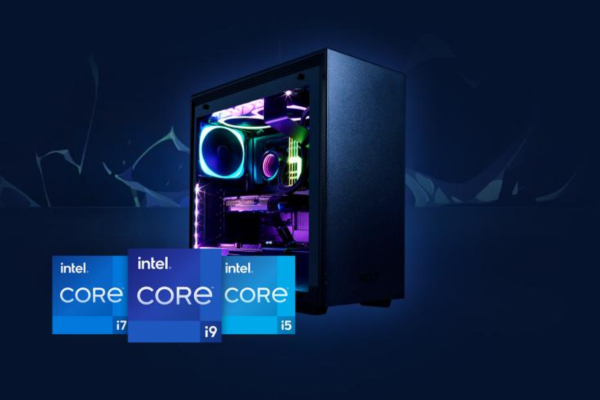
Intel recorded a record high sales of $1.8 billion. [Photo = Intel]
PC sales reached $10.1 billion, a 6% increase over the same period last year. Data center sales, on the other hand, declined 9% to $6.5 billion. This suggests that the surge in digitalization demand last year has somewhat subsided.
Gelsinger, CEO of Microsoft, analyzed the increase in PC sales by saying, "As people return to the workplace, they will likely continue to work in their old ways, so there will continue to be a need to increase the number and density of PCs." Furthermore, with the release of Microsoft's latest operating system, Windows 11, scheduled for October, demand for PC replacements is also expected to increase.
Intel faces a challenge from AMD. AMD's PC CPU market share approached 20% in the first quarter of this year, compared to 8.5% in 2017. Its revenue also reached $3.4 billion, a 93% increase year-over-year. The market expected this to continue in the second quarter.
NVIDIA, Texas Instruments (TI), and others are also seeing surging sales, demonstrating continued demand for chips. Intel, despite delays in 10nm and 7nm chip production, also reported revenue that exceeded market expectations. Intel plans to release details on its technology plans at the end of July.
Meanwhile, CEO Gelsinger remained tight-lipped about Intel's acquisition of GlobalFoundries. However, he added, "Consolidation in the semiconductor industry is a long-term possibility," and added, "We are one of the companies that could become a integrator."
Following the earnings announcement, CEO Gelsinger predicted in an interview with the Wall Street Journal that the global semiconductor shortage would persist until 2023. The automotive industry, in particular, has been hit hard by the shortage of key components. Germany's Volkswagen, which initially expected a slight improvement in the third quarter, now expects the automotive semiconductor supply situation to remain unstable until the end of the year.
Gelsinger's CEO said there were signs that the semiconductor shortage that has been squeezing the auto industry would ease in the second half of the year, echoing comments made by TSMC CEO CC Wei on the 16th.
Comments
Related news
Samsung Electronics Recruits Participants for University Student Programming Contest
Samsung Electronics' College Student Programming Competition (SCPC) will accept participant applications on the Samsung Research website from June 15th through July 13th.
2021.06.14by 명세환 기자
ST Expands 'STM32G0' MCU Portfolio for USB-C Devices
ST Microelectronics has expanded its portfolio of STM32G0 MCU series. The new devices support dual bank flash, CAN FD, and crystal-less USB full-speed device/host. Additionally, they provide secure boot and firmware updates for manufacturer IP protection, PCROP, MPU supporting task partitioning, and AES-256 encryption functionality.
2021.06.30by 강정규 기자
Microchip Unveils Tri-Mode RAID Storage Adapter
Server OEMs require superior performance, flexibility and security for next-generation data centers. In response, Microchip has launched the Adaptec SmartRAID 3200 smart storage PCIe Gen 4 NVMe triple mode RAID adapter and Adaptec SmartHBA 2200 and Adaptec HBA 1200 host bus products. These adapters support next-generation NVMe and 24G SAS connectivity, ease of management and high performance, while providing the security required for next-generation data center infrastructure.
2021.07.22by 강정규 기자

Intel Unveils Next-Generation 'Core Ultra Series 3' and vPro Platform for Enterprise PCs
Intel has officially unveiled the "Intel Core Ultra Series 3" for next-generation enterprise PCs and the latest vPro platform, addressing a wide range of demands from enterprise notebooks to high-performance workstations.
2026.03.26by 배종인 기자

ROHM Launches ESD Protection Diode Compatible with High-Speed Interfaces of 10Gbps or Higher
Semiconductor specialist ROHM has developed the 'RESDxVx series' of ESD (electrostatic discharge) protection diodes capable of responding to next-generation high-speed data communication environments exceeding 10Gbps, simultaneously enhancing both signal quality maintenance required in high-speed interfaces and IC protection performance.
2026.03.26by 배종인 기자











