



Air Liquide to Establish Key Production Site for Krypton and Xenon in China
 Published2021.07.27 09:51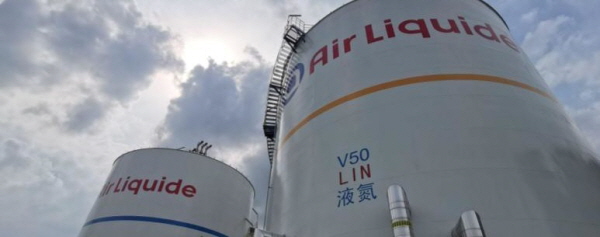
▲Air Liquid’s oxygen production base in China (Photo: Air Liquide)
Air Liquide is supporting China's steel industry by expanding its largest oxygen production base in the country and establishing a key production site in China for krypton and xenon, which are in increasing demand in the electronics industry.
Air Liquide recently announced that it has signed a long-term industrial gases contract with Chinese steel company Jiangsu Shagang Group and will invest approximately €100 million to build China's largest air separation unit (ASU) in Zhangjiagang, Jiangsu Province.
There are currently two Air Liquide ASUs in operation in Zhangjiagang.
The capacity of the newly constructed ASU is known to be able to process 3,800 tons of oxygen per day, and when construction is completed in 2023, it will be able to process more than 8,000 tons of oxygen per day.
In particular, this ASU is expected to become a major production site for Xenon and Krypton, for which demand has been increasing recently.
Air Liquide produces most of its xenon and krypton at Sasol in South Africa, where it has a large oxygen ASU complex, and refines it in Paris, France, for sale to major demand countries.
In particular, demand for rare gases as materials for memory semiconductors is rapidly increasing in countries including Korea, China, and Japan, and recently, the prices of xenon and krypton have continued to rise to record levels.
Xenon and krypton are used in the etching process in semiconductor 3D NAND. 3D NAND is a 2D NAND circuit that is stacked in dozens of layers, and an etching process is needed to create a channel that connects each layer, and xenon and krypton are used as propellant gases to inject etching gas into the deep holes.
It is known that more than 76% of the world's krypton is used for semiconductors, and as a result, demand for krypton is rapidly increasing and its price is also continuously rising.
Large ASUs are essential for the production of xenon and krypton, but in recent years, due to the recession in the steel and shipbuilding industries, the number of large ASUs has decreased for economic reasons, and there has been no new expansion.
As a result, production of xenon and krypton remained the same, but demand surged, causing prices to continue to rise.
Here, xenon is used as a key fuel for space propulsion, and with the recent surge in private commercial space projects such as SpaceX and Blue Origin, the industry predicts that the price of xenon will also skyrocket.

Comments
Related news
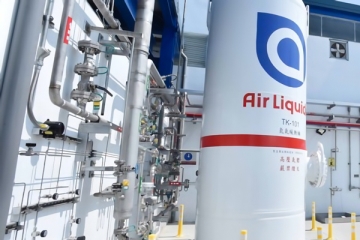
Hydrogen for Semiconductors, a Key Material for Advanced EUV Technology, is Rising
Air Liquide has recently completed the first phase of construction of a 25MW water electrolysis hydrogen plant between Tainan and Hsinchu Science Park in Taiwan. The hydrogen is expected to be used exclusively for semiconductors, including by TSMC, and hydrogen consumption for semiconductors is projected to increase as advanced EUV processes become more prevalent.
2021.04.07by 배종인 기자
.png)
Crypton's price hits all-time high, increasing the burden of NAND costs.
Krypton import prices have broken all-time highs. Since krypton is used in the majority of global NAND flash production, it is expected to put pressure on NAND manufacturing costs.
2021.05.18by 배종인 기자
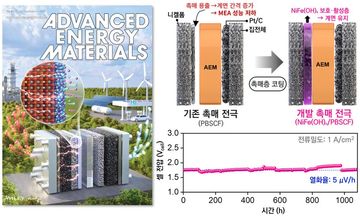
Materials Research Institute Develops Ultra-thin Coating Water Electrolysis Catalyst Technology
The Korea Institute of Materials Science has simultaneously resolved the performance and durability trade-off problem in water electrolysis catalysts by applying ultra-thin surface coating technology. Achieving 1.9 times higher performance compared to conventional catalysts while demonstrating 1,000-hour long-term stability, the institute has developed technology scalable to industrial water electrolysis systems through a simple process.
2026.10.07by 배종인 기자
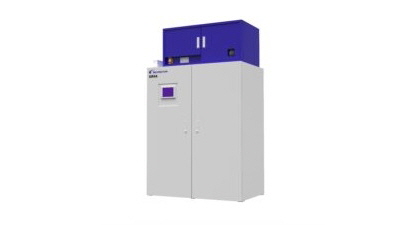
Gigaphoton Develops Neon Gas Recycling System for ArF Excimer Lasers...Achieves 50% Recycling Rate
Gigaphoton announced that it has developed a gas recycling system for ArF excimer lasers and achieved a 50% neon gas recycling rate.
2026.10.02by 배종인 기자
UNIST suppresses vaporization losses while maintaining 97% of liquefied hydrogen storage capacity
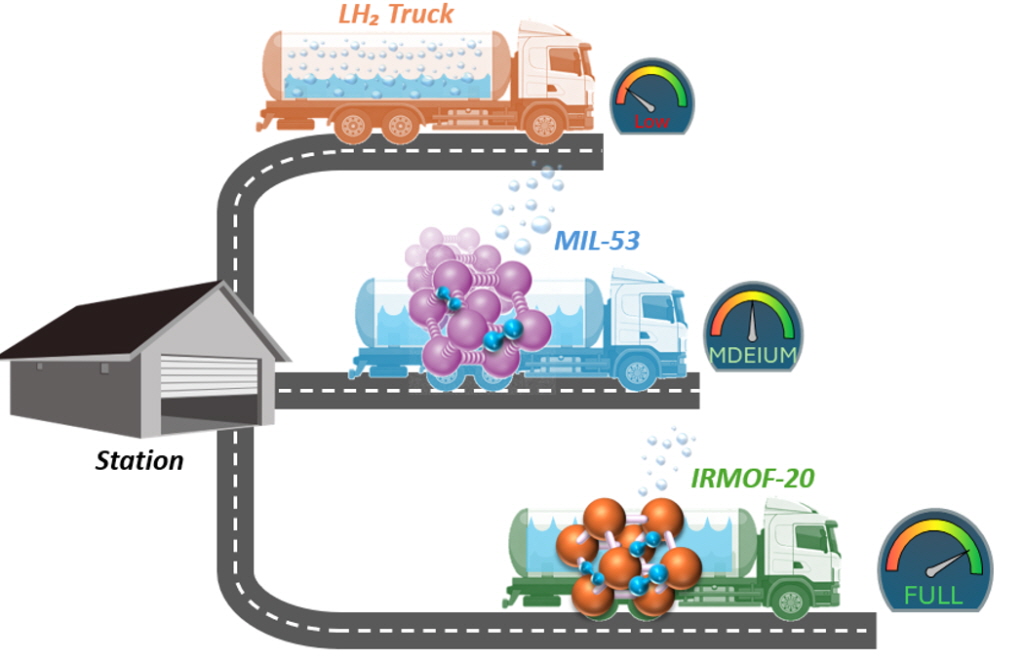
A research team led by Professor Oh Hyun-cheol from the Department of Chemistry at UNIST, in collaboration with Professor Moon Hoe-ri from Ewha Womans University and researchers from the Technical University of Munich in Germany, has verified technology that reduces boil-off loss occurring during liquefied hydrogen transportation and storage by utilizing metal-organic frameworks (MOF).
2026.09.30by 배종인 기자











