


[Promising Technology Outlook] Collision Avoidance Technology Considering All Aspects of a Vehicle
 Published2021.09.02 14:20
Rear/side accidents cannot be prevented. Automobile Research Institute,
Development of accident avoidance technology to supplement ADAS/autonomous driving
When driving, there are often instances where a car, a living thing, or an object appears in front of you and you have to brake suddenly. However, sudden braking does not always lead to accident avoidance.
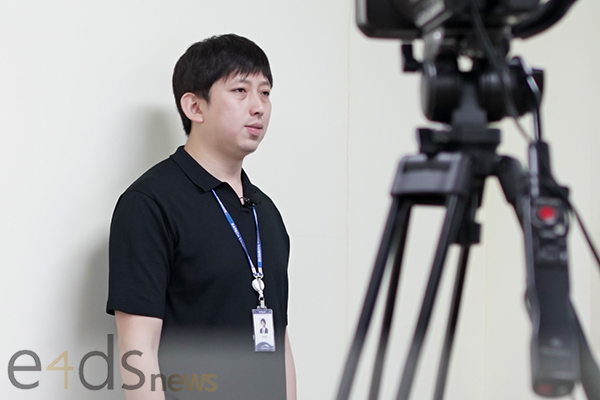
Shin Sung-geun, a researcher at the Korea Automobile Research Institute's ICT Convergence Research Center, proposed a more advanced accident avoidance technology that protects not only the vehicle itself but also the vehicle behind it in response to the sudden appearance of an object.
Accident avoidance technology, represented by the Autonomous Emergency Braking (AEB) system, is an active safety technology that controls the vehicle independently of the driver for the purpose of accident avoidance. In the West, mandatory installation of AEB is in effect, and it is being legislated in Korea as well.
Active safety systems detect collision risks through the 'perception-judgment-control' process to prevent accidents. Recently, as the automation of automobiles accelerates, the driving subject is changing from the driver to the system. Accordingly, autonomous vehicles require a more advanced accident avoidance system.
The AEB system recognizes the situation ahead using cameras, radars, etc. and prevents accidents by braking just before a collision. This prevents collisions with objects in front, but not with vehicles behind. Level 3 autonomous vehicles tested in California from 2015 to 2017 were involved in more than twice as many rear-end collisions as regular vehicles when AEB was engaged.
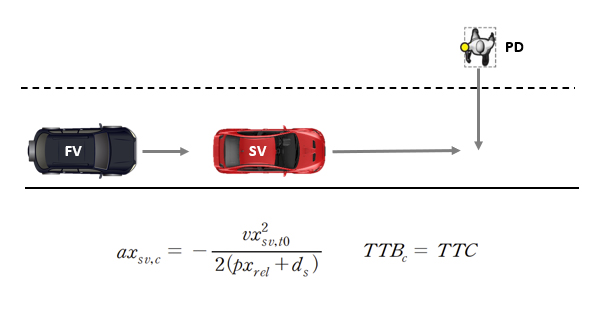
Accordingly, researcher Shin Sung-geun developed 'Car accident avoidance technology that considers the risk of collision from all directions.' If the existing AEB system only considered avoiding forward collisions, this technology includes an algorithm that also considers avoiding rear-end collisions. It calculates the deceleration and applies the brakes so that it can stop at a point where it does not hit the front object and the rear vehicle can sufficiently handle it.
It also has an algorithm for the Autonomous Emergency Steering (AES) system. In many cases, the contact area between a pedestrian and a vehicle is not large. Rather than braking, steering can reduce accidents. One thing to consider here is the risk of collision with a side vehicle, and Researcher Shin Sung-geun's technology predicts the location of the collision based on the location of the side vehicle, determines the timing of the steering change, and executes it.
Regarding the automobile accident avoidance technology that takes into account the risk of collision from all directions, researcher Shin Sung-keun emphasized, “It can reduce the risk of rear-end and side collisions that existing advanced driver assistance systems (ADAS) or autonomous vehicles have not taken into account,” and “It can prevent collisions with rear-end vehicles by 75% and reduce accidents by 66% in unavoidable situations.”
This technology is patented. Details can be found at the Technology Information Promotion Agency (TIPA) Technology Exchange Meeting, which will be held online from 1:30 PM on the 14th (Tuesday).
Comments
Related news
Rohm develops SerDes IC and PMIC for ADAS camera modules
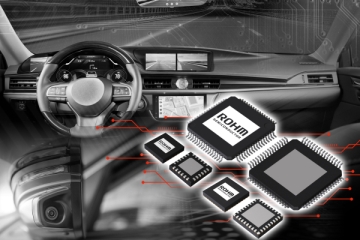
Rohm has developed the SerDes IC 'BU18xMxx-C' and PMIC 'BD86852MUF-C' for ADAS camera modules. Both products address the challenges of miniaturization and low-power consumption in modules, and with low electromagnetic emissions, they facilitate EMI management. Both products conform to AEC-Q100.
2021.06.02by 이수민 기자
The US NHTSA has launched an investigation into Tesla's ADAS 'Autopilot' system.
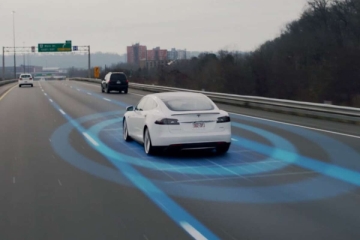
Regulatory authorities are intensifying their scrutiny around Tesla. The Wall Street Journal reported on the 16th local time that the National Highway Traffic Safety Administration (NHTSA) has launched a detailed investigation into Tesla's advanced driver assistance system, Autopilot. The NHTSA confirmed that since early 2018, 11 accidents have occurred involving Tesla vehicles using Autopilot colliding with one or more vehicles in emergency response situations. Four of these accidents occurred this year, and most happened after sunset.
2021.08.17by 이수민 기자

Xilinx and Motovis Develop Automotive Front Camera Solution
The front camera system is a key component of Advanced Driver Assistance Systems (ADAS) that provides advanced sensing capabilities required for critical safety functions such as Lane Keeping Assist (LKA), Autonomous Emergency Braking (AEB), and Adaptive Cruise Control (ACC). Xilinx and Motovista have developed a solution for vehicle recognition and control in automotive front camera systems by combining their respective automotive-grade SoC platforms and CNN IP.
2021.09.01by 이수민 기자
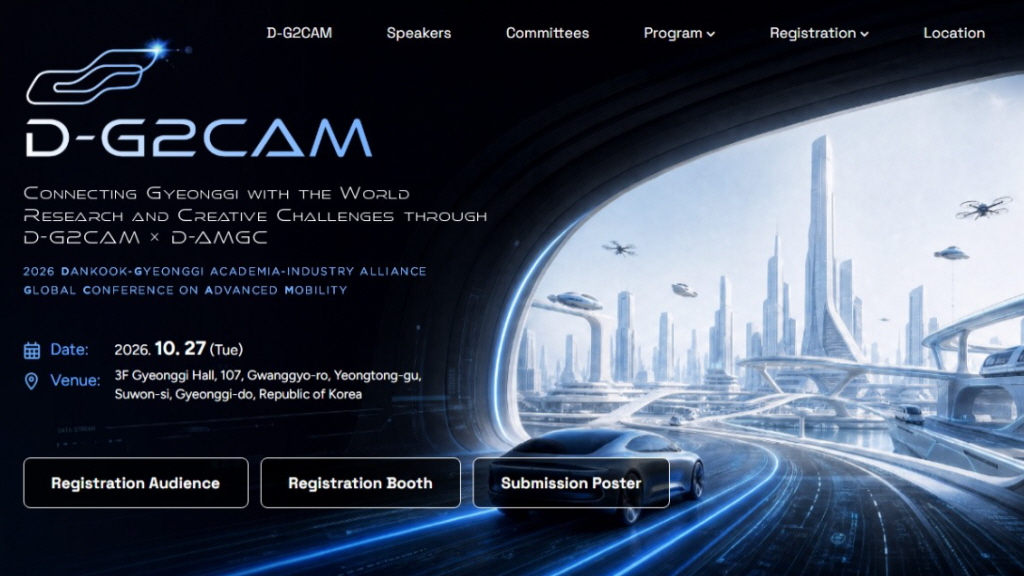
GAIA-Festa 2026, Autonomous Driving, AI, and Aerospace Experts Gather…Discussing Global Cooperation in the 'Silicon Intelligence Era'
GAIA-Festa 2026, which will be held in Suwon on October 27, is an industry-academia-research exchange event that explores the present and future of future mobility and AI technology through the global conference D-G2CAM 2026 and the international contest D-AMGC 2026. Domestic and international experts will share the latest research in autonomous driving, 5G/6G mobility, space technology, and data protection fields, while university students will showcase robots and physical AI prototypes that they have independently developed. Additionally, through poster presentations, corporate exhibitions, international cooperation meetings, and signing ceremonies, a platform will be established to connect the research capabilities and industrial needs of the Gyeonggi region with a global cooperation network.
2026.10.13by 배종인 기자

[e4ds Tech Day 2026 ⑨] Sim Sang-gyu, Autocrypt CTO: "In the Physical AI Era, Automotive Security Must Extend Beyond the Vehicle"
At e4ds Tech Day 2026, Sim Sang-gyu, CTO of Autocrypt, explained automotive cybersecurity strategies in the era of Physical AI and SDV (Software-Defined Vehicle). Automobiles are evolving as part of an ecosystem connected to AI, cloud, chargers, IoT, and robots, and he emphasized that the scope of security must expand beyond the vehicle interior to the entire connected environment. In particular, AI model tampering, adversarial attacks, OTA updates, and EV charger hacking were identified as major threats. He explained that response measures require zero trust, AI model integrity protection, intrusion detection, Security by Design and Default, and full lifecycle security management, and that proactive security system establishment beyond regulatory compliance is critical for securing future mobility competitiveness.
2026.10.12by 배종인 기자











