


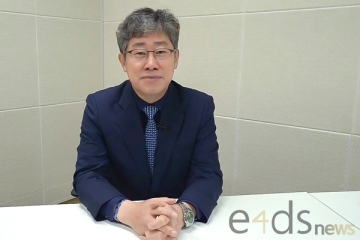
[Interview] Yeon Gyu-bong, Head of the AI Semiconductor Research Center: "Electromagnetic safety in vehicle electronics must be integrated into the design phase."
 Published2021.09.02 14:21
Electric vehicle voltage and current are drastically increased, making them more susceptible to defects.
Designed to minimize self-radiation and ensure resistance to external electromagnetic waves
[Editor's Note] The latest automobiles are rapidly increasing their electronic components, including advanced autonomous driving features, large displays, sensors, and various auxiliary devices. In particular, the shift from engines to motors in powertrains and the acceleration of electrification have made it increasingly necessary to consider the impact of electromagnetic waves generated by these electronic components. The future expansion of autonomous driving is expected to lead to a complex data flow beyond in-vehicle communication, encompassing communication between vehicles and external devices, and between vehicles. This development can lead to issues such as electromagnetic interference between individual electronic components, and the constant risk of accidents related to electromagnetic waves, the nature of which is currently unknown. Therefore, we spoke to Yeon Gyu-bong, a senior researcher at the AI Semiconductor Research Center and an automotive semiconductor expert, about the impact of electromagnetic waves on automotive electronic components and the key considerations for product design.
 ■ The AI Semiconductor Research Center of the Korea Automobile Research Institute
The AI Semiconductor Research Center conducts research on semiconductors used in automobiles, including self-driving cars and electric vehicles. Additionally, we are contributing to the advancement of automotive semiconductor technology by developing system semiconductor technology that applies artificial intelligence technology.
■ The recent spread of autonomous driving technology has led to an increase in in-vehicle semiconductors and device-to-device communication. What research is being conducted?
Autonomous driving technology is expected to evolve beyond the AI domain electronic controller and vehicle-to-everything (V2X) control, focusing on intelligent sensor-based technology. This advancement is not optional but essential. For intelligent sensors, I'm currently working on a project to develop radar and lidar sensors. Furthermore, for semiconductor technology development, I'm working on a project to develop system semiconductors that can meet ASIL and security requirements for automotive cockpits, and an AI system semiconductor for autonomous valet parking.
As the number of electronic devices increases, concerns are growing about the potential for electromagnetic interference between devices. Is there a risk of device failure due to electromagnetic waves? Furthermore, are there differences in the electromagnetic waves experienced by electric and internal combustion engine vehicles?
Automotive companies strive to manufacture highly reliable products. However, unforeseen potential defects can manifest themselves through various channels, potentially leading to serious failures.
In particular, with regard to electromagnetic waves, we develop and manufacture products in compliance with international standards such as ISO and IEC, as well as the upgraded standards of each OEM. As the proportion of electric vehicle production is increasing, additional electromagnetic wave-related standards are continuously being proposed.
Basically, compared to internal combustion engine vehicles, electric vehicles have increased use of batteries and motors related to electromagnetic waves, and the applied voltage and current have also increased significantly, making them more sensitive to the possibility of defects caused by electromagnetic waves.
■ What are the design considerations for automobile parts to reduce electromagnetic waves?
There are two main aspects to consider when it comes to electromagnetic waves for automobiles.
The first is to design and manufacture the development components themselves to reduce their electromagnetic radiation.
Secondly, it is designed and manufactured to ensure resistance to electromagnetic waves coming from outside.
Electromagnetic shielding is the second type and can be applied based on the skin effect, so it is being considered when developing automotive electrical components.
As autonomous driving evolves, it is predicted that numerous communications will occur even in very short periods of time, including between devices within the car and between the car and surrounding objects. What are the possibilities for interference during these communication processes, and what technologies are available to prevent it?
Automotive communication technology is basically comprised of reliable wired network technology.
Recently, wireless communication technology has been applied to numerous products, and their quantity is increasing. Compared to traditional wired communication, wireless communication is relatively vulnerable to interference.
Therefore, technically, numerous technologies, including wireless modulation, filtering, and polarization, are being developed. Additionally, many communication technologies are being developed to address vehicle security issues.
■ It is expected that the electrification of vehicles and the spread of electrical components will accelerate in the future. If there are any points to keep in mind when developing battlefield components,
Unlike general home appliances, automobiles are products that must ensure safety as they are directly related to human life.
Therefore, automotive electrical components must ensure functional safety according to ISO 26262, which is required as an international standard.
In addition, technology development to ensure high reliability without problems even after long-term operation must be considered and integrated from the design stage.
■ A final word to the readers
Although many aspects of automotive technology have been domestically produced, automotive semiconductors still have a high dependence on foreign countries.
Many people are working towards localization, but more technological development is needed.
Although it is insufficient, I ask for your continued support so that we can successfully localize automobile technology.
thank you

Comments
Related news
Automotive semiconductor shortages will likely persist for the foreseeable future.
An Ki-hyun, Executive Director of the Korea Semiconductor Industry Association, delivered a keynote presentation titled "Recent Issues and Responses in the Semiconductor Industry" at the 'e4ds Semiconductor Technology Conference 2021 Spring'. Executive Director An Ki-hyun projected that automotive semiconductor supply and demand imbalances will persist in the near term, as production capacity falls short relative to the year-over-year demand growth for automotive semiconductors.
2021.04.30by 배종인 기자
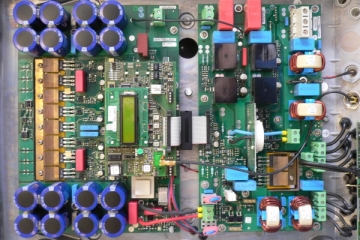
Electric vehicle electrical components 'EMI' emergency
Recently, there has been an increase in cases of electrical component failures in electric vehicles due to electromagnetic interference (EMI) phenomena, prompting electric vehicle parts manufacturers to take urgent measures to secure EMI shielding technologies.
2021.08.20by 배종인 기자

"EMC, Cost Reduction is Possible if It is Caught from the Early Design Stage"
Electromagnetic noise must be sufficiently reviewed and evaluated from the early stages of product development to establish effective noise countermeasures with adequate margin. To accomplish this, it is necessary to understand the types and characteristics of noise and to effectively apply appropriate countermeasures tailored to each noise source and device. We consulted with Oh-Yong Song, Senior Researcher at Rohm Korea, on how engineers should approach EMI, EMC, and EMS issues related to electromagnetic noise.
2021.08.20by 이수민 기자
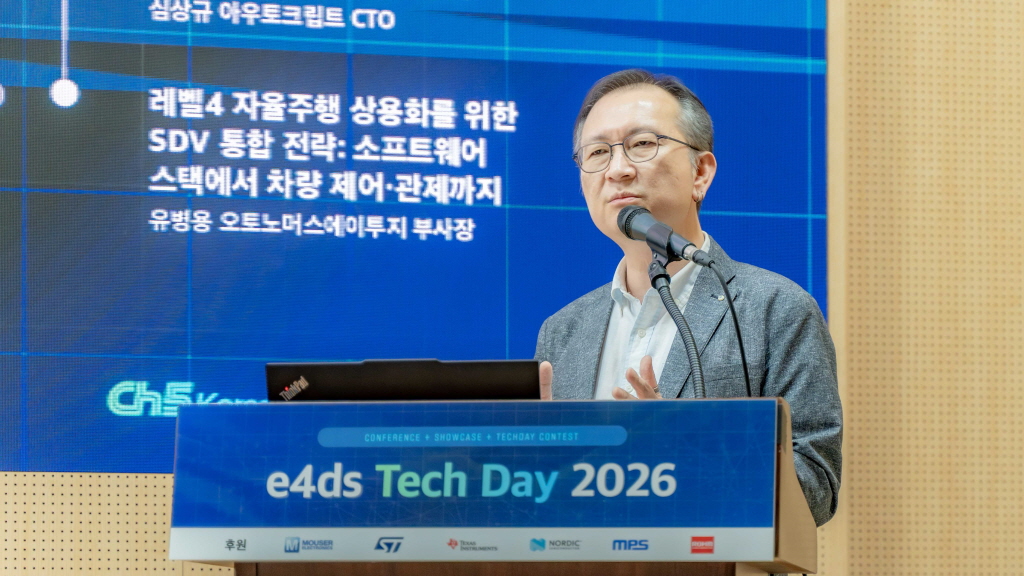
[e4ds Tech Day 2026 ⑨] Sim Sang-gyu, Autocrypt CTO: "In the Physical AI Era, Automotive Security Must Extend Beyond the Vehicle"
At e4ds Tech Day 2026, Sim Sang-gyu, CTO of Autocrypt, explained automotive cybersecurity strategies in the era of Physical AI and SDV (Software-Defined Vehicle). Automobiles are evolving as part of an ecosystem connected to AI, cloud, chargers, IoT, and robots, and he emphasized that the scope of security must expand beyond the vehicle interior to the entire connected environment. In particular, AI model tampering, adversarial attacks, OTA updates, and EV charger hacking were identified as major threats. He explained that response measures require zero trust, AI model integrity protection, intrusion detection, Security by Design and Default, and full lifecycle security management, and that proactive security system establishment beyond regulatory compliance is critical for securing future mobility competitiveness.
2026.10.12by 배종인 기자

Practical HIL Construction Strategy for Automotive and Off-Highway Controller Validation
As vehicle E/E architecture transitions to zonal structures and shifts to software-defined vehicles (SDV), the number of controllers (ECUs) requiring validation and software complexity are surging dramatically. Meanwhile, real vehicle testing cannot provide repeated verification under identical conditions and entails lead time and safety concerns. This white paper explains the principles of HIL (Hardware-in-the-Loop) validation and the structure of the NI platform composed of PXI, SLSC, and VeriStand, and through two actual implementation cases—Camera Record & Replay HIL for In-Cabin Monitoring Controller (ICMU) and Forklift Controller (VCU) HILS—describes how controller-level regression testing becomes possible. Additionally, it explicitly states application boundaries and limitations, such as lack of A2B support.
2026.10.12by 편집부











