


[Interview] Professor Jo Seong-jae of Shinhan University - “EMC/EMI, the eternal homework of circuit design, training of experts is essential”
 Published2021.09.14 11:08
Circuit designers require experience and sensitivity in pattern design.
Government support for training experts and investing in research institutes and labs is urgently needed
.jpg) “'EMC/EMI (Electro Magnetic Compatibility/Electro Magnetic Interference)' is an eternal homework for those who design circuits. EMC/EMI is a process that circuit designers must go through and overcome, and when designing circuits and systems, they must have experience and know-how in solving EMC/EMI problems and design the system and circuit. This is especially important when designing patterns. However, this problem-solving ability cannot be achieved in a short period of time and can only be achieved through long-term practical experience. “In addition, government support for educational institutions is urgently needed to train circuit and system experts based on EMC/EMI from college level.”
“'EMC/EMI (Electro Magnetic Compatibility/Electro Magnetic Interference)' is an eternal homework for those who design circuits. EMC/EMI is a process that circuit designers must go through and overcome, and when designing circuits and systems, they must have experience and know-how in solving EMC/EMI problems and design the system and circuit. This is especially important when designing patterns. However, this problem-solving ability cannot be achieved in a short period of time and can only be achieved through long-term practical experience. “In addition, government support for educational institutions is urgently needed to train circuit and system experts based on EMC/EMI from college level.”Professor Cho Seong-jae of Shinhan University, who was recently interviewed by our magazine, emphasized the importance of education by specialized institutions, saying that in order to solve EMC/EMI, which is a common problem for circuit designers, it is necessary to encounter and solve various problems for a long time, and that when senior engineers with various experiences and know-how in solving these problems continuously educate and spread the knowledge to junior engineers, the capabilities of domestic engineers can be improved.
Professor Cho Sung-jae mentioned EMC/EMI in automobiles, which has recently become an issue. He said that in the case of automobiles, both conventional internal combustion engine vehicles and recently rapidly emerging electric vehicles, transient fast response (EFT or burst) or surge, radiated noise, and conductive noise such as internal and external shock waves can occur, and that electrical components and circuits can fail due to various factors such as power instability caused by sudden peak currents and noise caused by PCB patterns.
However, in order to identify the cause of failure of these electrical components, various cases and a lot of time must be invested, but in the case of automobiles, the number of failure cases that occur is extremely small, one in tens of thousands or one in several thousand units, so it is very difficult to track them down. So, he said, it is necessary to design the circuit by considering all possible countermeasures in advance as a preventive measure.
In particular, various electronic devices are installed not only in automobiles but also in industrial sites and the defense field. In particular, in the case of tanks or self-propelled guns, a very strong shock wave is generated when the gun is fired. In such extreme situations, not only the installed CPU but also the circuits of the board and the installed devices may be damaged. Therefore, EMC/EMI countermeasures that can withstand this must be considered. In particular, it was mentioned that comprehensive measures that consider even circuit damage due to vibration of the board or device are necessary.
He said that the solutions for this include: △stable circuit design, △noise removal through PCB patterns, △blocking wired and wireless noise, △solving power instability factors, △blocking communication errors, △measures against surges and EFT, △grounding of the equipment case, △special cables, and △insulating materials.
Furthermore, in the case of recent powertrain components, there is an indescribable mix of various wavelengths, such as high-voltage electric vehicles, incredibly fast transmission speeds due to autonomous driving, communication between components, and communication between automobiles and the outside world. Therefore, in addition to preparing for this and having strong components, it is urgent to foster experts who have the experience and knowledge to consider all of these situations.
Professor Cho Seong-jae said, “In Korea, PCB circuit design is often left to PCB companies, but I believe this is not the right direction for circuit design. In fact, a circuit designer needs to have a feel for how to design a PCB and design it, but in Korea, pattern education is still limited to just connecting wires with a circuit diagram, and the techniques for pattern design are also lacking,” he said. “It is difficult for students to understand that such practical things are taught professionally at universities, so education for seniors or experienced engineers is urgently needed,” he said.
He also argued that “competition among countries in industrial protection and electronic components is expected to intensify in the future, so the government should be aware of circuit design and EMC/EMI issues and invest in nurturing talent through investment in grants, equipment, and expanded faculty at universities and labs.”

Comments
Related news
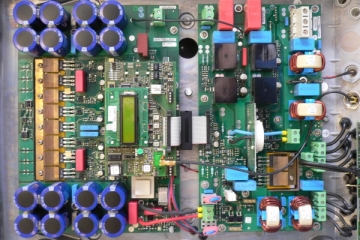
Electric vehicle electrical components 'EMI' emergency
Recently, there has been an increase in cases of electrical component failures in electric vehicles due to electromagnetic interference (EMI) phenomena, prompting electric vehicle parts manufacturers to take urgent measures to secure EMI shielding technologies.
2021.08.20by 배종인 기자
ADI Presents Cost-Optimized Power Supply EMI Reduction Method
PCB layout configuration can be said to be decisive in the success or failure of power supply design. This is because it determines electromagnetic interference (EMI) and thermal performance. Switching power supply layout configuration is often overlooked until quite late in the design process. Therefore, using verified EMI reduction measures can ensure a reliable power supply.
2021.08.26by 이수민 기자
.jpg)
[Interview] Yeon Gyu-bong, Head of the AI Semiconductor Research Center: "Electromagnetic safety in vehicle electronics must be integrated into the design phase."
Modern vehicles are experiencing rapid increases in electrical components, including advanced autonomous driving functions, large displays, sensors, and various assistance systems, which can create issues such as electromagnetic interference between electrical components. To address this, we have arranged an interview with Yeon Gyu-bong, Senior Researcher at the AI Semiconductor Research Center and automotive semiconductor expert, to discuss the electromagnetic effects on automotive electrical components and design considerations for electrical products.
2021.09.02by 배종인 기자

ESP32 Development Environment Selection and GPS Application Implementation
The ESP32 is a microcontroller that integrates Wi-Fi, Bluetooth, 12-bit ADC, capacitive touch, PWM, DAC, and UART in a single SoC. However, the abundance of features does not by itself solve the designer's problems. The real challenges lie in selecting the appropriate development environment, determining which pins can be used and which must be avoided, and converting raw data from modules into usable information. This document addresses ESP32 peripheral constraints (ADC2 and Wi-Fi coexistence limitation, UART1 occupancy, ADC non-linear regions), the trade-offs between Arduino IDE and ESP-IDF, and the process from connecting NEO-6M/NEO-M8N GPS modules to UART2, parsing NMEA sentences, and visualizing routes in Google Earth, all organized based on documented references.
2026.10.12by 편집부

[e4ds Tech Day 2026 ⑨] Sim Sang-gyu, Autocrypt CTO: "In the Physical AI Era, Automotive Security Must Extend Beyond the Vehicle"
At e4ds Tech Day 2026, Sim Sang-gyu, CTO of Autocrypt, explained automotive cybersecurity strategies in the era of Physical AI and SDV (Software-Defined Vehicle). Automobiles are evolving as part of an ecosystem connected to AI, cloud, chargers, IoT, and robots, and he emphasized that the scope of security must expand beyond the vehicle interior to the entire connected environment. In particular, AI model tampering, adversarial attacks, OTA updates, and EV charger hacking were identified as major threats. He explained that response measures require zero trust, AI model integrity protection, intrusion detection, Security by Design and Default, and full lifecycle security management, and that proactive security system establishment beyond regulatory compliance is critical for securing future mobility competitiveness.
2026.10.12by 배종인 기자











