


Korea and Germany Lead Carbon Neutrality Through Hydrogen Cooperation
 Published2021.10.15 09:21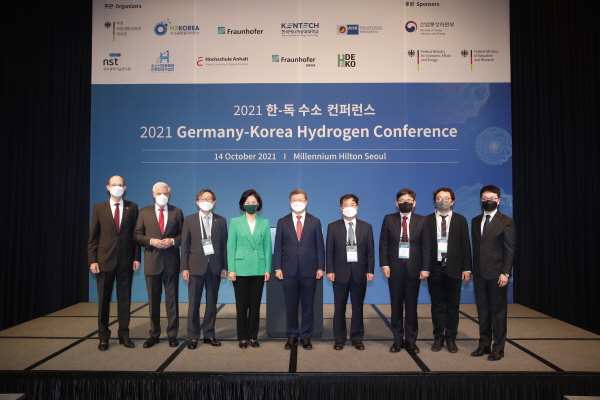
As countries around the world declare carbon neutrality, Korea and Germany are working to achieve carbon neutrality in both countries based on research and technology cooperation related to the hydrogen economy.
The Hydrogen Convergence Alliance (Chairman Jae-do Moon, hereinafter referred to as H2KOREA) announced on the 15th that it co-hosted the '2021 Korea-Germany Hydrogen Conference' with representative organizations from industry, academia, and research of both countries, including the Fraunhofer Korea Representative Office, at the Millennium Hilton Seoul on October 14th with support from the Korean and German governments.
This conference is the second of its kind since the Korean and German governments signed the "Korea-Germany Energy Partnership" in 2019. It was designed to bring together governments and hydrogen experts from industry, academia, and research to share the current status of the hydrogen economy and hydrogen technology and discuss ways to cooperate.
In accordance with the government's COVID-19 quarantine measures, the event was held in parallel as an on-site seminar and an online live broadcast. At the on-site seminar, all attendees were required to wear masks, observe social distancing, and limit the number of people allowed indoors, while adhering to quarantine measures and preventive measures.
The event was attended by Moon Jae-do, Chairman of H2KOREA; Michael Reifensruhl, German Ambassador to Korea; Kang Kyung-sung, Director of the Energy Industry Office of the Ministry of Trade, Industry and Energy; Torsten Herdan, Director of the Energy Policy Office of the German Federal Ministry for Economic Affairs and Energy; Kim Bok-cheol, Chairman of the National Science and Technology Council; Martin Henckelmann, President of the Korean-German Chamber of Commerce and Industry; and Johann Peeckl, Head of International Affairs at the Fraunhofer Society, as well as representatives from industry, academia and research institutes of both countries. About 500 people attended the event on-site and online.
In his opening remarks, Moon Jae-do, Chairman of H2KOREA, emphasized, “Carbon neutrality, which major countries around the world, including Korea and Germany, are declaring, is a global paradigm for the future survival of humanity,” and “In order to achieve carbon neutrality, we need to promote the expansion of hydrogen energy use and rapidly transition to a hydrogen economy.”
He also said, “As technological powerhouses, it is very timely for Korea and Germany to establish a regular forum for information exchange and cooperation to develop hydrogen economy technologies,” adding, “I expect that today’s conference, which is being held for the second time following last year, will serve as a foundation for solidifying practical hydrogen cooperation between our two countries.”
German Ambassador to Korea Michael Reifenstul then said, “International cooperation is very important for the activation of green hydrogen, a key technology in responding to climate change,” and “This conference is an important axis of exchange between our two countries, and I expect that cooperation in the fields of science and business will be further strengthened.”
Kim Bok-cheol, chairman of the National Research Council for Science and Technology, expressed his hope for the promotion of research and development cooperation in the hydrogen sector between the two countries, saying, “If Korea and Germany strengthen cooperation in the hydrogen sector, we will be able to advance not only the entry into the hydrogen economy but also carbon neutrality.”
Park Byeong-gwan, head of the Fraunhofer Korea office, also said, “At a time when global cooperation is required to overcome the threat of climate change, achieve carbon neutrality as soon as possible, and implement a hydrogen economy, Korea and Germany, which are technological powerhouses, must continue to strengthen their discussions on cooperation.” He added, “We hope that this conference, which is in its second year, will establish itself as a platform for sharing the current status of the hydrogen economy and further promoting cooperation.”
In particular, both governments believe that international cooperation is paramount to realizing a hydrogen economy.They all said in one voice.
Kang Kyung-sung, Director General of the Energy Industry Bureau at the Ministry of Trade, Industry and Energy, said, “We plan to carry out a project to introduce clean hydrogen produced overseas to Korea, centered on private companies,” indicating the importance of international cooperation in the hydrogen economy. Torten Herdan, Director General of the Energy Policy Bureau at the German Federal Ministry for Economic Affairs and Energy, said, “Importing clean hydrogen for the realization of a hydrogen economy is a very important task, and international cooperation also plays a major role in Germany’s hydrogen policy.”
The conference began with a keynote speech on the topic of "Global Carbon Neutrality Policy Trends and the Role of the Hydrogen Economy," followed by presentations by hydrogen government ministries and industry-academia-research experts from both countries on the following topics: △policy directions and goals, △market outlook, △R&D cooperation activities, and △industry and research and development.
This was followed by a panel discussion on the topic of ‘Korea-Germany Hydrogen Technology Cooperation Plan’, moderated by Vice President Jin-ho Park of the Korea Institute of Energy Technology, with experts from government ministries, industry, and research participating.
Vice President Jin-ho Park, who moderated the panel discussion, said, “Korea and Germany share common goals in hydrogen technology, each with its own strengths,” and suggested, “Close consultation and cooperation between the governments, companies, and research institutes of both countries is more important than ever.”
Comments
Related news
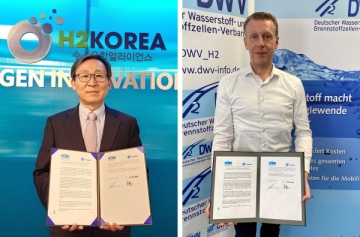
Hydrogen Alliance and Germany Hydrogen Association Join Hands to Promote Hydrogen
The Hydrogen Convergence Alliance (Chairman Moon Jae-do) and the German Hydrogen and Fuel Cell Association (Chairman Werner Diwald, DWV) have joined forces to activate the hydrogen economy and foster industry development in both countries.
2021.06.01by 배종인 기자
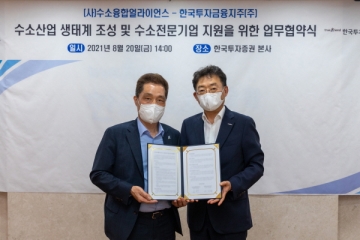
Hydrogen Alliance and Korean Investment Finance to Activate Hydrogen Industry Ecosystem
The Hydrogen Fusion Alliance (Chairman Moon Jae-do, hereinafter H2KOREA) and Korean Investment Finance Holdings (Chairman Kim Nam-gu) are moving to activate the hydrogen industry ecosystem through financial support.
2021.08.20by 배종인 기자
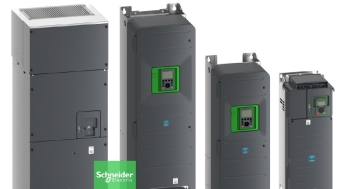
Schneider Aims for Building Energy Savings and Operational Stability with Next-Generation HVAC Drives
Schneider Electric has unveiled its next-generation HVAC drive product line 'Altivar HVAC'. The new product line's key features center on enhanced energy savings, system operational stability, and building management system integration. The products are divided into 'ATH200' for OEM and small equipment applications, and 'ATH600' for environments requiring continuous operation and advanced control. The company plans to expand the application scope from commercial buildings to facilities where HVAC system stability is critical, such as hospitals, airports, and data centers. The announcement includes over 30% energy savings, operation from -10°C to +60°C, Modbus and BACnet support, and compatibility with low global warming potential refrigerants.
2026.03.26by 명세환 기자
Ecolab Expands AI Data Center Cooling Business Through Acquisition of CoolIT
Ecolab has agreed to acquire CoolIT Systems, a liquid cooling company for AI data centers, for approximately $4.75 billion. The transaction is expected to close by Q3 2026, subject to regulatory approvals. CoolIT has been supplying direct-to-chip cooling-based coolant distribution units, cold plates, and manifolds, serving hyperscale data centers and colocation operators as customers. This acquisition is a measure to address the high-heat and high-density server environments created by AI proliferation. Ecolab plans to combine its water management and digital monitoring capabilities with CoolIT's hardware technology to expand its data center cooling business.
2026.03.26by 명세환 기자
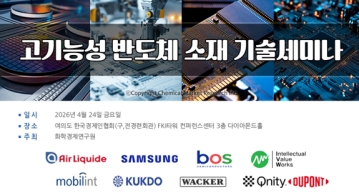
AI Semiconductor Era, Key is 'Materials Technology'… KIEC Holds Seminar on High-Performance Semiconductor Materials
With rapid growth in the global semiconductor market driven by expanded AI data center investments and increased demand for high-bandwidth memory (HBM), a specialized seminar examining next-generation semiconductor materials and packaging technologies will be held. The Korea Chemical Industry Institute will host a "High-Performance Semiconductor Materials Technology Seminar" on April 24 at the FKI Tower of the Korea Economic Association in Yeouido, Seoul. Applications to participate in the seminar are being accepted on a first-come, first-served basis through the Korea Chemical Industry Institute's official website, with early bird discounts available until March 27 and advance registration open until April 22.
2026.03.25by 배종인 기자











