


KT Internet Outage Nationwide, Social Infrastructure Shutdown
 Published2021.10.25 12:13
DDOS and other threats are mentioned, and thorough security management is essential for public internet use.
As KT Internet experiences nationwide access disruptions and all Internet-based businesses are paralyzed, citizens are increasingly concerned that the Internet outage could lead to a social shutdown, with concerns rising that it could lead to not only inconvenience but also terrorism.
At around 11:00 AM on October 25th, KT Internet was paralyzed nationwide. Due to this communication failure, not only was KT's wired and wireless internet access impossible, but all internet-based businesses, including finance, broadcasting, and commerce, were paralyzed.
In the financial sector, account transfers and stock trading were halted, and losses were incurred due to the suspension of payment services and stock trading. In the internet broadcasting sector, internet transmissions were halted, resulting in broadcasting failures.
Additionally, in the commercial sector, card payments and zero pay have become unavailable, and only cash payments are possible.
Delivery apps are also reportedly experiencing disruptions, causing serious damage to lunchtime delivery drivers and restaurants.
This situation has led to an increase in public interest in the Internet, something we normally take for granted.
Internet outages are not just an inconvenience; they can paralyze society, making them a vital public good for our society.
In particular, in countries like ours where all social resources are connected to the Internet and a convenient network has been built, the social chaos caused by the paralysis of the Internet communication network is analyzed to have a greater impact.
The conclusion is that it can affect not only simple communications but also finance, broadcasting, and even the military.
Some citizens felt more than just inconvenienced, but also worried that this was a terrorist attack, and they perceived the internet outage as meaning a shutdown of social communication.
Meanwhile, several possibilities have been suggested regarding this accident, including a DDOS attack, but it is known that the cause of the accident was ultimately a configuration error.
Although the service was restored within an hour of the outage, awareness of cyberattacks is growing.
In 2009, a new type of DDOS attack hit the Blue House and other defense facilities.The wealthy and major domestic websites have suffered from access problems.
DDOS (Distributed Denial of Service attack) is a hacking method that attacks a specific site by causing multiple computers to operate simultaneously. It refers to causing a massive number of connections that the target site's computer system cannot handle, paralyzing the system.
Accordingly, various preventive measures are being discussed to respond to cyber threats such as DDOS, such as applying the latest security patches, using genuine software, maintaining the latest version of antivirus programs, deleting unknown emails, and performing antivirus scans when using P2P programs.
On the other hand, in situations like this where a problem occurs in the Internet company's own system, the preventive measures taken by general Internet users are meaningless, so thorough response, prevention, and maintenance by Internet companies are even more crucial.
Consumers unanimously agreed that this incident has heightened their awareness of internet safety and that the internet, as an essential part of our society, must be managed more safely.

Comments
Related news
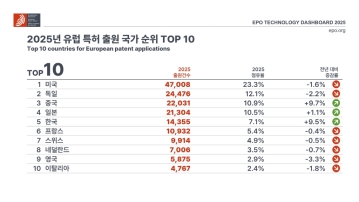
European Patent Applications Surpass 200,000 for the First Time… South Korea Maintains 5th Place, Led by Batteries and Telecommunications
According to the European Patent Office (EPO)'s 'Technology Dashboard 2025', European patent applications last year reached 201,974, surpassing 200,000 for the first time. Korean companies and inventors filed 14,355 applications, representing a 9.5% increase from the previous year and maintaining 5th place by country. Battery, digital communication, and semiconductor technologies led the growth, with Samsung ranking as the top EPO applicant for the second consecutive year and LG reaching 3rd place. The presence of major domestic cities such as Seoul, Suwon, and Yongin was also confirmed. It was also revealed that Korea's European patent strategy is expanding beyond individual technologies to span the entire industry.
2026.03.24by 명세환 기자

SK Telecom First Applies AI-Based Network Operations at Gwanghwamun K-Pop Concert
SK Telecom announced that it applied an AI-based network operation system for the first time at a large-scale K-pop concert held in the Gwanghwamun area of Seoul on March 21st, managing communication quality throughout the event. Mobile data usage during the three hours before and after the concert reached 12.15TB, approximately doubling compared to the same time slot the previous weekend. SK Telecom monitored traffic using the AI system 'A-One' in five-minute and 50-meter units to respond to potential overload situations, while also operating temporary communication facilities and on-site personnel in parallel. This case is interpreted as confirmation of the practical applicability of AI-based autonomous network operation in an environment where demand from dense events and foreign users increases simultaneously.
2026.03.23by 명세환 기자
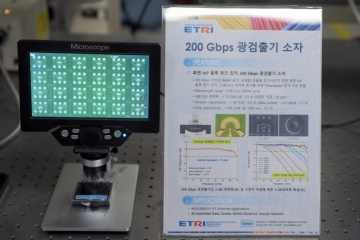
ETRI Develops 200Gbps Photodetector… Initiates Localization of Optical Receivers for AI Data Centers
The Electronics and Telecommunications Research Institute (ETRI) has developed a photodetector device that processes optical signals of approximately 200Gbps per channel for the first time in Korea. This device is a component that converts optical signals into electrical signals and determines the reception performance of AI data centers and 5G/6G communication networks. ETRI achieved bandwidth of 70GHz or higher and optical responsivity of 0.75A/W or higher, and integrated an indium phosphide lens on the rear of the chip to enhance optical reception efficiency and alignment convenience. The technology was presented at OECC 2025 and was recently published in the international academic journal 'Optics Express'.
2026.03.19by 명세환 기자

SKT and Ericsson Expand Joint Research on AI Networks… Preparing for 6G Beyond 5G Advancement
SK Telecom and Ericsson are expanding AI-based mobile network collaboration. On the 19th, the two companies signed a memorandum of understanding covering 5G advancement through 6G standardization, and agreed to undertake joint research and verification in the areas of AI-RAN, open and autonomous networks, security, and future communication technologies. This collaboration is interpreted as a move to enhance current 5G operational efficiency while preparing for a 6G environment where AI becomes embedded throughout the network. The scope also includes network operations automation, multi-vendor environment response, energy efficiency improvements, and review of communication-sensing fusion technology.
2026.03.19by 배종인 기자
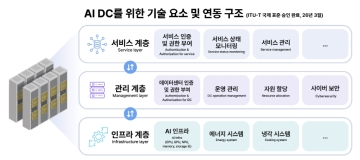
SKT Receives International Standard for AI Data Center Interconnection Structure… Establishes Operating System Standards
SK Telecom's proposed AI data center interworking architecture has received final approval as an international standard at the International Telecommunication Union Telecommunication Standardization Sector (ITU-T) conference. The core of this standard is the classification of AI data centers into three layers—service, management, and infrastructure—and the organization of signaling requirements between layers. As AI service proliferation increases the importance of interworking among various systems within data centers such as computation, power, cooling, storage, and security, this standard is significant in that it presents a common architecture for operations and service delivery. SK Telecom stated that it initiated the relevant standardization project in 2024 and achieved this approval following approximately two years of discussion.
2026.03.18by 명세환 기자











