


Intel AI Mentors, Space Radiation Cancer Measurement Algorithm Development
 Published2021.10.26 10:50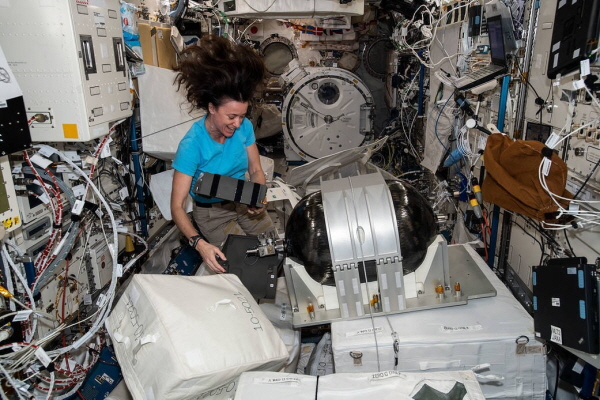
Intel and the U.S. National Aeronautics and Space Administration (NASA) Frontier Development Lab (FDL) jointly conducted the first radiation-based cancer research utilizing rodent and human data, and developed the first algorithm demonstrating biological markers that measure cancer progression stages.
Intel announced on the 19th that Intel AI Mentors and researchers from the NASA Frontier Development Lab (FDL) jointly conducted groundbreaking health research on astronauts to better understand the physiological effects of radiation exposure on space explorers.
The FDL developed the first algorithm demonstrating biological markers that measure cancer progression stages by combining radiation exposure data from laboratory mice and humans using Intel artificial intelligence (AI) technology.
Paul Duckworth, FDL researcher, stated, "With Intel's assistance, we formalized how causal machine learning models operate on data located in different places without physically moving the data. We achieved our goal of better understanding, improving, and supporting astronaut health using customized algorithms at the FDL 2021 forum," and added, "The results of this research are highly valuable and will eventually benefit not only astronauts participating in the International Space Station, future space stations, and the upcoming 2024 lunar exploration missions, but also cancer patients on Earth."
Space radiation can penetrate multiple layers of steel and aluminum and affect human biological tissue during space travel. This can cause health problems for astronauts and may lead to future cancer complications. With little data available on the effects of space radiation on astronauts from existing space exploration missions, researchers utilized human astronaut datasets that are strictly protected under various institutions. Intel and the FDL built causal machine learning that enables training AI algorithms on data stored in separate locations without data sharing across the entire federation of collaborating institutions to access these fragmented data.
Patrick Foley, Intel senior technology mentor, stated, "The FDL's astronaut health management team achieved remarkable results in two key objectives this year: newly combining human and mouse data and identifying multiple cancer-causing genes," and said, "This research demonstrates what public and private institutions can achieve when they collaborate, as well as how federated learning can be used for discoveries that might otherwise remain hidden. We are confident that this research will support astronaut health and enrich the lives of all people on Earth."

Comments
Related news

Intel Accelerates Google Cloud Virtual Machines
Intel is collaborating with Google Cloud to advance the latest virtual machine acceleration.
2021.10.05by 배종인 기자
.jpg)
Intel Delivers Optimal Security Hybrid Workspace Technology
Intel provides integrated technology for optimized secure hybrid workspace through partnership with VMware.
2021.10.06by 배종인 기자

Intel Contributes to Advancing Biomedical Research
Intel, in collaboration with the Broad Institute and Google Engineering, has presented a new level of research methodology through workflow optimization, contributing to advances in biomedical research.
2021.10.13by 명세환 기자
Camera for Both Humans and Machines: ST BrightSense 5MP Dual Shutter Image Sensor
Video consumed by humans and imagery analyzed by machines impose different requirements on the sensor in terms of shutter method and wavelength band. Until now, sensors had to be separated or supplemented with companion chips and high-performance processors, and this cost and complexity became a bottleneck in vision system design. The ST BrightSense next-generation 5MP image sensor (VD5943, VD1943, VB5943, VB1943) with 2.25 µm pixels supports both global and rolling shutters, and through on-chip staggered HDR (up to 100 dB), on-chip RGB-IR separation and 5MP NIR smart upscaling, and frame-by-frame context switching, absorbs both requirements internally at the sensor level. This white paper describes the rationale, choices, trade-offs, and results of each design decision based on presentation slides and technical Q&A, and specifies application boundaries. The product is scheduled for mass production in February 2026, and evaluation and sampling are currently available.
2026.10.13by 편집부

AI-based Universal Robots Automation Solution
In manufacturing environments where declining labor populations overlap with frequent production item changes, existing programming-based robot automation requires reconfiguration from weeks to several months each time product models change. This white paper takes this flexibility gap as its starting point and synthesizes, based on webinar presentation materials and technical Q&A, what collaborative robots gain and forfeit compared to industrial robots, why process automation is transitioning from rule-based to learning-based (4th generation) approaches, and how Universal Robots' hardware, software, and partner ecosystem implement this. Additionally, it clarifies the application boundaries and limitations, including that AI Accelerator is still at the development kit stage.
2026.10.13by 편집부











