


In the era of electric vehicles, it's urgent for auto parts manufacturers to transform their R&D efforts.
 Published2021.11.22 10:24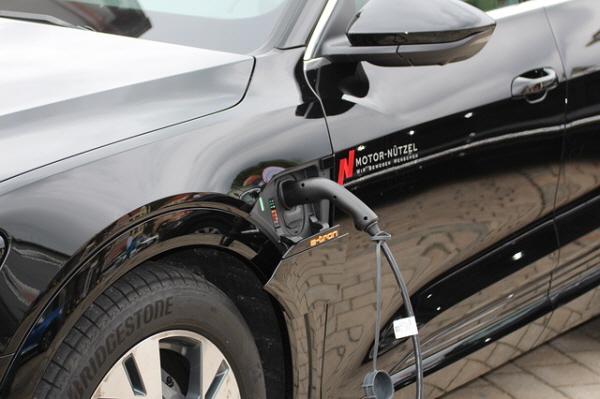
▲The number of parts in an electric vehicle is reduced from 30,000 in a conventional internal combustion engine vehicle to 19,000.
Domestic companies are accelerating their transition to new areas such as hydrogen vehicles.
The recent acceleration of the transition to electric vehicles has led to factory closures and workforce reductions at traditional auto parts manufacturers worldwide, expanding into a social issue. This has led to the need for rapid R&D transformation tailored to the times for parts manufacturers and government support for this transition.
According to foreign news agencies such as Reuters, on November 19, thousands of workers at Robert Bosch, a global auto parts manufacturer in Germany, held a protest to protest the closure of the company's factory.
Bosch's decision to close the plant is said to be due to the fact that generator regulators, a component for internal combustion engine vehicles, are no longer needed due to automakers' shift to electric vehicles.
In this regard, the German auto parts industry predicted that the transition to electric vehicle production would be difficult for traditional parts manufacturers, and that 500,000 jobs would be lost in Germany alone. Accordingly, it was argued that new R&D activities and retraining of production workers are necessary for parts manufacturers to transition into electric vehicle parts manufacturers.
It is known that similar cases are occurring not only in Germany but also in Japan, an automobile powerhouse.
In Japan, key components for internal combustion engine vehicles, such as engine parts, are reportedly no longer needed in electric vehicles, causing companies involved in these vehicles to suffer losses and are shifting their R&D efforts to survive. In particular, it is projected that approximately 300,000 jobs will be lost in Japan if the transition to electric vehicles is not addressed.
Amidst these overseas examples, the industry believes that if the domestic auto parts industry fails to adapt to electrification, small and medium-sized parts manufacturers will struggle to survive.
According to the Korea Institute for Industrial Economics and Trade, auto parts expected to disappear in the electric vehicle era include engines, camshafts, crankshafts, valves, transmissions, ignition systems, hydraulic steering systems, analog display clusters, pumps, and compressors.
The number of parts in internal combustion engine vehicles, which was around 30,000 in the past, is expected to decrease to around 19,000 due to the transition to electric vehicles, and parts manufacturers that fail to adapt to electrification are expected to be eliminated.
In the case of our country's parts manufacturers, the majority are small businesses, and the technological level also has a large gap with major advanced automotive countries such as the United States, Japan, and Germany.
In particular, they lack the capacity to invest in R&D, and according to a recent survey by the Korea Automobile Manufacturers Association, parts manufacturers are investing less than 5% of their sales in R&D for future vehicles, including electric vehicles, making it expected that preparing for electrification will be even more difficult.
Of course, not all domestic auto parts manufacturers are having problems responding to electrification. Some companies are preparing for electrification with rapid response.
A domestic company that manufactures traditional mechanical compressors was considering shutting down the relevant department just a few years ago, claiming that the business was not adaptable to the electric vehicle era. However, it is known that the company has now successfully responded to electrification and is continuing to invest in R&D for new areas such as hydrogen vehicles.
On the other hand, such success stories are few and far between, and most parts manufacturers are still giving up due to lack of investment capacity.
Accordingly, the auto parts industry is unanimous in its concerns that if we continue to sit back and do nothing, we will see a chain reaction of factory closures by auto parts companies in Korea, similar to what happened in traditional advanced auto countries like Germany and Japan.
Accordingly, comprehensive measures at the government level are required to help the approximately 10,000 domestic auto parts companies adapt to electrification, and R&D and financial support are required to help parts companies become self-reliant.

Comments
Related news
Electric vehicle electrical components 'EMI' emergency
Recently, there has been an increase in cases of electrical component failures in electric vehicles due to electromagnetic interference (EMI) phenomena, prompting electric vehicle parts manufacturers to take urgent measures to secure EMI shielding technologies.
2021.08.20by 배종인 기자
Growth in wireless charging and electric vehicle technology increases demand for electromagnetic shielding
Electromagnetic waves can be harmful to the human body over the long term, and in IT devices or vehicles, they cause electromagnetic interference (EMI) phenomena, increasing the risk of malfunction. As various industries undergo electrification in recent times, interest in electromagnetic shielding has grown considerably. In particular, with the advancement of wireless communication technology, the types and quantity of radio waves are increasing rapidly, making it imperative to forecast diverse shielding demands and develop material technologies suited to shielding environments.
2021.09.06by 이수민 기자
Automotive semiconductor shortage to continue through 2022
The automotive semiconductor shortage is expected to persist into next year following this year. Additionally, power semiconductors are anticipated to experience continued market expansion in the future due to increasing electric vehicle demand.
2021.10.28by 배종인 기자
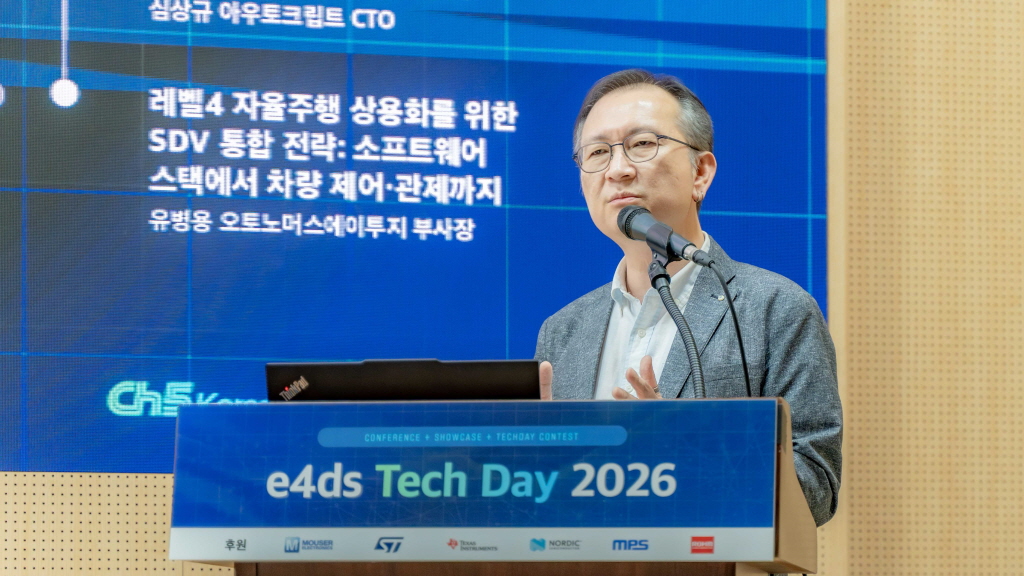
[e4ds Tech Day 2026 ⑨] Sim Sang-gyu, Autocrypt CTO: "In the Physical AI Era, Automotive Security Must Extend Beyond the Vehicle"
At e4ds Tech Day 2026, Sim Sang-gyu, CTO of Autocrypt, explained automotive cybersecurity strategies in the era of Physical AI and SDV (Software-Defined Vehicle). Automobiles are evolving as part of an ecosystem connected to AI, cloud, chargers, IoT, and robots, and he emphasized that the scope of security must expand beyond the vehicle interior to the entire connected environment. In particular, AI model tampering, adversarial attacks, OTA updates, and EV charger hacking were identified as major threats. He explained that response measures require zero trust, AI model integrity protection, intrusion detection, Security by Design and Default, and full lifecycle security management, and that proactive security system establishment beyond regulatory compliance is critical for securing future mobility competitiveness.
2026.10.12by 배종인 기자

Practical HIL Construction Strategy for Automotive and Off-Highway Controller Validation
As vehicle E/E architecture transitions to zonal structures and shifts to software-defined vehicles (SDV), the number of controllers (ECUs) requiring validation and software complexity are surging dramatically. Meanwhile, real vehicle testing cannot provide repeated verification under identical conditions and entails lead time and safety concerns. This white paper explains the principles of HIL (Hardware-in-the-Loop) validation and the structure of the NI platform composed of PXI, SLSC, and VeriStand, and through two actual implementation cases—Camera Record & Replay HIL for In-Cabin Monitoring Controller (ICMU) and Forklift Controller (VCU) HILS—describes how controller-level regression testing becomes possible. Additionally, it explicitly states application boundaries and limitations, such as lack of A2B support.
2026.10.12by 편집부











