



EV Industry Issues Must Be Recognized as a Global Challenge
 Published2022.03.08 16:51
Optimization of EV performance, cost, and development speed is essential
On the 8th, e4ds Webinar hosted the 'TI LIVE! Tech Exchange' webinar by the design engineering team of Texas Instruments (hereinafter TI).
The participants in the discussion all agreed that in the evolving EV industry, not all problems can be solved in a single way, and that this is a challenge for the whole world, not just a problem for TI.
Everyone supported the argument that the EV industry would be significantly strengthened only if there were not only customized solutions at the engineering level, but also tailored solutions for infrastructure and purchasing at the consumer level.
For vehicles that satisfy consumer demands for connectivity and safety to become a reality, the pace of technological innovation in semiconductors and the resulting automotive systems must accelerate.
Accordingly, the pace of collaboration among semiconductor suppliers, Tier 1 suppliers, and the automotive industry is expected to accelerate.
In line with this trend, TI aims to optimize performance, cost, and development speedHe said that he is making an effort.
TI identified high-voltage batteries as one of the key components of electric vehicles.
Precise and accurate monitoring is required to ensure the flexibility to drive a longer distance between charges.
We are continuously advancing our ability to accurately assess the charge status and overall condition of battery systems through our portfolio of battery monitors and sensors.
The wireless high-voltage battery management system is flexibly designed to eliminate the need for bulky wiring while improving overall range, performance, and maintenance.
In the case of wired battery management systems, there are thousands of feet of cables between the vehicle's exterior and interior for high-speed, secure communication and battery management.
This is a stable method, but because it is very heavy, it affects battery efficiency.
TI sought a shift to a wireless BMS protocol as a solution to reduce weight.
It is an effective method to reduce or eliminate cables associated with the BMS system in order to communicate directly with the control unit.
The system can monitor voltage, temperature, etc., and continuously provide consumers with necessary information.
It is a method in which each cell and microcontroller communicates at 2.4 GHz using TI's star network method.
It is a different approach from the daisy-chain method, where inherent delays occur through the architecture in wired implementations.
In addition, new technologies such as GaN help meet the demand for more power and less space in automobiles.
Because GaN has a fast switching speed, it allows for a reduction in inductor size, which has the advantage of simultaneously reducing weight and cost. />
It cannot be solved with GaN alone.
Powertrain integration can be enabled by using real-time MCUs such as TI's C2000.
Various algorithms and software that can be executed by the MCU to optimize efficiency enable high density and high efficiency.
Silicon and software are actually replacing copper and iron in terms of wiring, cabling, and magnetism.
It is reducing heavy and expensive old technology.
TI is accelerating vehicle electrification through technologies that enable new automotive architectures, and the TI engineering team stated that it is important to ensure that everything, including voltage and current sensing, software, and efficiency, is connected so that it can operate reliably.
It also included information that DC charging develops along two vectors.
There are high power chargers capable of charging up to 350~500kW per unit and DC chargers capable of up to 22kW.
Henrik Mannesson, General Manager of Global Grid Infrastructure and Industrial Systems, stated, “These bidirectional DC chargers will be used in homes and public places and will become power hubs that can make EV vehicles more affordable.”
He went on to express optimism that many charging standards are emerging and are expected to help with their adoption.
Methods are being considered where consumers pay with a credit card only for the amount of electricity charged at EV charging stations, similar to modern gas stations, as well as time-based pricing schemes.
Time-of-use pricing can benefit both power companies and consumers because it effectively operates the grid and prevents overload.
One debater It emphasized global cooperation regarding scope and safety.
Currently, investment and support for the establishment of extensive public charging networks are being provided globally.
"Enabling charging where people live or work to make it more convenient will help accelerate EV adoption," said General Manager Henrik Mannesson. "OEMs and TI are focusing on creating smaller and more affordable charging environments."
Comments
Related news
Six global automotive semiconductor companies achieved $70.8 billion in sales, up 29% year-over-year.
Global automotive semiconductor companies achieved record high growth in 2021 with unprecedented sales volumes and price increases, driven by worldwide automotive semiconductor shortages and surging demand.
2022.03.03by 성유창 기자
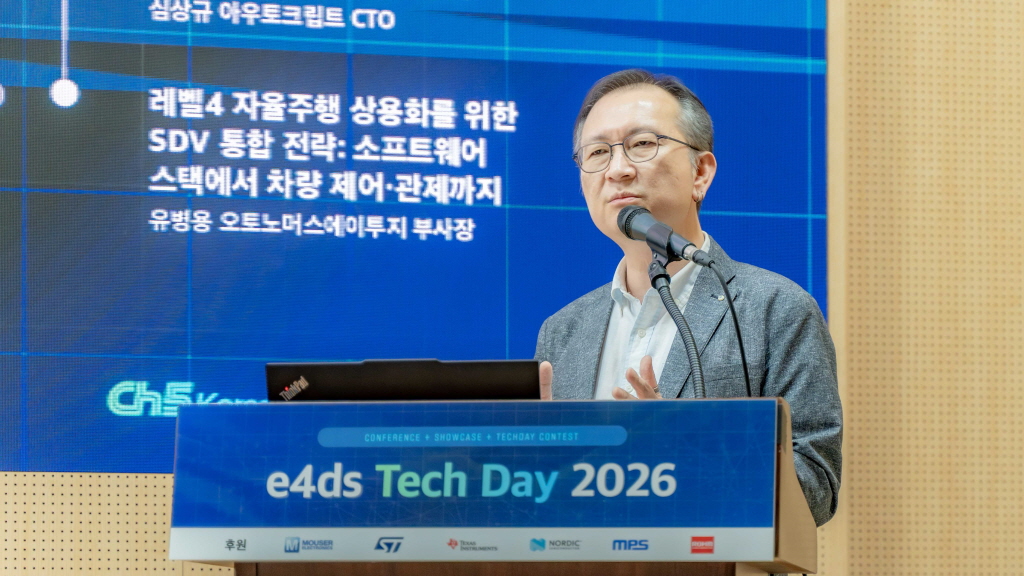
[e4ds Tech Day 2026 ⑨] Sim Sang-gyu, Autocrypt CTO: "In the Physical AI Era, Automotive Security Must Extend Beyond the Vehicle"
At e4ds Tech Day 2026, Sim Sang-gyu, CTO of Autocrypt, explained automotive cybersecurity strategies in the era of Physical AI and SDV (Software-Defined Vehicle). Automobiles are evolving as part of an ecosystem connected to AI, cloud, chargers, IoT, and robots, and he emphasized that the scope of security must expand beyond the vehicle interior to the entire connected environment. In particular, AI model tampering, adversarial attacks, OTA updates, and EV charger hacking were identified as major threats. He explained that response measures require zero trust, AI model integrity protection, intrusion detection, Security by Design and Default, and full lifecycle security management, and that proactive security system establishment beyond regulatory compliance is critical for securing future mobility competitiveness.
2026.10.12by 배종인 기자

Practical HIL Construction Strategy for Automotive and Off-Highway Controller Validation
As vehicle E/E architecture transitions to zonal structures and shifts to software-defined vehicles (SDV), the number of controllers (ECUs) requiring validation and software complexity are surging dramatically. Meanwhile, real vehicle testing cannot provide repeated verification under identical conditions and entails lead time and safety concerns. This white paper explains the principles of HIL (Hardware-in-the-Loop) validation and the structure of the NI platform composed of PXI, SLSC, and VeriStand, and through two actual implementation cases—Camera Record & Replay HIL for In-Cabin Monitoring Controller (ICMU) and Forklift Controller (VCU) HILS—describes how controller-level regression testing becomes possible. Additionally, it explicitly states application boundaries and limitations, such as lack of A2B support.
2026.10.12by 편집부
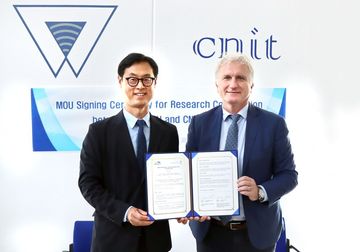
Korea Automotive Research Institute Signs MOU with Italy National Institute for Wireless Communications
The Korea Automotive Research Institute will sign an MOU with Italy's National Institute for Wireless Communications and launch joint research on next-generation mobility technologies based on 6G, V2X, and connected vehicles. The two organizations will conduct research to apply advanced wireless communication technologies to vehicles and discover international joint projects to advance next-generation connected vehicle technology development.
2026.10.12by 배종인 기자
Color Accuracy Issues in Vehicle Interior Ambient Lighting and Intelligent LED Drivers
Vehicle interior ambient lighting is spreading across all price segments, and the level of color accuracy required of lighting designers is rising accordingly. This white paper quantitatively addresses why temperature drift and individual variations of RGB LEDs cannot be corrected by standard constant-current drivers, and explains an intelligent LED driver approach that integrates an MCU, calibration data, and a LIN network interface into the driver. It covers implementation details of the LITIX Interior TLD4020-3ET currently in production, portfolio roadmap, and evaluation/development environments, and clarifies application boundaries including lack of 48V support, lack of RGBi/ISELED support, and absence of direct optical degradation diagnostics.
2026.10.08by 명세환 기자











