



Lithium iron phosphate batteries will lead the power battery market.
 Published2022.04.19 16:39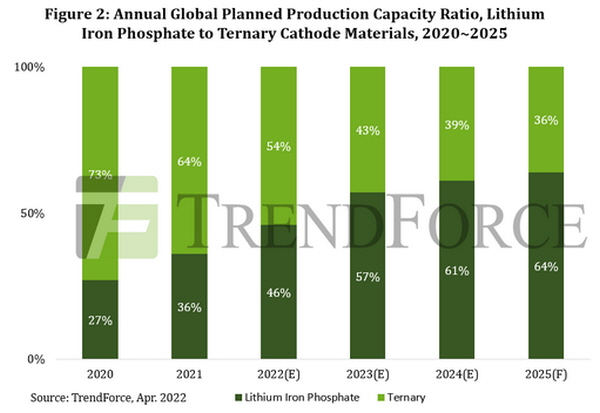
배터리 비용 절감, 경쟁 전략 될 것
리튬인산철 배터리, 2024년 60% ↑
트렌드포스는 리튬인산철배터리의 글로벌 점유율이 2024년 60%에 달해 전력 배터리 시장의 주류로 자리 잡을 것이라고 19일 발표했다.
전력 배터리 원자재 가격 상승에 따라 테슬라, BYD, NIO, Li Auto, 폭스바겐 등 글로벌 신에너지차(NEV) 브랜드가 22분기 전기차(EV) 판매가를 잇달아 올렸다.
트렌드포스는 전기자동차 전체 비용 중 가장 큰 비중을 차지하는 핵심 부품은 전원 배터리이며, 전력 배터리 비용 절감은 기업이 향후 경쟁력을 유지하는 데 중요한 전략이 될 것으로 보고 있다.
기술 혁신이 이어지면서 리튬인산철배터리는 2024년까지 전 세계 전력 배터리 시장의 설비 용량(Installed Capacity) 60% 이상을 차지할 것으로 예상된다.
트렌드포스는 세계 최대 전기차 시장인 중국 입장에서 2021년 전력 배터리 시장이 역전됐고 리튬인산철 배터리는 장착 용량의 52%로 3차 배터리를 공식적으로 앞질렀다고 밝혔다. 리튬인산철 설비용량은 2022년 1분기에도 꾸준한 증가세를 보이며 58%에 도달했고, 삼원전지를 능가하는 성장률을 보이고 있다.
다만, 글로벌 EV 시장의 관점에서 보면, 유럽과 미국의 NEV 보급률 상승에 힘입어 2021년에도 삼원전지가 60% 이상의 점유율을 차지해 약 32~36%의 점유율을 기록한 리튬 인산철 전지를 크게 웃돌았다.
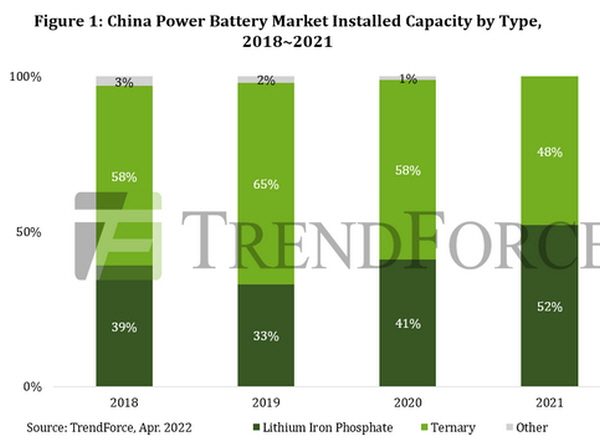
▲ 중국 전력 배터리 설비 용량 (그림 출처: 트렌드포스)
이 두 재료의 전류 격차는 상당하지만, 최근 2년간 글로벌 신에너지 전지 양극재 제조사들의 생산능력 계획에 따르면 리튬 인산철 재료의 규모와 속도는 삼원소재를 크게 웃돌 것으로 보인다.
트렌드포스 조사에 따르면 현재 글로벌 양극재 제조사들이 발표한 계획 확장 사업은 중국과 한국에 집중돼 있으며 명목상 총 계획 생산능력은 1,100만톤 이상이며 이 중 리튬 인산철 양극의 계획 생산능력은 약 64%를 차지한다.
다만 계획생산능력은 시장수요를 초과하기 때문에 업계의 총계획생산능력과 실제 미래생산능력 사이에는 일정 부족이 있을 것으로 보인다.
앞으로 실제 유효 생산능력이 어느 수준까지 올라갈 수 있을지는 미지수다.
2021년 하반기 이후 리튬, 코발트, 니켈 등 핵심 배터리 원자재 가격이 상승하고, 전 세계 전력 배터리 공급망이 러시아-우크라이나 전쟁과 글로벌 대유행 등 불확실성으로 몸살을 앓고 있다.
이에 수요와 공급의 성장률 사이에 단기적인 격차가 있을 것이고 기업들은 미래 경쟁력과 관련된 두 가지 주요 이슈인 배터리 재료의 비용 절감과 공급망 보안에 더 집중할 것이다.
이러한 추세에 따라 트렌드포스는 리튬 철인산염 배터리의 가성비 우위가 더욱 부각될 것으로 기대하고 있으며, 향후 2~3년 내에 이러한 유형의 배터리가 단말기 시장의 주류가 될 수 있는 기회를 갖게 될 것으로 기대하고 있다.
Comments
Related news

Hyundai Motor Enters Community-Based NFT Market
Hyundai Motor has released a video introducing its Hyundai NFT universe 'Metamobility Universe,' under plans to enter the industry's first community-based NFT marketplace among global automakers and provide customers with diverse brand experiences.
2022.04.18by 성유창 기자
Hyundai Motor Strengthens Electric Vehicle Maintenance Capabilities
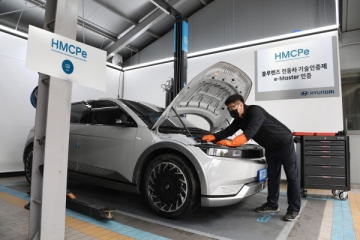
Hyundai Motor announced on the 18th that it will accelerate the cultivation of specialized electric vehicle maintenance personnel through the launch of the new 'Hyundai Master Certification Program Electrified (HMCPe)'.
2022.04.18by 성유창 기자
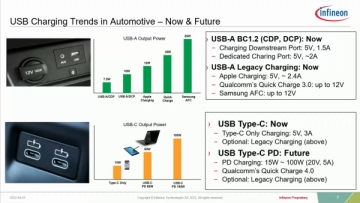
Trend of unifying USB charging ports in vehicles to Type C
Moon Seung-il, director at Infineon, presented on the topic of "Automotive USB Type-C Charging Controller Solutions and Design Technology" at the e4ds webinar, stating that the company will provide solutions to simplify the design process and enable rapid transition to USB Type-C charging ports by leveraging design resources and specialized expertise.
2022.04.19by 성유창 기자
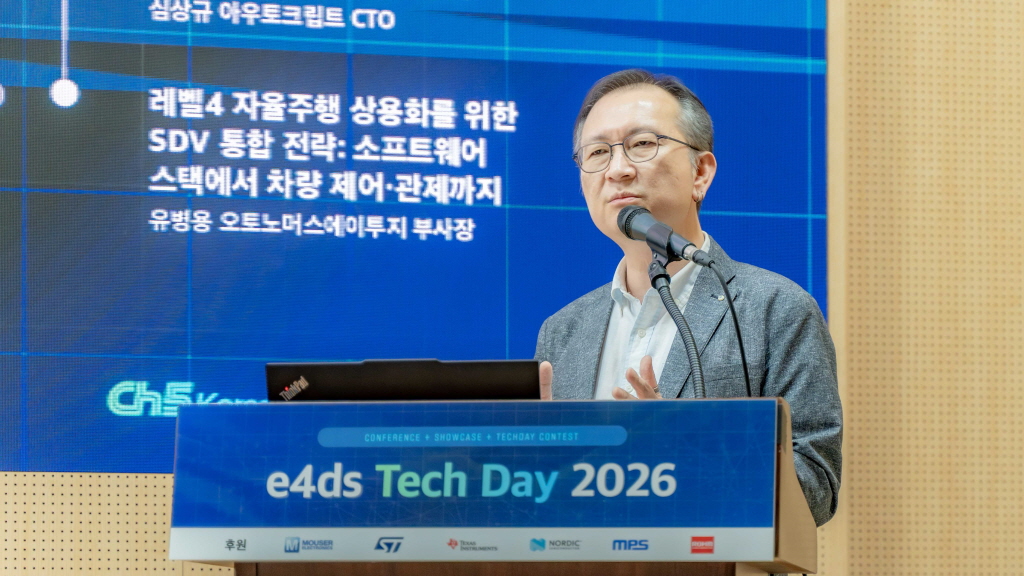
[e4ds Tech Day 2026 ⑨] Sim Sang-gyu, Autocrypt CTO: "In the Physical AI Era, Automotive Security Must Extend Beyond the Vehicle"
At e4ds Tech Day 2026, Sim Sang-gyu, CTO of Autocrypt, explained automotive cybersecurity strategies in the era of Physical AI and SDV (Software-Defined Vehicle). Automobiles are evolving as part of an ecosystem connected to AI, cloud, chargers, IoT, and robots, and he emphasized that the scope of security must expand beyond the vehicle interior to the entire connected environment. In particular, AI model tampering, adversarial attacks, OTA updates, and EV charger hacking were identified as major threats. He explained that response measures require zero trust, AI model integrity protection, intrusion detection, Security by Design and Default, and full lifecycle security management, and that proactive security system establishment beyond regulatory compliance is critical for securing future mobility competitiveness.
2026.10.12by 배종인 기자
Practical HIL Construction Strategy for Automotive and Off-Highway Controller Validation
As vehicle E/E architecture transitions to zonal structures and shifts to software-defined vehicles (SDV), the number of controllers (ECUs) requiring validation and software complexity are surging dramatically. Meanwhile, real vehicle testing cannot provide repeated verification under identical conditions and entails lead time and safety concerns. This white paper explains the principles of HIL (Hardware-in-the-Loop) validation and the structure of the NI platform composed of PXI, SLSC, and VeriStand, and through two actual implementation cases—Camera Record & Replay HIL for In-Cabin Monitoring Controller (ICMU) and Forklift Controller (VCU) HILS—describes how controller-level regression testing becomes possible. Additionally, it explicitly states application boundaries and limitations, such as lack of A2B support.
2026.10.12by 편집부











