


The new government's semiconductor investment and talent development efforts
 Published2022.04.28 13:55
The semiconductor industry: a government-business partnership
Including fabless and small and medium-sized enterprises in human resource development support
China's semiconductor boom, U.S. President Biden holding semiconductor wafers, and TSMC, which holds the world's largest foundry market share, have three things in common. It falls within the category of the government's full-scale support for fostering the semiconductor industry.
■ Full support needed for Korean semiconductors
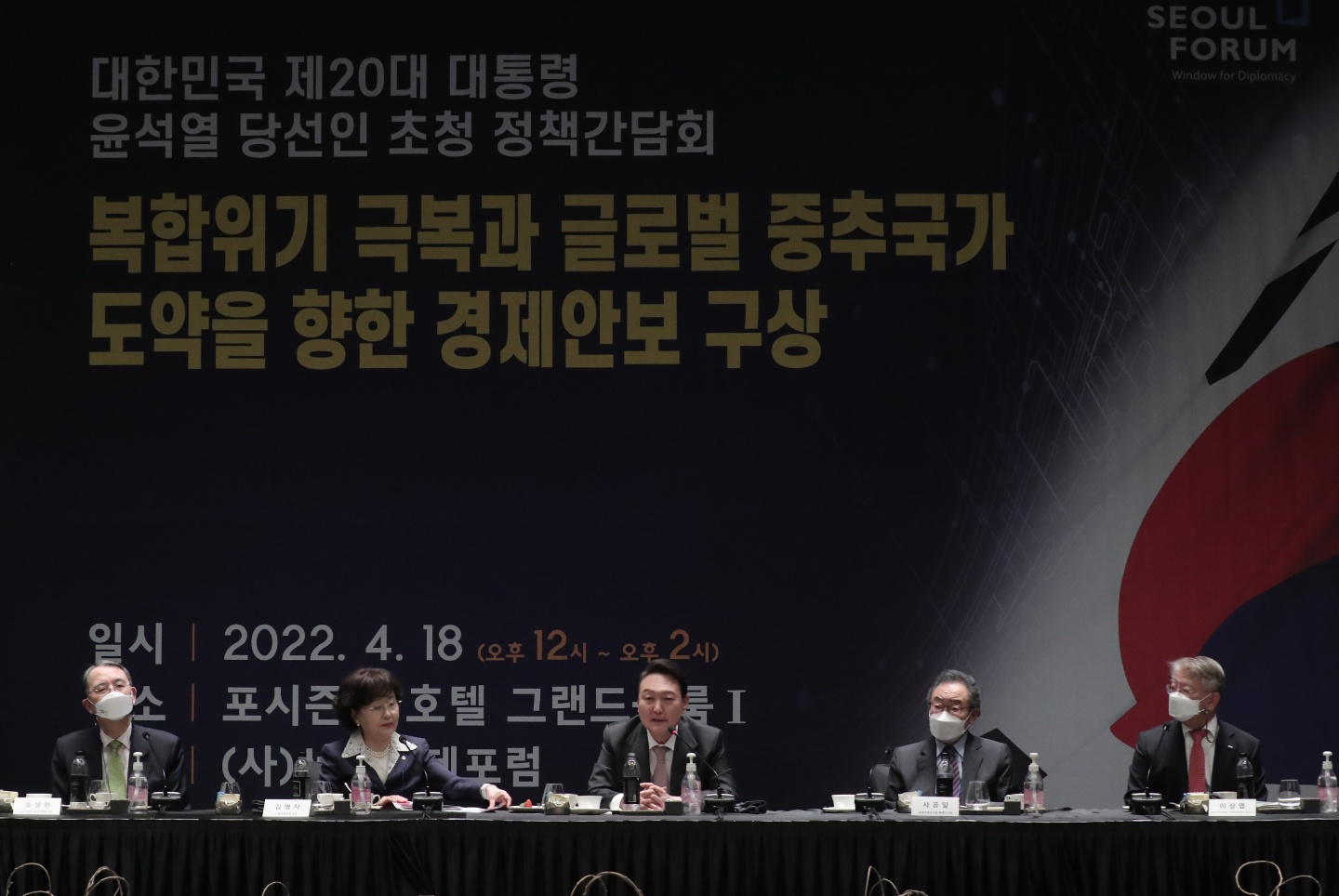
As major countries around the world are staking their lives on fostering the semiconductor industry, which is directly linked to economic security, the incoming Yoon Seok-yeol administration's strong commitment to fostering the semiconductor industry is evident.
A comprehensive look at the semiconductor policy direction of President-elect Yoon Seok-yeol's 20th Presidential Transition Committee includes strengthening the infrastructure and talent development necessary for research and development, along with private-sector-led and government-cooperative support. To this end, it is expected that a larger budget will be invested to support the semiconductor industry than the level supported by the current government.
The current government's support for semiconductors is relatively low compared to major countries with global semiconductor companies, with 1 trillion won for intelligent semiconductor R&D projects, 400 billion won for the launch of new-concept semiconductor PIM projects, and 1 trillion won for special funds for semiconductor equipment investment.
Meanwhile, the United States passed the American Innovation and Competition Act last year, dedicating $52 billion (approximately 65 trillion won) to expanding U.S. semiconductor manufacturing capacity. $2 billion (approximately 2.5 trillion won) is earmarked for the development of automotive semiconductors alone.
Furthermore, China has been pouring 1 trillion yuan (approximately 192 trillion won) into its semiconductor industry since 2015, fueled by its semiconductor boom. The European Union (EU) plans to invest 145 billion euros (approximately 193 trillion won) with the goal of increasing its share of global semiconductor production to 20% by 2030.
Accordingly, the next administration's strong commitment to fostering the semiconductor industry is a positive development. President-elect Yoon's transition team's semiconductor policy, designed to strengthen semiconductor technological competitiveness, prioritizes the following: Establishing a platform for industry-academia-research collaboration in semiconductor R&D; Strengthening the functions of public semiconductor fabs; Designating and fostering key national semiconductor research labs; and Developing semiconductor talent.
In an e4ds interview, a member of President-elect Yoon's transition team stated, "The semiconductor industry has changed from a competition between companies in the past to a joint competition between the government and companies," and "We will pursue full-scale deregulation and investment incentives to expand the domestic production base for semiconductors, which are strategic security assets." He added, "To maximize Korea's position in the US-led supply chain restructuring, we will strengthen next-generation technology development and supply chain cooperation with the US and other major global semiconductor countries."
In particular, he emphasized that “the biggest difference from the current government is that we are strengthening investment support for fostering the semiconductor industry.”
As the transition committee reviews various proposals for fostering the semiconductor industry, including raising the semiconductor tax deduction rate, expediting licensing, and reforming related regulations, attention is focused on whether the necessary policy plans for the industry will be established.
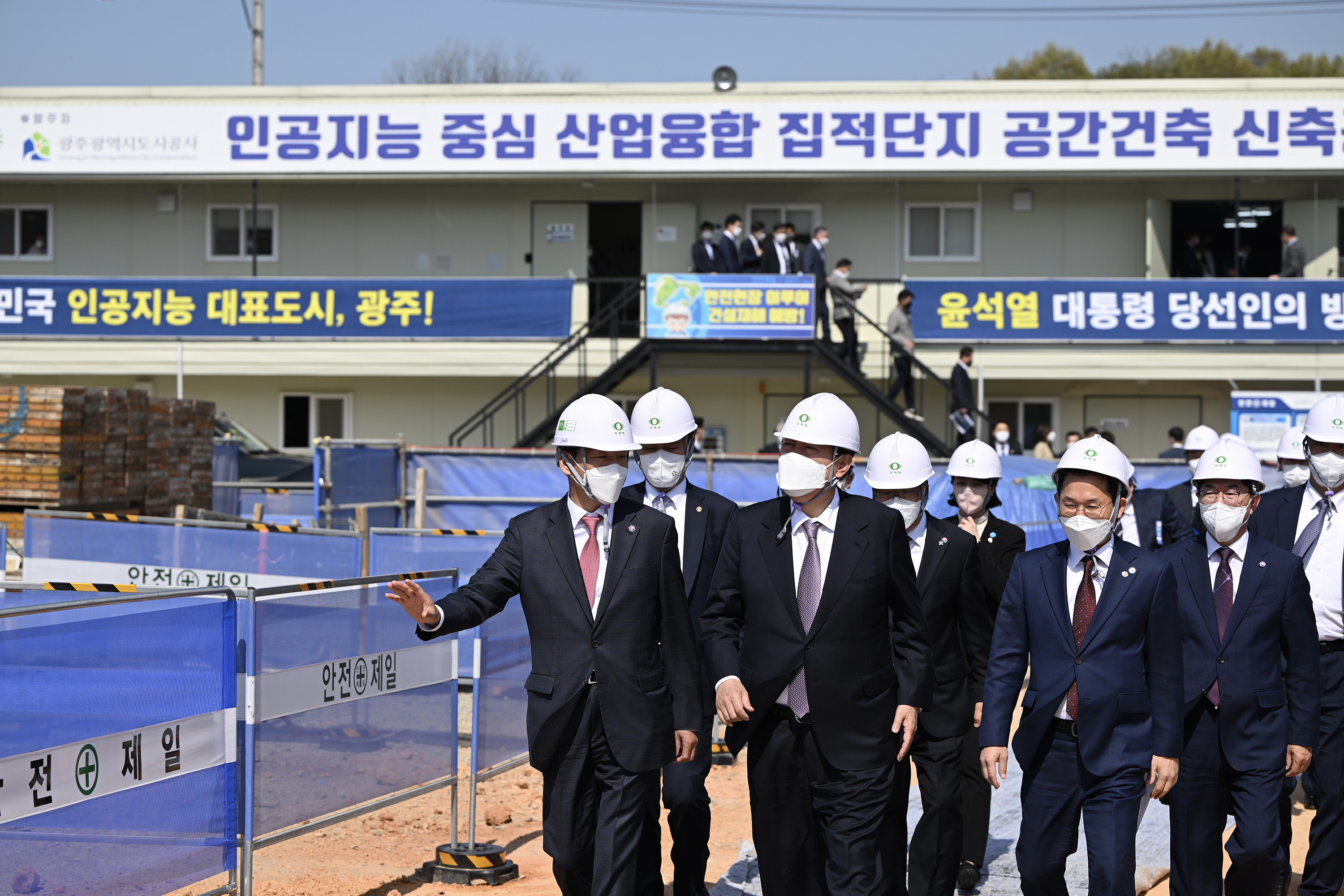
▲President-elect Yoon inspects the Gwangju National AI Complex (Photo - 20th Presidential Transition Committee)
The current administration is being criticized for essentially neglecting the private sector in fostering talent. With the expansion of semiconductor talent development stalled, even large corporations, let alone small and medium-sized enterprises, are struggling with a semiconductor talent shortage.
In a survey of semiconductor companies conducted by the Korea Semiconductor Industry Association, 65.4% responded that the most important aspect of government support for the semiconductor industry was ‘talent supply and demand.’ SK Hynix, Samsung Electronics, and other companies are establishing semiconductor contract departments at major universities in the metropolitan area, leading the private sector to make efforts to secure semiconductor talent.
Last year, the government unveiled a mid- to long-term blueprint for nurturing semiconductor talent, aiming to cultivate 36,000 individuals over ten years. However, the Special Act on Semiconductors failed to meet industry expectations, as it did not include measures such as increasing the number of semiconductor departments in universities in the Seoul metropolitan area or government support for on-the-job training by companies. This has led to complaints that local lawmakers and relevant authorities have failed to adequately address the demand for semiconductor talent development, simply by asserting their respective positions.
The four major policies announced by the 20th transition committee primarily focused on nurturing semiconductor talent and supporting R&D infrastructure. The transition committee is expected to meticulously focus on not only nurturing a large number of semiconductor talent but also securing talent for fabless companies and other small and medium-sized semiconductor companies.
In an e4ds interview, a transition team official promised, “The semiconductor contract department is a way to support and recruit large corporations, and the next government will support it so that not only large corporations but also small and medium-sized enterprises can utilize the contract department.”
The transition team official mentioned that Taiwan has already been strengthening national support by establishing four semiconductor graduate schools last year, and that the United States is investing in Ohio University, where Intel's factory will be located, and is also developing human resources through matching with the federal government.
He added, "The next administration aims to establish a system in which businesses and the government jointly develop the talent needed in the field. We affirm the government's proactive and facilitative role in human resource development, which is key to the competitiveness of the semiconductor industry." To this end, the government announced plans to “promote a balanced approach to talent development through △expanding undergraduate enrollment, △designating a semiconductor graduate school, △establishing major tracks, △cultivating human resources through public-private joint investment R&D, △activating in-house universities, and △cultivating human resources through public-private collaboration.”
Meanwhile, the industry recognizes that while the talent shortage is a mid- to long-term challenge, it also hopes for a flexible implementation of the 52-hour workweek in R&D to address short-term issues. Industry expectations are running high, as President-elect Yoon has demonstrated a positive stance toward expanding work hour flexibility since his candidacy.

Comments
Related news

“AI Semiconductor Changes the Future IT Industry Landscape”
As AI services rapidly expand across everyday life and industries, the volume of data that needs to be processed is growing exponentially, and AI semiconductors that can replace GPUs are emerging as the next-generation flagship semiconductor industry.
2022.04.19by 김예지 기자
This year's wafer production up 8.7%... Impact of expansion by SK, TSMC, etc.
As the semiconductor supply shortage continues, forecasts indicate that global wafer production capacity will increase this year, drawing attention to whether the supply deficit can be resolved.
2022.04.22by 명세환 기자

[Semiconductor Digital Forum] US-China Semiconductor Hegemony Competition Intensifies
The semiconductor industry is experiencing intensifying global supply chain restructuring. As both China and the United States are making critical efforts to foster their semiconductor industries—with China's semiconductor rise, U.S. investment expansion, and U.S. sanctions against China—responding to these developments has become increasingly important.
2022.04.25by 명세환 기자

South Korea’s Semiconductor Market Share in China and China Plummets
Following the U.S. semiconductor supply restrictions targeting the general public, Korea's semiconductor market share in China has plummeted sharply. The new administration has indicated that strengthened corporate support, including R&D investment, is urgently needed to secure Korea's technological superiority in semiconductors.
2022.04.25by 배종인 기자

[Semiconductor Digital Forum] Data Explosion Driven by Metaverse and AI: The Solution Ultimately Comes from Semiconductors
Data volume is increasing exponentially. This is because technological advancements in AI, autonomous driving, metaverse, and cloud computing are driving the need to process an enormous amount of data. Humanity, having entered the era of AI and big data, is generating vast amounts of data such that the data created in just one or two days now exceeds the cumulative data accumulated throughout previous eras.
2022.04.26by 명세환 기자











