



Electromagnetic Wave Human Safety Certification: "Living Spaces and Long-Term Impacts Are Important"
 Published2022.05.09 15:38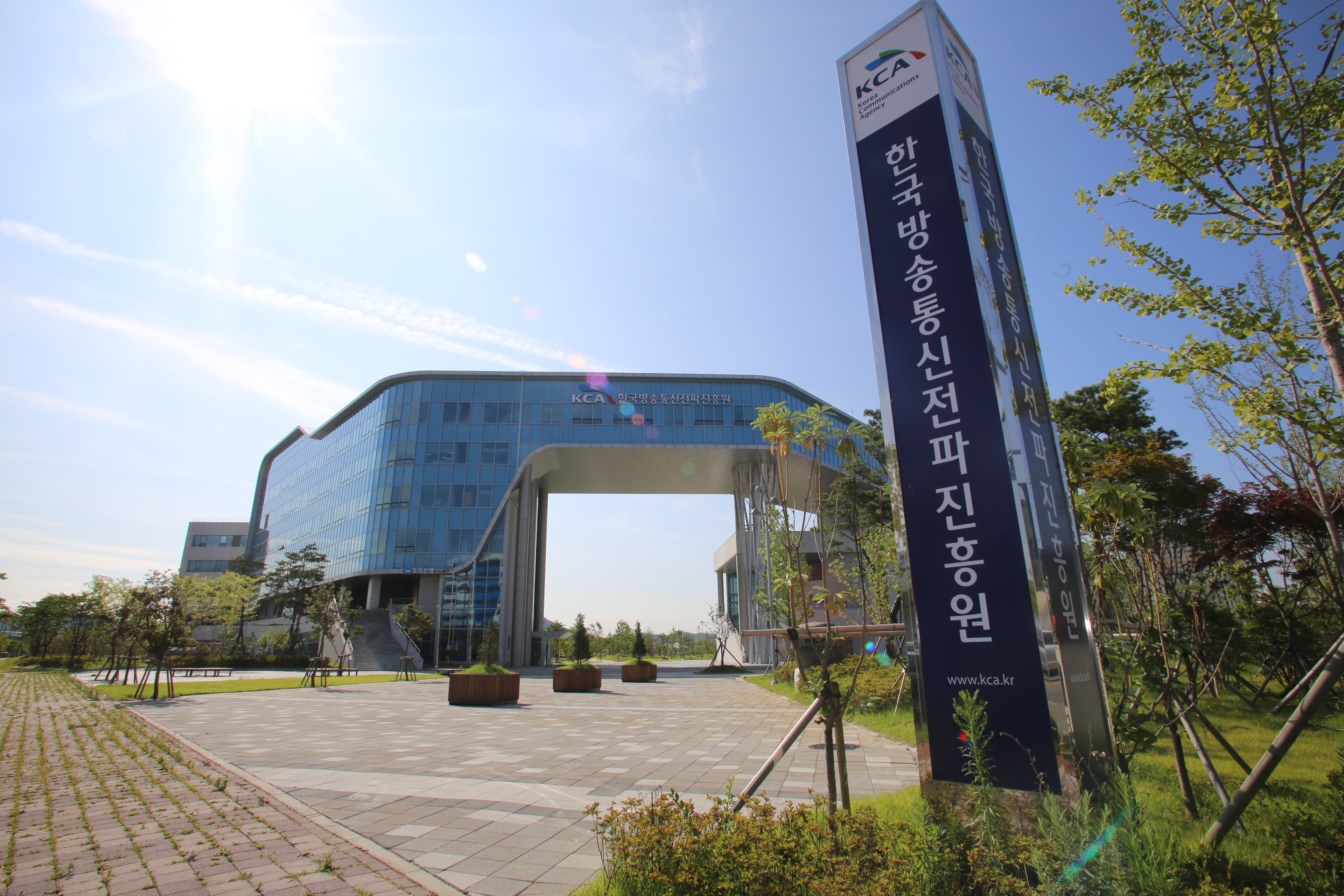
▲A panoramic view of the Korea Communications Commission (KCA) (Photo provided by KCA)
Expected demand in stages, including infants, toddlers, the elderly, call centers, and the 4th industrial revolution.
Establishing an electromagnetic communication system reduces social and economic costs.
The number of devices and equipment emitting electromagnetic waves is increasing in our daily lives. With the development of the Internet of Things, autonomous vehicles, and 5G communications, the frequency of exposure to electromagnetic waves in our daily lives is increasing, leading to growing concerns about the harmful effects of electromagnetic waves on the human body. The International Agency for Research on Cancer (IARC) has classified electromagnetic fields as a possible human carcinogen (Group 2B). However, the long-term cumulative effects of electromagnetic fields, non-thermal effects, hormonal effects, nervous system effects, and mental activity remain insufficiently understood, necessitating countermeasures.
Accordingly, the Korea Communications Commission (KCA) conducted a research project to improve the electromagnetic wave safety certification system. Since last year, KCA has been conducting research on "Study on the Introduction of Human Safety Certification for Electromagnetic Waves in Living Spaces," and released the final report on the 1st of last month.
According to the report, the National Radio Research Agency has introduced a new electromagnetic wave intensity item in the KC certification, but this is not a certification that guarantees electromagnetic wave safety in living spaces where people stay for a long time. He emphasized the need for a related certification system, saying that there is currently no certification that guarantees electromagnetic wave safety during long-term stays.
Looking at domestic certification operation cases in similar fields, indoor air quality certification, radon safety space/product certification, and children's activity environment safety space certification are being operated, which has improved the safety of products and services.
In the case of overseas cases, Germany has introduced the concept of "building biology (Baubiologie)" to consider electromagnetic safety during the planning and design stages of buildings. The Building Biology Standard Test Method (SMB-2015) is largely divided into three categories: electromagnetic radiation; indoor toxins, pollutants, and indoor climate; and mold, bacteria, and allergens. The four levels are determined based on the measurement results. Electromagnetic radiation subcategories include direct and alternating electric and magnetic fields; radiofrequency radiation (high frequency); and radioactivity and geological emissions.
The report forecasted that the expected demand for electromagnetic wave human safety certification would be as follows: 1st stage: free support for vulnerable groups exposed to electromagnetic waves, such as infants and toddlers and senior centers; 2nd stage: government agencies and public institutions; 3rd stage: private sector, such as home shopping and private call centers; and 4th stage: 4th industrial revolution fields, such as electric vehicle chargers and autonomous driving.
Starting with a free support program for vulnerable populations, the certification system is expected to be gradually expanded to include private businesses heavily exposed to electromagnetic waves. The Fourth Industrial Revolution sector, in particular, is expected to be a high-risk area for issues related to the human health impact of electromagnetic waves due to its significant use in semiconductors, communications, and sensors. Stability certification through electromagnetic wave shielding and absorption is expected to serve as an important marketing point.
When surveying the general public on their awareness of electromagnetic waves, 91.8% responded that there is a need for electromagnetic wave safety certification in living spaces. More than seven in ten respondents (73.6%) felt they were regularly exposed to electromagnetic waves and were concerned about their health effects. 52.6% of respondents cited educational facilities such as kindergartens and schools, followed by residential facilities at 39.3%. 86.7% of respondents said regular recertification was necessary, with 56.8% saying annual certification was appropriate.
In the mobile communications frequency sector, more than half (53.1%) believed that 5G frequencies would be more harmful to the human body than 3G and 4G. If concerns about the human health risks of related electromagnetic waves rise as 5G communications begin to fully expand, this could negatively impact the installation of related infrastructure and the distribution of devices.
According to the final report on ‘Establishment of a Public Communication System for Electromagnetic Wave Safety and Analysis of Socio-Economic Effects’ released by the KCA on the 25th of last month, there are cases overseas where communication systems related to electromagnetic waves exist in the form of government organizations, and it was determined that a public institution with the infrastructure and expertise for electromagnetic wave management needs to operate a dedicated electromagnetic wave safety organization.
This is believed to alleviate the general public's misconceptions about electromagnetic waves, while preventing delays in base station construction and unnecessary costs due to lack of information and communication regarding electromagnetic wave safety.
There have always been cases in Korea where infrastructure construction plans have been hindered due to public anxiety about electromagnetic waves. △The controversy over the harmful electromagnetic waves of the THAAD radar during the US military's decision to deploy THAAD in 2016, △The cancellation of the Korea Meteorological Administration's localized weather detection radar in the Seoul metropolitan area in 2017, and △The delay in the installation of the Korea Research Institute of Standards and Science's Pyeonggun City Broadcasting Station in 2019. These delays in infrastructure installation due to concerns about electromagnetic waves have persisted. In addition to establishing a safety certification system to alleviate public concerns, a communication system that enhances understanding of electromagnetic waves is also necessary.
The report estimated that the effects of establishing a national communication system for electromagnetic wave safety would include: △ a reduction in complaints about electromagnetic waves from mobile communication base stations; △ a reduction in requests for base station relocation and the smooth installation of base stations; △ a reduction in unnecessary purchases of electromagnetic wave blocking products by the public; and △ a reduction in the number of electromagnetic wave measurements from wireless stations, resulting in an economic benefit of approximately KRW 42.6 billion per year.

Comments
Related news
Growth in wireless charging and electric vehicle technology increases demand for electromagnetic shielding
Electromagnetic waves can be harmful to the human body over the long term, and in IT devices or vehicles, they cause electromagnetic interference (EMI) phenomena, increasing the risk of malfunction. As various industries undergo electrification in recent times, interest in electromagnetic shielding has grown considerably. In particular, with the advancement of wireless communication technology, the types and quantity of radio waves are increasing rapidly, making it imperative to forecast diverse shielding demands and develop material technologies suited to shielding environments.
2021.09.06by 이수민 기자
Presenting the latest EMI shielding solutions
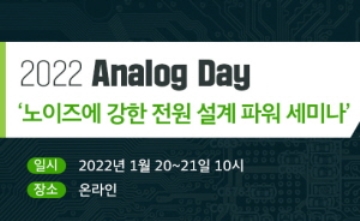
The '2022 Analog Day' event, which presents circuit design solutions for EMI shielding, will be held online on Thursday, January 20th and Friday, January 21st.
2021.12.01by 배종인 기자
.jpg)
5G EMI is caught with 'this material'...Material Research Institute develops new material for millimeter waves
As 5G realization comes into view beyond 4G(LTE), electromagnetic compatibility (EMC) responding to millimeter-wave has emerged as an important future technology. To address tens of gigahertz ultra-high frequency in the 6G and aerospace era, and to resolve electromagnetic interference (EMI) issues caused by various devices integrating multiple sensors used in autonomous driving technology, millimeter-wave compatible technology is becoming an essential requirement.
2022.04.19by 명세환 기자
ESP32 Development Environment Selection and GPS Application Implementation
The ESP32 is a microcontroller that integrates Wi-Fi, Bluetooth, 12-bit ADC, capacitive touch, PWM, DAC, and UART in a single SoC. However, the abundance of features does not by itself solve the designer's problems. The real challenges lie in selecting the appropriate development environment, determining which pins can be used and which must be avoided, and converting raw data from modules into usable information. This document addresses ESP32 peripheral constraints (ADC2 and Wi-Fi coexistence limitation, UART1 occupancy, ADC non-linear regions), the trade-offs between Arduino IDE and ESP-IDF, and the process from connecting NEO-6M/NEO-M8N GPS modules to UART2, parsing NMEA sentences, and visualizing routes in Google Earth, all organized based on documented references.
2026.10.12by 편집부
MIPI CSI-2, DSI-2, C-PHY, D-PHY Test Solution Technical White Paper
The MIPI interface adopts a burst mode that transitions between low-power (LP) and high-speed (HS) states for low-power consumption, and in return, strict timing rules are imposed on state transitions. Additionally, the high-speed section operates as a packet-based protocol with headers, ECC, and CRC, so verification engineers must handle waveforms and protocols simultaneously. Traditional configurations combining general-purpose oscilloscopes and AWGs reveal limitations in setup complexity, measurement uncertainty, and lack of reproducibility when faced with these requirements. This white paper, based on webinar materials, organizes the structure of this problem and describes how the SV5C-DPTXCPTX generator for receiver testing and SV5C-DPRXCPRX analyzer for transmitter testing integrate state transition testing, stressed eye testing, and protocol analysis into a single bench, along with their application boundaries.
2026.10.12by 편집부











