


Hyundai Motor to Invest 21 Trillion Won in Electric Vehicles by 2030
 Published2022.05.19 08:49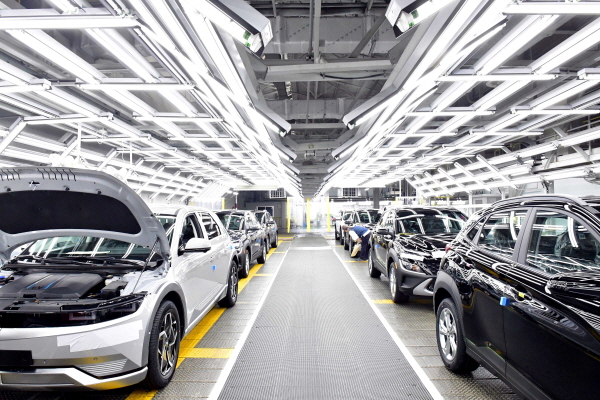
▲현대차 울산공장 아이오닉 5 생산라인 (사진제공: 현대자동차그룹)
전용공장 신설, 미래 자동차 생산 거점 구축 속도
2030년 세계 전기차 점유율 약 12% 수준 목표
현대자동차·기아 양사는 2030년까지 전기차 분야에서 국내에 총 21조원을 투자하고, 2022년 35만대로 예상되는 국내 전기차 연간 생산량을 2030년 144만대까지 대폭 확대한다고 18일 밝혔다.
144만대는 2030년 현대자동차·기아의 글로벌 전기차 생산량의 45%에 달하는 물량이다. 현대자동차·기아는 2030년 글로벌 전기차 생산량을 323만대로 계획하고 있다.
현대자동차·기아의 대규모 국내 전기차 분야 투자는 국내 전기차 생태계를 고도화하고, 글로벌 미래 자동차산업 혁신을 선도하는 허브 역할을 강화하기 위한 것이다.
또한 국내 전기차 생산-연구개발-인프라-연관산업 등의 선순환이 촉진될 것으로 기대된다.

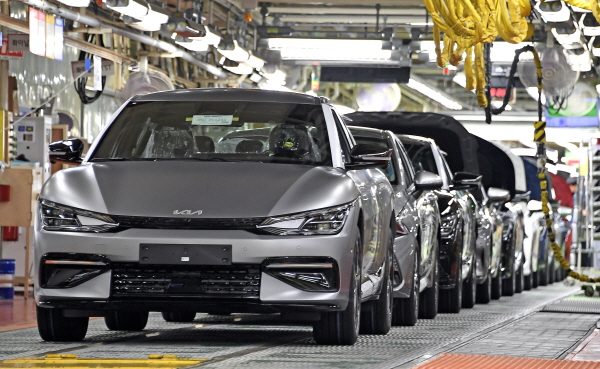
▲기아 오토랜드 화성 EV6 생산 라인 (사진제공: 현대자동차그룹)
기아는 전기차 국내 생산 확대의 일환으로 오토랜드(AutoLand) 화성에 수천억원 규모를 투입, 연간 최대 15만대 생산 능력을 갖춘 신개념 PBV(Purpose Built Vehicle, 목적 기반 차량) 전기차 전용공장 신설 계획을 공식 발표했다.
현대자동차·기아가 2030년까지 국내 전기차 분야에 투자하는 21조원은 전기차 생산 능력 확충과 전용 전기차 라인업 다양화 및 부품·선행기술 개발, 인프라 조성, 그리고 전기차 관련 다각도의 신사업을 모색하는 전략제휴 등에 활용된다.
우선 국내 전기차 생산능력 확대를 위해 PBV 전기차 전용공장 신설과 함께 내연기관차와 전기차의 혼류 생산 시스템 점진적 구축, 기존 공장의 전기차 전용 라인 증설 등을 추진한다.
전기차 생산 혁신과 최적화 차원에서 현대자동차그룹의 미래 제조 혁신기술 인큐베이터인 싱가포르 글로벌 혁신센터(HMGICS)의 유연 생산 시스템, 맞춤형 물류 시스템, 디지털 제조 시스템 등을 국내 공장에 단계적으로 도입한다.
양사는 차세대 전기차 전용 플랫폼 개발 및 제품 라인업 확대, 핵심 부품 및 선행기술 개발, 연구시설 구축 등 연구개발에도 집중 투자한다. 협력사와 함께 국내 기술 개발도 활성화한다.
이를 통해 전용 플랫폼 제품 라인업 다양화, 전기차 성능의 핵심인 배터리와 모터 등 PE(Power Electric) 시스템 고도화, 1회 충전 주행거리(AER, All Electric Range) 증대 기술 개발 등 하드웨어와 소프트웨어를 아우르는 통합 상품성을 강화한다.
전기차의 원천적인 성능 향상을 위해 차세대 플랫폼 확보에도 속도를 낸다. 2025년 도입하는 승용 전기차 전용 ‘eM’ 플랫폼을 비롯해 ‘통합 모듈러 아키텍처(IMA, Integrated Modular Architecture)’ 체계 하에서 차급별 다양한 전용 플랫폼들을 순차적으로 개발할 계획이다. 통합 모듈러 아키텍처를 적용한 플랫폼은 배터리와 모터를 표준화해 제품 개발 속도와 효율성을 제고할 수 있다.
전기차 보급의 핵심 기반인 전기차 충전 솔루션, 고객 서비스 등 인프라 부문도 투자 항목이다.
양사는 지난해 3월, ‘전기차 초고속 충전 브랜드 ‘이피트(E-pit)’를 출범시켰고, 올해 4월에는 전기차 충전 서비스 플랫폼(E-CSP, E-pit Charging Service Platform)’을 론칭했다.
또한 롯데그룹-KB자산운용 등과 전기차 초고속 충전 인프라 확충을 위한 특수목적법인(SPC)을 설립해 최대 200kW급 충전기를 임대하는 사업 모델을 개발하며, 2025년까지 전국 주요 도심에 초고속 충전기 5,000기를 설치한다.
전기차 관련 광범위한 전략제휴도 모색한다. 배터리, 충전, 수명이 다한 배터리를 에너지 저장 장치로 활용하는 UBESS(Used Battery Energy Storage System) 등의 영역에서 국내외 파트너들과 함께 신사업을 추진한다.
현대자동차그룹 관계자는 “글로벌 전기차 시장은 태생기를 넘어 본격적인 주도권 경쟁이 시작됐다”며 “현대자동차그룹은 대규모 국내 투자와 연구개발로 친환경 미래 모빌리티 물결에 민첩하게 대응해 나가겠다”고 밝혔다.
기아 오토랜드 화성에 신설될 국내 최초 신개념 PBV 전기차 전용공장은 ‘EV 트랜스포메이션(EV Transformation)’을 상징하는 대표적 미래 자동차 혁신 거점이다.
PBV 전기차 전용공장은 약 2만평의 부지에 수천억원 규모를 투입해 2023년 상반기 착공, 2025년 하반기 양산을 목표로 하고 있다. 양산 시점에 연간 10만대 생산 능력을 확보하며 향후 시장 상황에 맞춰 최대 15만대까지 확장한다.
송호성 기아 사장은 PBV 전기차 전용공장에 대해 “글로벌 PBV 시장 1위 브랜드에 도전하는 기아 ‘Plan S’의 하나의 큰 축”이라며 “기아는 단기적으로는 파생 PBV로 신시장을 개척하고 중장기적으로는 전용 PBV와 자율주행기술을 앞세워 전 세계에 PBV 공급 물량을 점차적으로 늘려 나가겠다”고 밝혔다
기아의 PBV 전기차 전용공장은 미래 혁신 제조기술을 대거 적용하고 탄소배출을 최소화하는 친환경 공장으로 구축된다. 디지털 제조 시스템 등 현대자동차·기아의 스마트팩토리 브랜드 이포레스트(E-FOREST) 기술로 효율화와 지능화도 추구한다.
또, 중장기 전략 ‘Plan S’를 바탕으로 새로운 모빌리티 서비스와 결합된 PBV 사업을 활발히 전개할 예정이다. 지난 2월에는 라스트마일 배송에 적합한 레이 1인승 밴을 출시했으며, 4월에는 첫번째 파생 PBV 니로 플러스의 디자인과 주요 상품성을 공개했다.
2025년에 선을 보일 전용 PBV 라인업의 최초 모델 SW(프로젝트명)는 중형급 사이즈(Mid-Size)로 개발된다. 스케이트보드 형태의 PBV 전기차 전용 ‘eS’ 플랫폼 기반으로 다양한 종류의 차체를 유연하게 결합할 수 있다. 성인 키 높이에 이르는 넓은 실내공간에 뛰어난 적재성까지 갖춰 딜리버리(Delivery), 차량호출(Car Hailing), 기업 간 거래(B2B) 등 각종 비즈니스 수요에 대응할 수 있을 것으로 보인다.
또한 차량의 시스템을 실시간으로 무선 업데이트(OTA, Over The Air)할 수 있는 기능을 탑재하고, 차체 기준 60만Km의 내구 테스트까지 충족하는 등 사업자들의 차량 총소유비용(TCO, Total Cost of Ownership) 절감을 도울 수 있는 성능과 경제성을 겸비한다.
기아는 중형 사이즈 PBV인 SW 론칭 이후에 음식, 생활용품 배송에 최적화된 무인 자율주행 소형 사이즈(Micro-Size) PBV, 일반 물류, 신선식품 배송, 다인승 셔틀, 이동식 오피스와 스토어로 활용이 가능한 대형 사이즈(Large-Size) PBV까지 제품 라인업을 늘려 나갈 방침이다.
한편, 장영진 산업통상자원부 1차관은 이날 기아 오토랜드 화성을 방문해 현대자동차그룹의 전기차 중장기 투자 및 PBV 전기차 전용공장 건설 계획을 공유한 후 미래 모빌리티 산업 발전 방안에 대한 폭넓은 의견을 나눴다.
장영진 1차관은 “불확실성이 큰 대내외 여건 속에서도 현대자동차·기아가 국내에 대규모 투자를 결정한 것은 큰 의미가 있다”고 밝혔다. 이어 “자동차 산업이 인포테인먼트, 로보택시와 같은 서비스와 융합하면서 모빌리티 혁명이 본격화되고 있는 만큼, 기업의 혁신 노력에 더욱 박차를 가해달라”고 덧붙였다. 장 차관은 기아의 전용 전기차인 EV6 생산 라인을 둘러봤다.
현대자동차그룹은 미국, 유럽, 일본 등의 업체들이 내연기관차 시대를 주도했던 과거와는 달리 전기차 시대에는 경쟁 업체를 뛰어넘는 압도적인 성능과 가치로 전 세계 전기차 시장의 판도를 뒤바꾸는 ‘게임 체인저(Game Changer)’이자 ‘퍼스트 무버(First Mover)’로 도약한다는 의지가 강하다.
현대자동차그룹은 ‘세계 올해의 차’와 ‘유럽 올해의 차’ 등 글로벌 3대 올해의 차 가운데 2개를 석권했다. ‘세계 올해의 차’와 ‘유럽 올해의 차’는 ‘북미 올해의 차(The North American Car, Truck and Utility Vehicle of the Year, NACTOY)’와 함께 최고 권위를 지니고 있다.
전 세계 시장에서의 판매도 눈에 띈다. 현대자동차그룹은 지난해 25만2,719대를 판매해 전세계 전기차 판매 ‘톱5’권에 진입했다.
올 1분기에는 현대자동차그룹의 전기차 판매는 7만6,801대로 지난해 동기 4만4,460대 대비 73% 증가했다. 국내에서 2만2,768대가 판매돼 155%, 해외에서 5만4,033대가 판매돼 52% 각각 신장했다.
현대자동차그룹은 2030년 총 323만 대의 전기차를 판매해 글로벌 전기차 시장에서 약 12% 수준의 점유율을 목표로 하고 있다.
Comments
Related news
Hyundai Autoever Receives Automotive Cybersecurity Technology Certification
Hyundai Autoever demonstrated an internationally-level vehicle cybersecurity software development process through obtaining vehicle cybersecurity technology certification.
2022.05.17by 배종인 기자
Hyundai Motor and SOS Lab Jointly Develop LiDAR for Mobile Robots
Hyundai Motor Group is collaborating with SOS Lab, a specialist in fixed-type lidar sensor development, to accelerate mobile robot development.
2022.05.18by 성유창 기자
The new administration aims to commercialize fully autonomous vehicles within its term.
The new administration has established the commercialization of fully autonomous vehicles during its term as a national policy task, and the new Minister of Land, Infrastructure and Transport has emphasized a paradigm shift in policy toward customer-centric "mobility." Against this backdrop, the domestic autonomous driving industry appears to be gaining momentum, and attention is focused on whether related systems and issues can be resolved.
2022.05.18by 성유창 기자
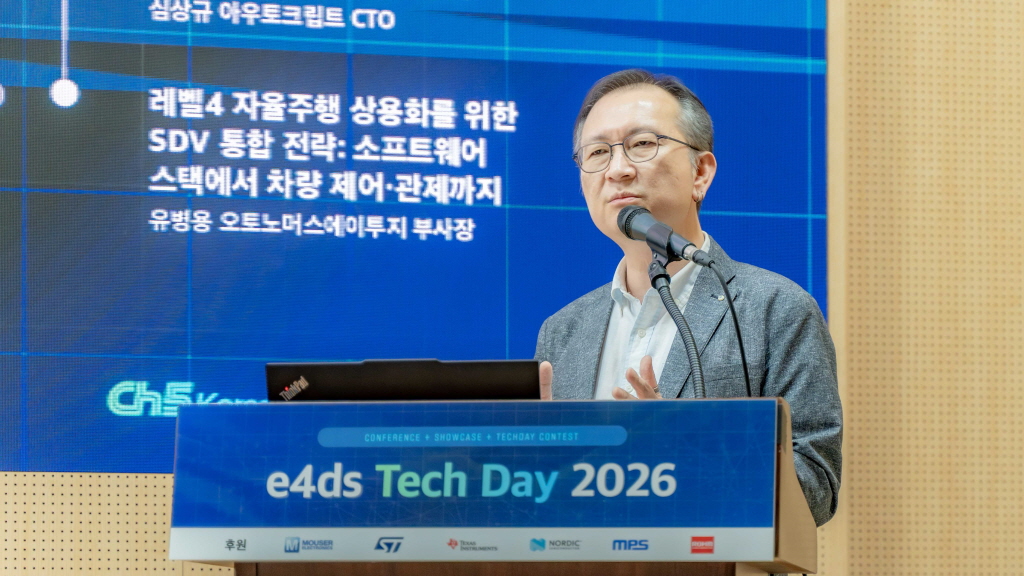
[e4ds Tech Day 2026 ⑨] Sim Sang-gyu, Autocrypt CTO: "In the Physical AI Era, Automotive Security Must Extend Beyond the Vehicle"
At e4ds Tech Day 2026, Sim Sang-gyu, CTO of Autocrypt, explained automotive cybersecurity strategies in the era of Physical AI and SDV (Software-Defined Vehicle). Automobiles are evolving as part of an ecosystem connected to AI, cloud, chargers, IoT, and robots, and he emphasized that the scope of security must expand beyond the vehicle interior to the entire connected environment. In particular, AI model tampering, adversarial attacks, OTA updates, and EV charger hacking were identified as major threats. He explained that response measures require zero trust, AI model integrity protection, intrusion detection, Security by Design and Default, and full lifecycle security management, and that proactive security system establishment beyond regulatory compliance is critical for securing future mobility competitiveness.
2026.10.12by 배종인 기자

Practical HIL Construction Strategy for Automotive and Off-Highway Controller Validation
As vehicle E/E architecture transitions to zonal structures and shifts to software-defined vehicles (SDV), the number of controllers (ECUs) requiring validation and software complexity are surging dramatically. Meanwhile, real vehicle testing cannot provide repeated verification under identical conditions and entails lead time and safety concerns. This white paper explains the principles of HIL (Hardware-in-the-Loop) validation and the structure of the NI platform composed of PXI, SLSC, and VeriStand, and through two actual implementation cases—Camera Record & Replay HIL for In-Cabin Monitoring Controller (ICMU) and Forklift Controller (VCU) HILS—describes how controller-level regression testing becomes possible. Additionally, it explicitly states application boundaries and limitations, such as lack of A2B support.
2026.10.12by 편집부











