



NVIDIA Announces Launch of Grace CPU Superchip in First Half of 2023
 Published2022.05.25 08:26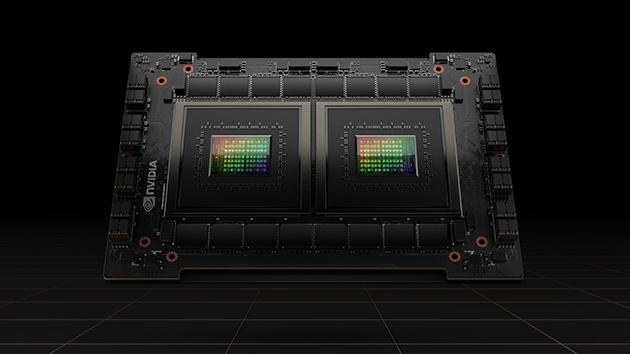
▲NVIDIA Grace CPU Superchip (Image: NVIDIA)
NVIDIA is making a splash at Computex 2022, the international ICT expo held in Taiwan. In its keynote address, NVIDIA described itself as the "engine of AI," focusing on new solutions for data centers, high-performance computing, AI, and cloud graphics.
NVIDIA announced on the 24th that it will launch advanced systems equipped with the Grace CPU Superchip and Grace Hopper Superchip. NVIDIA expects that these will help Taiwanese PC manufacturers handle a wide range of workloads, ranging from digital twins, AI, high-performance computing, cloud graphics, and gaming.
Various server models, including those from ASUS, Foxconn Industrial Internet, Gigabyte, QCT, Supermicro, and Wiwin, are scheduled to be released starting in the first half of 2023. The Grace-based system will reportedly offer a variety of options for high-performance data centers, featuring x86 and other ARM-based servers.
The upcoming servers are based on four new system designs, featuring the Grace CPU superchip and the Grace Hopper superchip, which NVIDIA announced at its two recent GTC conferences. The 2U form factor designs provide matching schematics and server baseboards to enable original design and equipment manufacturers to bring systems to market for NVIDIA CGX cloud gaming, NVIDIA OVX digital twins, and NVIDIA HGX AI and HPC platforms.
■The surge in modern workloads
NVIDIA Grace superchip technology can address a wide range of compute-intensive workloads across a variety of system architectures.
The Grace CPU superchip features two CPU chips coherently connected via NVIDIA NVLink®-C2C interconnect, up to 144 high-performance Arm V9 cores with scalable vector extensions and a 1 terabyte-per-second memory subsystem.
Nvidia claims this design delivers twice the performance, memory bandwidth, and energy efficiency of today's leading server processors to address demanding HPC, data analytics, digital twins, cloud gaming, and hyperscale computing applications.
The Grace Hopper superchip combines a Grace CPU with an NVIDIA Hopper GPU via NVLink-C2C in an integrated module designed to handle HPC and large-scale AI applications. Grace CPUs can transfer data to Hopper GPUs 15x faster than conventional CPUs using the NVLink-C2C interconnect.
Extensive Grace Server Portfolio
The Grace CPU Superchip and Grace Hopper Superchip server design portfolio includes unidirectional, bidirectional, and quad-directional configurations available on a single baseboard. These configurations are available in four workload-specific designs, which server manufacturers can customize based on market needs.
NVIDIA HGX Grace Hopper systems for AI training, inference, and HPC are available with the Grace Hopper superchip and NVIDIA BlueField®-3 DPU. NVIDIA HGX Grace systems for HPC and supercomputing feature a CPU-only design with the Grace CPU superchip and BlueField-3. NVIDIA CGX systems for cloud graphics and gaming include the Grace CPU superchip, BlueField-3, and NVIDIA A16 GPUs.
NVIDIA is expanding its Certified Systems program beyond x86 CPUs to include servers using the NVIDIA Grace CPU Superchip and Grace Hopper Superchip. The company added that the first OEM server certifications will follow the launch of partner systems.
“A new breed of data centers will emerge that can process and manipulate mountains of data to generate intelligence,” said Ian Buck, vice president of Hyperscale and HPC. “Our partners’ new systems, featuring our Grace superchip, will bring the power of accelerated computing to new markets and industries around the world.”

Comments
Related news
NVIDIA Handles RTX GPUs' Challenging Workflows
Nvidia (CEO Jensen Huang), a leader in AI computing technology, has unveiled its latest RTX GPUs that support demanding workflows and hybrid work.
2022.04.04by 배종인 기자

NVIDIA Unveils 'Drive Map', a Self-Driving Assistance Platform
Nvidia announced NVIDIA DRIVE Map, a multimodal mapping platform with stability and autonomy, during the GTC 2022 keynote.
2022.04.04by 성유창 기자
South Korea's fabless market accounts for just 1% of global semiconductor production, with the US dominating, and Taiwan gaining ground.
South Korea, despite securing the second-largest position in the global semiconductor market while striving to establish its standing as a semiconductor powerhouse amid the U.S.-led global semiconductor market dominated by Qualcomm and Nvidia, is facing concerns due to assessments that it remains highly vulnerable in the fabless IC sector.
2022.04.11by 명세환 기자

NVIDIA and Seoul National University Hospital Co-host 'HCLS Summit Korea 2022'
Nvidia and Seoul National University Hospital will jointly host the 'HCLS Summit Korea (Healthcare & Life Science Summit Korea) 2022' over two days on the 29th and 30th.
2022.04.20by 김예지 기자

Intel Unveils Next-Generation 'Core Ultra Series 3' and vPro Platform for Enterprise PCs
Intel has officially unveiled the "Intel Core Ultra Series 3" for next-generation enterprise PCs and the latest vPro platform, addressing a wide range of demands from enterprise notebooks to high-performance workstations.
2026.03.26by 배종인 기자











