



May Vehicle Exports ↓·Export Value ↑
 Published2022.06.03 11:52
Electric and High-Value Vehicle Exports Drive Value Increase
Due to tight automotive semiconductor supply, production disruptions resulted in lower export volumes. However, strong exports of high-value-added vehicles including SUVs and electric vehicles drove the increase in export value.
May overseas sales of five domestic complete vehicle manufacturers (Hyundai, Kia, Renault Korea, GM Korea, SsangYong) totaled 471,359 units, representing a 2.5% decrease compared to the same month last year.
Hyundai Motor's May overseas sales volume was 260,666 units, down 1.1% year-on-year. A Hyundai official stated, "While management uncertainty continues due to semiconductor component supply disruptions, we will minimize the impact of supply delays through flexible semiconductor allocation and vehicle production schedule adjustments," expressing difficulties amid the semiconductor shortage.
Kia also failed to reverse the sales decline trend. Kia's May overseas sales volume was 188,891 units, down 5% year-on-year. A Kia official stated, "We will expand market share and profitability through competitively strong new model launches and substantive sales strategies."
Renault Korea's May exports were recorded at 4,863 units. This represents a 14.9% decrease compared to the same month last year. The production of Renault Korea's flagship model QM6 encountered component supply difficulties, cited as a major reason. The QM6 sold 1,248 units in the global market including Korea, a 59.5% decrease year-on-year.
GM Korea's May export volume was 12,932 units, up 9.3% year-on-year. The Trailblazer and Buick Encore GX led the increase with 6,471 units exported. Carlos Mineurt, Vice President of GM Korea, stated, "We face difficulties due to prolonged automotive semiconductor chip supply issues and resulting production disruptions," adding "We will expand our portfolio alongside a strengthened SUV lineup."
SsangYong exported 4,007 units, down 6% year-on-year. Export volumes that had shown growth in March, surpassing 3,000 units, recorded over 4,000 units in May, with prospects that more exports could be achieved if component supply constraints are resolved. SsangYong stated, "We will ensure smooth parts supply and increase sales volumes."
While export volume decreased, export value increased.
According to the May 2022 export-import trends announced by the Ministry of Industry, automobile exports reached 4.153 billion dollars, up 18.9% year-on-year.
In addition to the base effect from May last year when production disruptions from automotive semiconductor supply shortages became full-blown, the increase over two consecutive months is attributed to expanded exports of high-value-added vehicles such as electric vehicles.
Efforts by Korean companies to shift export channels amid declining exports to CIS markets following the Ukraine crisis, along with strong performance of SUVs and eco-friendly vehicles, are cited as additional reasons.
As the Ukraine war prolonged, automobile sales in CIS regions recorded 120 million dollars, a 45.8% decrease year-on-year. New car sales rates have declined following Russian sanctions. In contrast, the Middle East saw increased demand for rental cars and new/used vehicles, recording 250 million dollars, up 86.2% year-on-year.
Comments
Related news
April Semiconductors Record Historic Monthly High…First $10 Billion Mark
ICT products including semiconductors and computers achieved record-high figures for April, leading the export growth momentum.
2022.05.02by 김예지 기자
April ICT Exports $19.94 Billion, Highest on Record for April
April 2022 ICT exports achieved the highest performance on a cumulative April basis, falling short of March's $23.26 billion but continuing double-digit growth for 13 consecutive months.
2022.05.18by 김예지 기자
May Semiconductor Imports and Exports Exceed $10 Billion for 13 Consecutive Months…Highest Record for May in History
ICT products including semiconductors and wireless communication devices set record highs for May, driving May export growth.
2022.06.03by 김예지 기자
GAIA-Festa 2026, Autonomous Driving, AI, and Aerospace Experts Gather…Discussing Global Cooperation in the 'Silicon Intelligence Era'
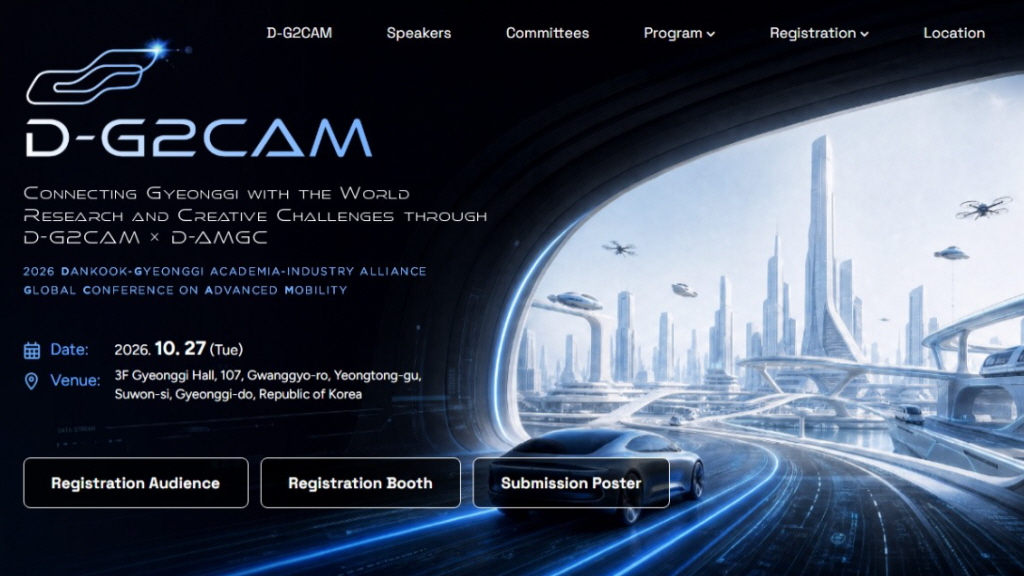
GAIA-Festa 2026, which will be held in Suwon on October 27, is an industry-academia-research exchange event that explores the present and future of future mobility and AI technology through the global conference D-G2CAM 2026 and the international contest D-AMGC 2026. Domestic and international experts will share the latest research in autonomous driving, 5G/6G mobility, space technology, and data protection fields, while university students will showcase robots and physical AI prototypes that they have independently developed. Additionally, through poster presentations, corporate exhibitions, international cooperation meetings, and signing ceremonies, a platform will be established to connect the research capabilities and industrial needs of the Gyeonggi region with a global cooperation network.
2026.10.13by 배종인 기자
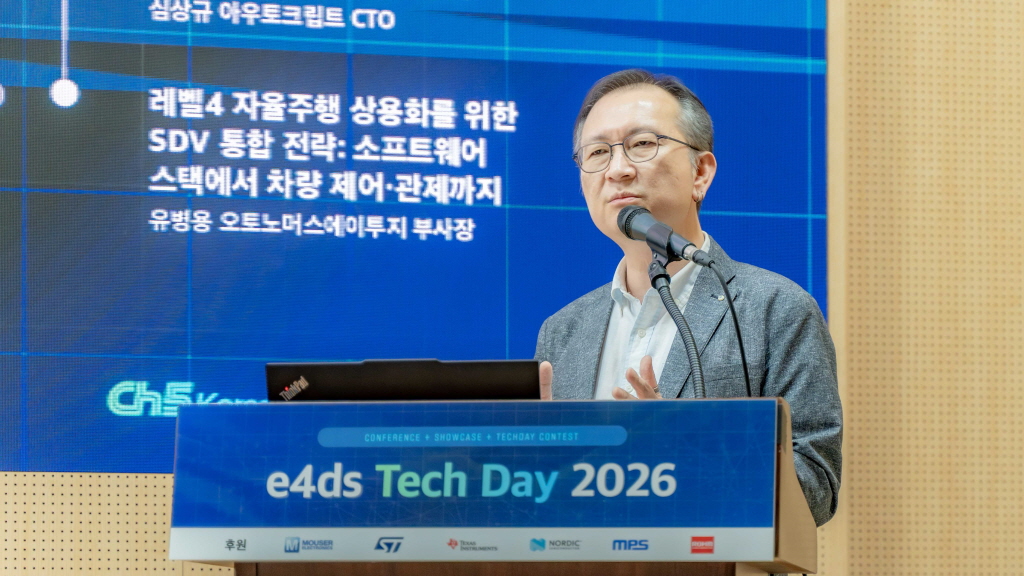
[e4ds Tech Day 2026 ⑨] Sim Sang-gyu, Autocrypt CTO: "In the Physical AI Era, Automotive Security Must Extend Beyond the Vehicle"
At e4ds Tech Day 2026, Sim Sang-gyu, CTO of Autocrypt, explained automotive cybersecurity strategies in the era of Physical AI and SDV (Software-Defined Vehicle). Automobiles are evolving as part of an ecosystem connected to AI, cloud, chargers, IoT, and robots, and he emphasized that the scope of security must expand beyond the vehicle interior to the entire connected environment. In particular, AI model tampering, adversarial attacks, OTA updates, and EV charger hacking were identified as major threats. He explained that response measures require zero trust, AI model integrity protection, intrusion detection, Security by Design and Default, and full lifecycle security management, and that proactive security system establishment beyond regulatory compliance is critical for securing future mobility competitiveness.
2026.10.12by 배종인 기자











