



Samsung's 200-megapixel ISOCELL HP3 resolves camera distortion and improves autofocus.
 Published2022.06.24 15:17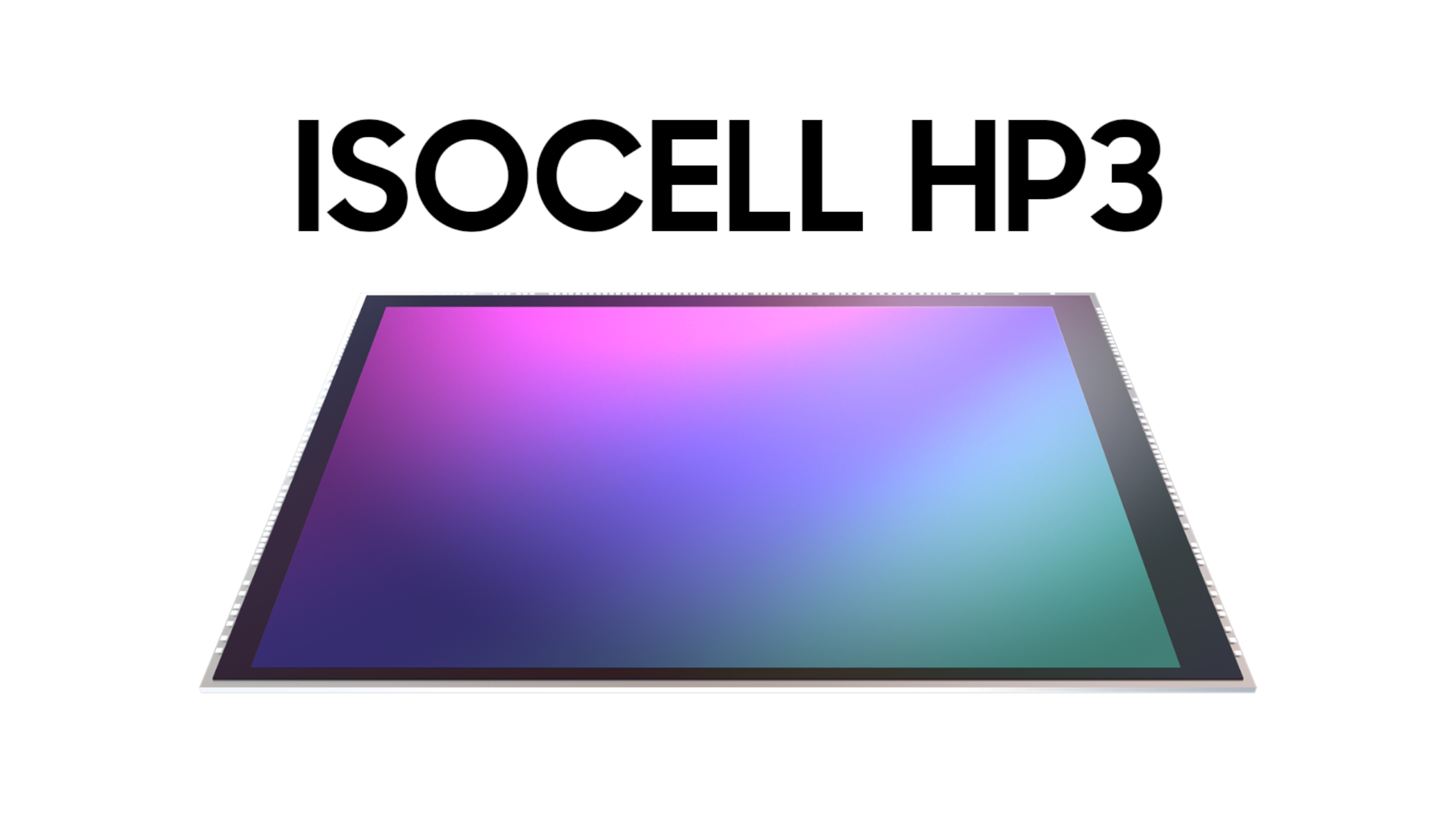
▲Samsung Electronics' 'ISOCELL HP3' image sensor (Image - Samsung Electronics)
Samsung vs. Sony: The Gap in Image Sensors Narrows… Demand for High-Media Pixels Rise
Image sensor development is increasingly focused on performance advancements and miniaturization. With 200-megapixel image sensors, specs are improving, while module size is shrinking by approximately 20%, leading to improvements in the so-called "catuktu" (a term referring to the prominent protrusion of a smartphone camera).
Samsung ISOCELL HP3, 200 million pixels, improved AF, and smart ISO
Samsung Electronics unveiled the 'ISOCELL HP3' image sensor on the 23rd, which is equipped with 200 million 0.56㎛ (micrometer) pixels, the industry's smallest size.
Last year, Samsung unveiled the 'ISOCELL HP1' in the ultra-high-pixel image sensor market, ushering in the era of 200 million pixel image sensors. In addition to the 200 million pixels, the product specifications are expected to be upgraded, and the so-called 'catuktu' design of the camera installed in the smartphone is also expected to be improved.
Samsung Electronics' 'ISOCELL HP3', with a 1/1.4-inch specification, is designed with a pixel size of 0.56㎛, which is 12% smaller than existing products, allowing the size of camera modules to be installed in mobile devices to be reduced by up to 20%.
Furthermore, the AF performance, which has been criticized as a drawback, is expected to be significantly improved. The previous model, the 'HP1', applied double super PD to support phase-detection AF only for some pixels.
In contrast, the newly released HP3 features "Super QPD (Quad Phase Detection)" phase-detection autofocus technology, utilizing all 200 million pixels. This technology utilizes phase differences across the image sensor, enabling faster and more accurate focusing. Furthermore, by utilizing all pixels in the image sensor for focus, it is expected to deliver sharp image quality across the entire image area, providing consumers with an enhanced device experience.
It also supports the 'Staggered HDR (Staggered High Dynamic Range)' function, which synthesizes three frames with different exposure times to provide a clean and vivid image in situations where there is a large difference in brightness between bright and dark areas.
The 'Smart ISO Pro' technology installed in the 'HP3' can synthesize a low-sensitivity (low ISO) image with a mid-sensitivity (medium ISO) or high-sensitivity (high ISO) image to enable more detailed expression in dark scenes. Unlike the previous method of synthesizing low-sensitivity and high-sensitivity images, it appears that image clarity will be improved by utilizing medium-sensitivity images as well.
The camera also features a proprietary technology called "Tetra2Pixel," which combines four or sixteen adjacent pixels into one for capture, depending on lighting conditions. In low-light environments, "Tetra2Pixel" combines adjacent pixels to expand the light-receiving area by four or sixteen times, providing clearer images.
“Samsung Electronics has been leading the market trend with its ultra-small pixel technology, such as opening the era of 100-megapixel image sensors for the first time in the industry in 2019 and launching the first 200-megapixel image sensor in 2021,” said Lim Jun-seo, Executive Vice President of System LSI Business at Samsung Electronics. “We will continue to innovate user experience with this new product, ‘HP3,’ which has the industry’s smallest pixel size.”
Samsung is on the rise, Sony is being chased

▲Vice Chairman Lee Jae-yong discussing cooperation plans with ASML CEO Peter Wennink on the 14th (local time) (Photo: Samsung Electronics)
The image sensor market is worth approximately $20.7 billion (approximately 27 trillion won). According to market research firm Yole Development, mobile sales account for over 70% of the market, and the market is projected to grow to $28.4 billion (approximately 37 trillion won) by 2026.
Meanwhile, Samsung Electronics' image sensor sales are increasing. According to market research firm TSR, Sony, the global leader in image sensor sales, is projected to achieve $8.7987 billion in sales in 2021, holding a 43% market share. Samsung Electronics and OmniVision followed in second and third place, with 19.7% and 14.1%, respectively.
While the market share gap between Samsung and Sony remains significant in the image sensor market, the gap appears to be narrowing, narrowing by 1.3 percentage points year-on-year. Samsung holds the lead in many areas, particularly in technological prowess.
Samsung Electronics, following its industry-first 200 million-pixel sensor, has also succeeded in miniaturizing pixel size to 0.56 micrometers (㎛) in its recently released "HP3." Sony remains stuck with the 0.8-micrometer pixel size announced in 2019, with the 64-megapixel maximum specification of its IMX686 sensor also announced in the same year.
An industry insider said, "Although they are competing in the same image sensor market, Samsung has a technological advantage and is moving toward dominating the high-resolution market." They added, "There's also talk recently that Sony is developing a 100-megapixel image sensor." Rumors are circulating in some parts of the industry that Sony is developing a 100-megapixel image sensor for smartphones in its IMX8 series.
As the high-resolution image sensor market is expected to show high growth in the future, it seems likely that Sony will enter the competition in the high-resolution sensor market. According to TSR, image sensors with 50 million pixels or more accounted for only about 8% of the entire image sensor market in 2020, but it is expected to increase to about 58% by 2025, and in particular, those with 100 million pixels or more are expected to increase their market share to about 11%.
The industry believes that as the spread of large displays increases and the demand for sharper image quality increases, the demand for high-resolution image sensors is bound to increase.
Meanwhile, Samsung Electronics Vice Chairman Lee Jae-yong, upon returning from a business trip to Europe, emphasized the importance of technological development, saying, “Technology first, technology second, technology third.”

Comments
Related news

Lee Jae-yong and Pat Gelsinger, Two Global Semiconductor Giants Join Hands
U.S. President Joe Biden visited Samsung Electronics' Pyeongtaek campus as his first schedule during his state visit to Korea. Subsequently, Pat Gelsinger, Intel CEO, also visited Samsung Electronics, demonstrating that Samsung Electronics' influence in the global semiconductor industry is growing.
2022.05.31by 명세환 기자
Samsung Electronics Offers Preferential Hiring to Scavenge Software Talent
Samsung Electronics is hosting a programming competition with prize money of 100 million won and employment preferential treatment benefits, launching an initiative to discover outstanding software talent.
2022.06.14by 배종인 기자
.jpg)
Lee Jae-yong personally stepped forward to secure EUV.
Following Samsung Electronics Vice Chairman Lee Jae-yong's accompanying U.S. President Joe Biden's recent visit to Samsung Electronics' Pyeongtaek campus, Vice Chairman Lee has been actively engaging with global leaders, including meeting with Intel CEO Pat Gelsinger who visited Seoul to discuss cooperation plans.
2022.06.16by 명세환 기자

Intel Unveils Next-Generation 'Core Ultra Series 3' and vPro Platform for Enterprise PCs
Intel has officially unveiled the "Intel Core Ultra Series 3" for next-generation enterprise PCs and the latest vPro platform, addressing a wide range of demands from enterprise notebooks to high-performance workstations.
2026.03.26by 배종인 기자

ROHM Launches ESD Protection Diode Compatible with High-Speed Interfaces of 10Gbps or Higher
Semiconductor specialist ROHM has developed the 'RESDxVx series' of ESD (electrostatic discharge) protection diodes capable of responding to next-generation high-speed data communication environments exceeding 10Gbps, simultaneously enhancing both signal quality maintenance required in high-speed interfaces and IC protection performance.
2026.03.26by 배종인 기자











