


Dell Leads the Way to Protect the Great Barrier Reef with Deep Learning Technology
 Published2022.08.31 14:51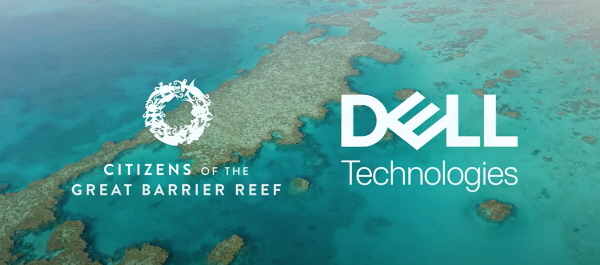
Reduced the time required to analyze a single image from 7-8 minutes to less than 1 minute.
Dell Technologies is taking a proactive approach to protecting Australia's Great Barrier Reef by analyzing coral reef images in real time using new deep learning technology and edge solutions.
Dell announced a new deep learning model on the 31st in collaboration with Citizens of the Great Barrier Reef in Australia as part of its ESG vision.
This model will be applied to the Great Reef Census (GRC), a citizen-led environmental conservation research survey, to enable citizen scientists around the world to quickly and accurately analyze coral bleaching on the Great Barrier Reef, a World Heritage Site.
Since late 2020, Dell has been deploying edge solutions on ships around the Great Barrier Reef to capture and transmit real-time images of the coral ecosystem. Analysis of these captured images has been performed manually by volunteers, but with the introduction of the latest deep learning model, analysis can now be done automatically.
The time it takes to analyze a single photo is expected to be shortened from the existing 7-8 minutes to less than 1 minute. In the first round of research, it took 1,516 hours to analyze 13,000 images, but the latest deep learning model is expected to quickly analyze the same amount of data in less than 200 hours, improving research results.
Based on this, citizen scientists plan to respond immediately in situations that require rapid recovery or during times of special attention, such as the spawning season.
The deep learning model using the semantic segmentation method used in this study is trained based on Dell's high-performance computing (HPC) graphics processing unit (GPU) acceleration system, and the data is stored on the 'Dell PowerScale' system, a data lake solution for unstructured data.
Additionally, it supports AI learning clusters and AI inference engines through ground computing platforms such as Dell PowerEdge servers.
The project embodies Dell's ESG vision to proactively address climate change and enhance sustainability by working with customers, partners, suppliers, and local communities.
The GRC project is a partnership spanning the Asia Pacific and Japan (APJ) region, bringing together the expertise and technology of Citizens' Coalition for the Great Barrier Reef, Dell Technologies, The University of Queensland (UQ), James Cook University (JCU), Sahaj Software Solutions, and citizen scientists.
Andy Ridley, founder of Citizens' Coalition for the Great Barrier Reef, said, “Dell’s edge solutions and deep learning models are easy to replicate and scale.“It can be applied to coral reef communities around the world,” he said, adding, “The first region outside of Australia where it will be applied is Indonesia.”
Kim Kyung-jin, President and CEO of Dell Technologies Korea, said, "Dell Technologies is expanding technological collaborations with various organizations working to mitigate climate change. Dell's deep learning technology has significantly advanced coral reef research by enabling researchers to quickly access high-quality data. We will continue to expand our vision for sustainability and environmental protection, working with local communities."
Meanwhile, Dell will use its new deep learning model to support the analysis of 42,000 images collected from 314 coral reefs within the 2,300-kilometer coral reef marine park by the end of the year.

Comments
Related news
.jpg)
Dell Hosts DTW 2022... Unveils New Services for Multi-Cloud Environments
Gartner forecasted that worldwide information security and risk management spending would reach $172 billion in 2022. As information security and management spending continues to increase year-over-year, a venue has been established to present related solutions in response to the growing importance of cyber protection.
2022.05.03by 명세환 기자
Dell Launches Apex Storage Service
Dell Technologies has launched 'Apex Data Storage Services' to enable enterprises to conduct consistent and sophisticated operations with their data, making a full-scale entry into the enterprise data storage market.
2022.08.24by 배종인 기자
.jpg)
Dell, “Bold Innovation to Solve Human Problems”
Dell Technologies shared its future sustainability vision, strategy, and customer innovation cases, calling for bold innovation to jointly address common challenges facing humanity.
2022.08.24by 배종인 기자
Camera for Both Humans and Machines: ST BrightSense 5MP Dual Shutter Image Sensor
Video consumed by humans and imagery analyzed by machines impose different requirements on the sensor in terms of shutter method and wavelength band. Until now, sensors had to be separated or supplemented with companion chips and high-performance processors, and this cost and complexity became a bottleneck in vision system design. The ST BrightSense next-generation 5MP image sensor (VD5943, VD1943, VB5943, VB1943) with 2.25 µm pixels supports both global and rolling shutters, and through on-chip staggered HDR (up to 100 dB), on-chip RGB-IR separation and 5MP NIR smart upscaling, and frame-by-frame context switching, absorbs both requirements internally at the sensor level. This white paper describes the rationale, choices, trade-offs, and results of each design decision based on presentation slides and technical Q&A, and specifies application boundaries. The product is scheduled for mass production in February 2026, and evaluation and sampling are currently available.
2026.10.13by 편집부

AI-based Universal Robots Automation Solution
In manufacturing environments where declining labor populations overlap with frequent production item changes, existing programming-based robot automation requires reconfiguration from weeks to several months each time product models change. This white paper takes this flexibility gap as its starting point and synthesizes, based on webinar presentation materials and technical Q&A, what collaborative robots gain and forfeit compared to industrial robots, why process automation is transitioning from rule-based to learning-based (4th generation) approaches, and how Universal Robots' hardware, software, and partner ecosystem implement this. Additionally, it clarifies the application boundaries and limitations, including that AI Accelerator is still at the development kit stage.
2026.10.13by 편집부











