



[Technical Contribution] Rohini Kasturi, SolarWinds - Observability Driving Business Success
 Published2022.09.07 08:21
Downtime ↓ · Problem Resolution Speed ↑ Securing Competitive Advantage
Integration of AI and Machine Learning Models, System Response Automation

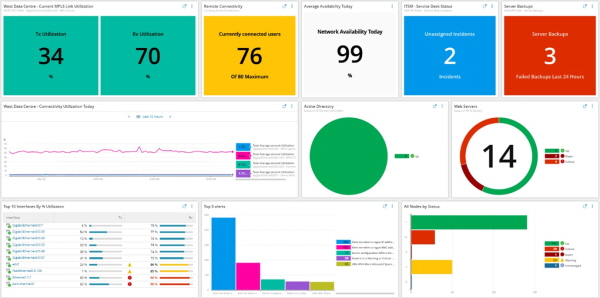
▲ SolarWinds Hybrid Cloud Observability
※ Author Bio
Rohini Kasturi has served as Senior Vice President and CPO of SolarWinds since March 2021, leading product-related divisions including engineering, product management, and product marketing. CPO Rohini holds more than 20 patents in the fields of SaaS, cloud, data, analytics, security, and software-defined technology (Software-defined anything; SDx).

Comments
Related news
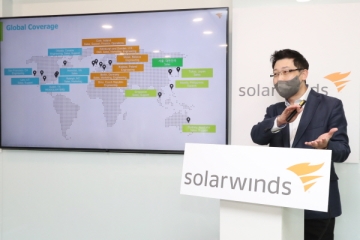
SolarWinds, “We will focus on domestic manufacturing, finance, and public sectors where cloud adoption is increasing”
Solarwinds held its first media briefing on the 22nd under the theme of "2022 Korea Business Strategy Introduction," announcing major products and its business strategy in Korea for this year, following the establishment of its Korean subsidiary in the fall of last year.
2022.03.22by 성유창 기자
.jpg)
SolarWinds Launches Hybrid Cloud Observability
SolarWinds provides comprehensive and integrated visibility into distributed and hybrid network environments, enabling organizations of all sizes to accelerate their digital transformation.
2022.04.21by 성유창 기자
.jpg)
[Technical Contribution] Thomas LaRocque: SolarWinds' Full-Stack Observability Solution: Solving IT Complexity
Thomas LaRock of SolarWinds discusses approaches to addressing the complexity and security challenges that arise from the use of numerous tools for managing networks and infrastructure.
2022.07.27by 명세환 기자
.png)
Databricks Unveils Open AI Security Monitoring 'Lakewatch'
Databricks entered the security market on March 24 by unveiling LakeWatch, an open-source agentic SIEM. The core functionality of this product is to integrate and analyze security, IT, and business data in a single environment to support AI-based threat detection and investigation. The company explained that it reduces the limitations of existing security operations centers, which have had to forgo some data due to high cost structures, and enables large-scale data analysis and automation based on open formats and ecosystems. LakeWatch is currently offered as a private preview, with Adobe and Dropbox mentioned as early customers. Databricks also announced an expanded partnership with Anthropic as well as the acquisition of Antimatter and SiftD.ai.
2026.03.26by 배종인 기자
Kaspersky Unveils Revamped 'NEXT' Combining SOC Integrated Management and AI Analytics
As enterprises increase demand for integrated management and automation in the construction and operation of Security Operations Centers (SOC), Kaspersky has disclosed updates to its B2B security product suite 'Kaspersky Next'. This update expands EPP, EDR, XDR, and SIEM integration through a single console based on OSMP, incorporates AI capabilities such as DLL hijacking detection and suspicious account takeover behavior identification, and includes integration with generative AI assistant tool KIRA. The company stated that in large-scale deployment environments, EDR Expert can reduce resource requirements by up to 30%, and XDR Expert by up to 60%.
2026.03.25by 배종인 기자











