


Samsung invests 7 trillion won in its new environmental management strategy, emphasizing energy efficiency, gas reduction, and resource recycling.
 Published2022.09.15 11:00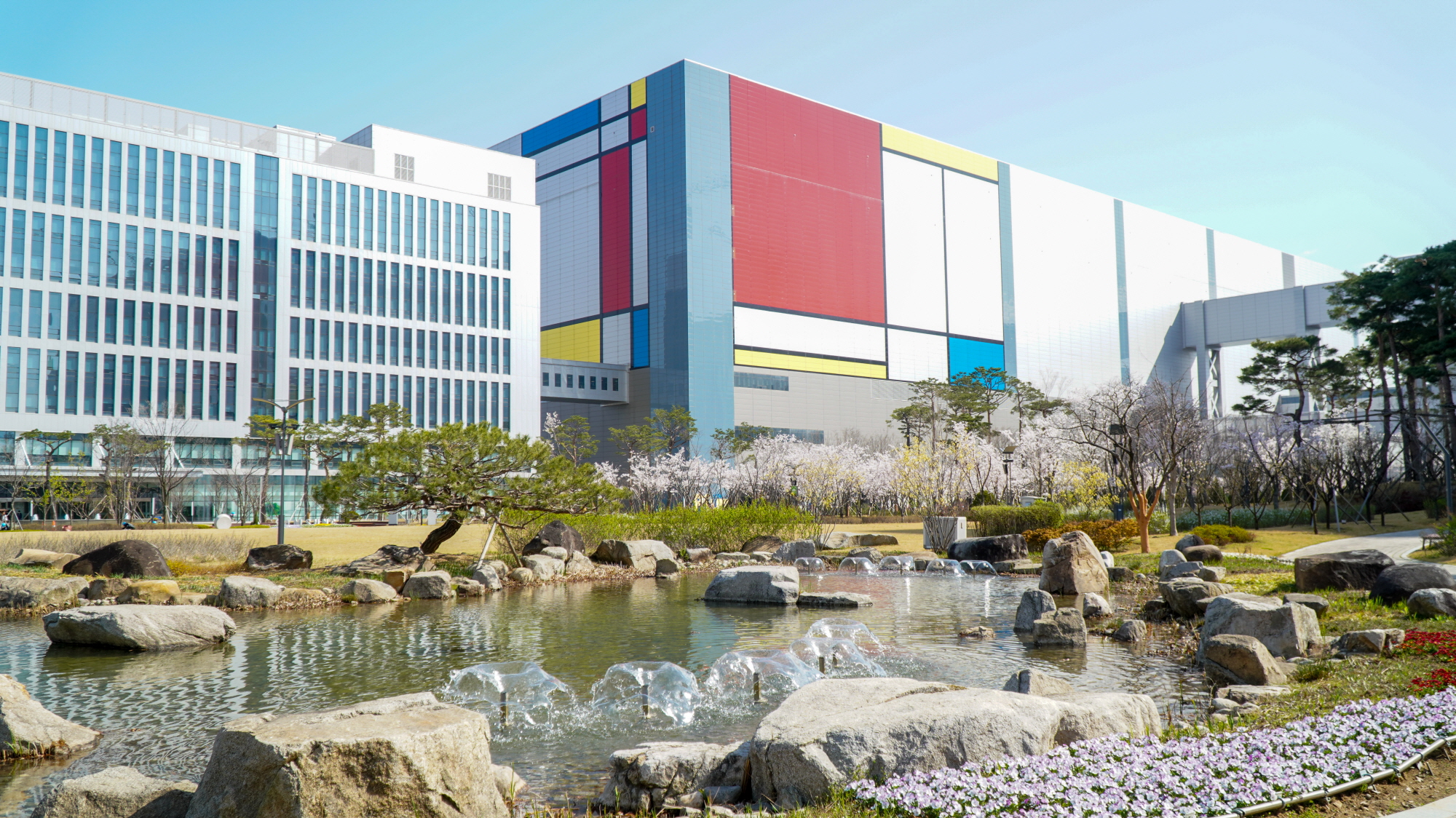
▲Inside Samsung Electronics' Pyeongtaek plant (Photo: Samsung Electronics)
Accelerating the development of low-power and energy-saving products
Samsung Electronics announced a new environmental management strategy on the 15th. With the goal of achieving carbon neutrality by 2050, the company announced plans to invest over 7 trillion won by 2030 in areas such as the development of ultra-low-power semiconductors and products and new technologies to improve process gas processing efficiency. This announcement is drawing attention to future changes.
Samsung Electronics announced its "New Environmental Management Strategy" and announced a shift in its management paradigm toward eco-friendly practices. Key initiatives include reducing process gas emissions, collecting and recycling waste electronic products, conserving water resources, and minimizing pollutants. The company plans to invest a total of over KRW 7 trillion in these environmental management initiatives by 2030. This figure excludes the costs required to achieve its renewable energy goals.
■ Notice of Expansion of Process Gas Reduction Facilities
Samsung Electronics plans to focus its investments on carbon emission reduction facilities that utilize innovative technologies to reduce direct carbon emissions (Scope 1) generated at its business sites.
Currently, the carbon emissions directly emitted by Samsung Electronics are mainly due to process gases generated during the semiconductor manufacturing process and fuel use such as LNG. Samsung Electronics plans to develop new technologies that will significantly improve process gas processing efficiency and expand processing facilities across its lines by 2030.
Etching gases used in semiconductor manufacturing often contain recalcitrant gases that contribute to global warming. Perfluorinated compounds (PFCs) are essential for cleaning and etching processes in semiconductor manufacturing. This announcement is expected to lead to the development of alternative gases and the expansion of reduction equipment, with the subsequent supply of gas scrubbers to treat hazardous gases generated during semiconductor and display production processes.
Some predicted that Unisem, which manufactures and supplies gas scrubbers and chillers, would benefit from these improvements. Unisem, which is considered to have a high market share of related equipment within Samsung, is reportedly supplying scrubbers and chillers to the Pyeongtaek Plant 3. In addition, there have been moves by CSK to hire personnel related to scrubber equipment for Samsung and SK Hynix, and competitor Global Standard Technology (GST) has also been detected to be establishing a new corporation to strengthen its response to Samsung's new foundry fab scheduled to break ground in Taylor, USA.
Meanwhile, as Samsung Electronics prepares to reduce the use of LNG boilers by expanding waste heat utilization and considering the introduction of electric heat sources, changes in related LNG demand are also expected.
■ Accelerating the development of ultra-low-power semiconductors and power-saving products.
Samsung Electronics announced plans to significantly reduce the power consumption of memory used in data centers and mobile devices by 2025 by securing ultra-low power technology in semiconductors.
The miniaturization of semiconductor processes and the advancement of low-power design technologies can not only contribute to reducing greenhouse gases by reducing the power consumption of various IT products and data centers, but also enable products with the same performance to be produced using fewer raw materials.
In terms of products, the company plans to apply low-power technology to representative models of seven major electronic products, including smartphones, TVs, refrigerators, washing machines, air conditioners, PCs, and monitors, to improve power consumption by an average of 30% in 2030 compared to models with the same performance in 2019.
Samsung Electronics plans to achieve this goal by developing energy-saving technologies that utilize high-efficiency components (compressors, heat exchangers, semiconductors) and improve product operating algorithms, such as introducing AI-powered energy-saving modes.
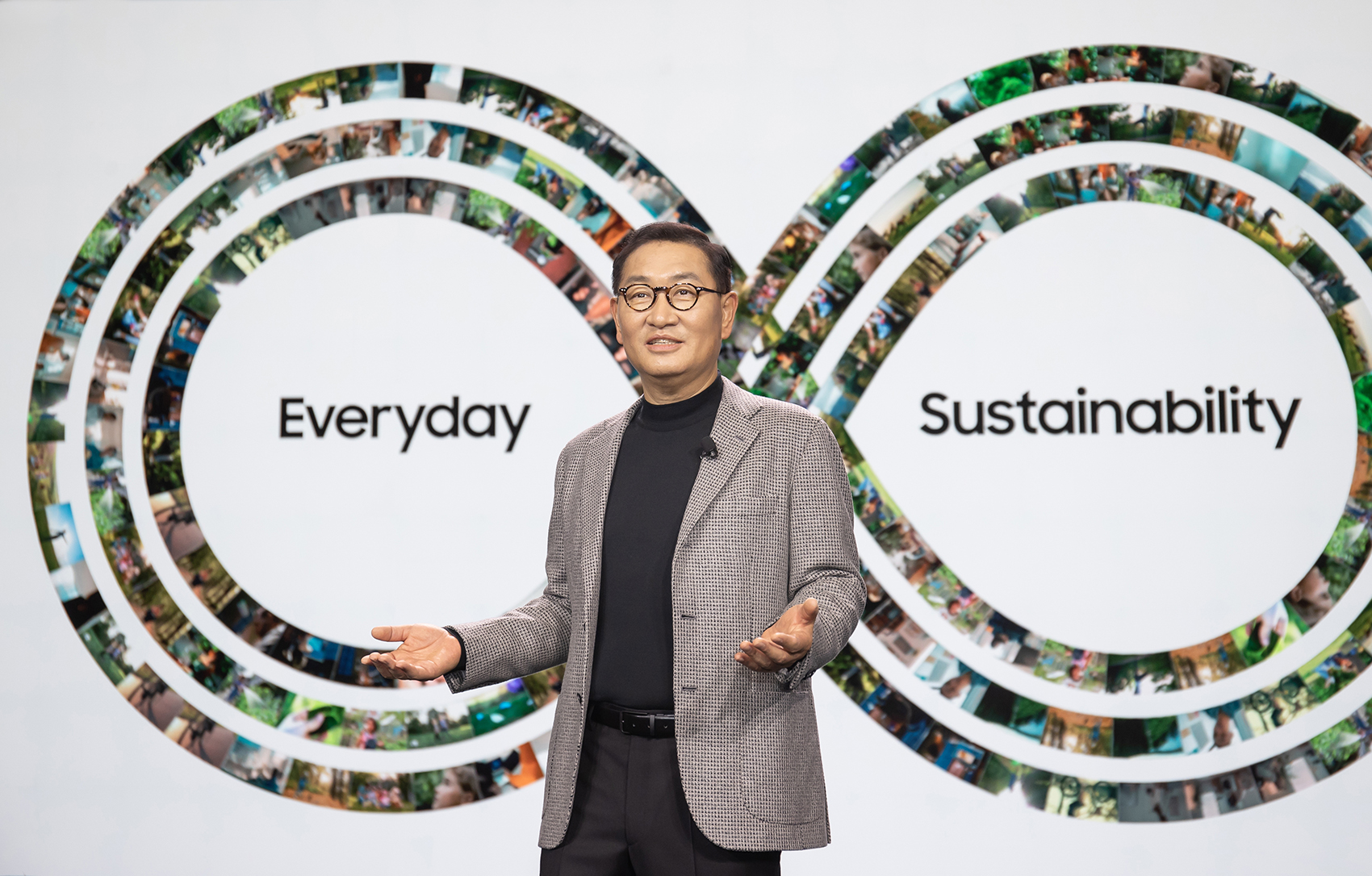
▲Head of Samsung Electronics DX Division in January Vice Chairman Han Jong-hee delivers a keynote address at CES 2022 in Las Vegas, USA, titled "A Journey for the Future." (Photo: Samsung Electronics)
■ Renewable energy expansion trend
Samsung Electronics' electricity consumption reached 25.8 TWh last year, the highest among global IT manufacturers. This amount is 1.76 times the total household electricity consumption in Seoul. To reduce the indirect carbon emissions (Scope 2) generated by this electricity use, Samsung Electronics joined the global initiative RE100 and is preparing to transition its electricity use to renewable energy by 2050.
△Southwest Asia and Vietnam plan to achieve their renewable energy targets by 2022, △Central and South America by 2025, and △Southeast Asia, the CIS, and Africa by 2027. Meanwhile, the United States, China, and Europe, which have already achieved their renewable energy targets, have decided to expand renewable energy supply agreements (PPAs) signed directly with renewable energy power producers. The DX sector is pursuing renewable energy targets by 2027 both domestically and internationally.
Despite these efforts, Korea's renewable energy supply remains woefully inadequate compared to other countries. According to Korea Electric Power Corporation (KEPCO), the share of renewable energy generation in Korea stood at 7.5% as of 2021, significantly lower than the OECD average of 30%. The RE100 2020 annual report also included Korea among the ten countries struggling to transition to renewable energy.
Despite the difficulties in procuring renewable energy, Samsung is exploring strategies to expand its use of renewable energy in response to the carbon reduction trend. Samsung Electronics announced that it plans to strengthen cooperation with various stakeholders, including those in the same industry and civil society, rather than remaining limited to its role as a corporate energy purchaser.
■ Resource recycling must be considered
Samsung Electronics is maximizing the use of water resources to strengthen resource recycling at its operations. In particular, its domestic semiconductor plants are pursuing a "zero increase in water withdrawals."
Due to the expansion of semiconductor production lines, the daily water demand at semiconductor plants will more than double from the current level by 2030. However, Samsung Electronics has decided to maximize water reuse and freeze this at the 2021 level.
The DX division will also expand water reuse by upgrading water treatment facilities, and by 2030, it plans to return 100% of the water it uses to society through global water resource development projects, water quality improvement, and river restoration projects.
The DS division aims to minimize air and water pollutants emitted. By applying new technologies to remove air and water pollutants emitted during semiconductor production, the company aims to process and discharge them in their natural state, with minimal environmental impact, starting in 2040.
Samsung Electronics plans to develop and apply new treatment technologies to treat effluent water to the level of upstream river water and discharge air to the level of national target clean air.
He also announced that he would focus his capabilities on developing carbon capture and utilization technology to address carbon emissions and reduction technology to address fine dust, a global environmental concern. The company plans to apply carbon capture technology to semiconductor manufacturing facilities after 2030 and then expand its application to the entire company and its partners.
Meanwhile, Samsung Electronics is also investing to discover promising eco-friendly technologies and foster and support startups in these fields. By working with the technology innovation community to support the commercialization and dissemination of innovative technologies, the company plans to collaborate in addressing global environmental challenges. C-Lab, an internal and external venture incubation program, also actively identifies and supports eco-friendly projects.
Samsung Electronics Vice Chairman and CEO Jong-hee Han said, “Overcoming the climate crisis and building a circular economy are the greatest challenges of our time that require the participation of businesses, governments, and citizens,” and emphasized, “Samsung Electronics will serve as a catalyst to accelerate the establishment of an eco-friendly ecosystem across the entire value chain through innovative technologies and products.”

Comments
Related news
Samsung Electronics Develops Smart Device Materials from Waste Fishing Nets
Samsung Electronics will apply eco-friendly materials made from recycled marine waste to Galaxy devices, starting with new products unveiled at Samsung Galaxy Unpacked 2022.
2022.02.07by 성유창 기자
Samsung Electronics Supports SMEs Establish Win-Win Smart Factories
Samsung Electronics announced that on the 2nd, it held the '2022 Win-Win Smart Factory Kick-Off Event' by inviting approximately 300 representatives and related personnel from small and medium-sized enterprises selected for this year's smart factory support project to Samsung Electronics' Gwangju Campus, in collaboration with the Ministry of SMEs and Startups and the Korea Federation of Small and Medium Business.
2022.09.02by 김예지 기자

Samsung Electronics to host Samsung Developer Conference on October 12th
Samsung Electronics executives in charge of each division held a briefing to present on platforms, services, and future technologies.
2022.09.07by 배종인 기자
Materials Research Institute Develops Ultra-thin Coating Water Electrolysis Catalyst Technology
The Korea Institute of Materials Science has simultaneously resolved the performance and durability trade-off problem in water electrolysis catalysts by applying ultra-thin surface coating technology. Achieving 1.9 times higher performance compared to conventional catalysts while demonstrating 1,000-hour long-term stability, the institute has developed technology scalable to industrial water electrolysis systems through a simple process.
2026.10.07by 배종인 기자
Gigaphoton Develops Neon Gas Recycling System for ArF Excimer Lasers...Achieves 50% Recycling Rate
Gigaphoton announced that it has developed a gas recycling system for ArF excimer lasers and achieved a 50% neon gas recycling rate.
2026.10.02by 배종인 기자











