


Intel Announces Next-Generation Thunderbolt Products
 Published2022.10.21 15:06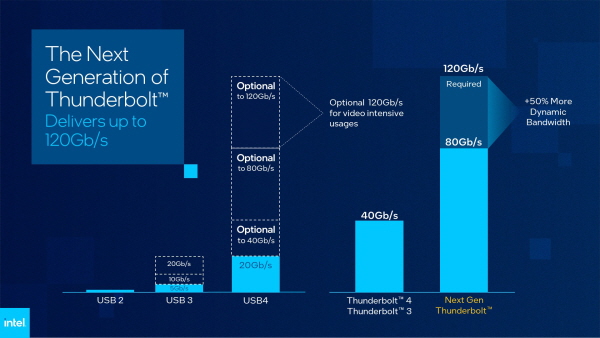
Intel is showcasing early prototypes of its next-generation Thunderbolt 4, compliant with the USB4 v2 specification, delivering the ultimate display experience for content creators and gamers.
Intel announced on the 20th that it has demonstrated an early prototype of the next-generation Thunderbolt™.
This announcement is in line with the USB4 v2 specification released by the USB Promoter Group.
Intel's new next-generation Thunderbolt delivers bidirectional bandwidth of 80 gigabits per second (Gbps) and supports up to 120 Gbps for the ultimate display experience, meeting the growing demands of content creators and gamers.
It also provides compatibility with previous Thunderbolt and USB versions.
“Intel has consistently pioneered and led the way in wired connectivity solutions, and Thunderbolt has become a mainstream port for laptops, having been integrated into three generations of Intel mobile CPUs,” said Jason Ziller, general manager of the Client Connectivity Division at Intel. “We are excited to once again lead the industry with the next-generation of Thunderbolt technology based on the newly announced USB4 v2 specification from the USB Promoter Group.”
The Thunderbolt prototype unveiled this time is the next generation Thunderbolt.It marks a major milestone in the Bolt's journey to commercialization.
Content creators and gamers are demanding more bandwidth to power higher-resolution displays, lower latency screens, and transfer or backup large video and data files.
The next-generation Thunderbolt products will deliver three times the performance of existing Thunderbolt™4 products, enabling more efficient and immersive content creation and gaming experiences.
In addition to supporting the latest version of USB4, the next-generation Thunderbolt will provide twice the bandwidth of Thunderbolt 4 at 80 Gbps, and up to three times the bandwidth for video-intensive applications at 120 Gbps.
It also supports the newly released DisplayPort 2.1 for the best display experience, doubling PCI Express data throughput for improved storage and external graphics speeds.
New signaling technology allows it to work with existing passive cables up to 1m, is backward compatible with Thunderbolt, USB, and DisplayPort, and supports Intel's activation and certification program.
Driven by a commitment to making Thunderbolt accessible to all users, Intel donated the Thunderbolt protocol specification to the USB Promoter Group in 2019, which served as the cornerstone for the subsequent development of USB4. As an industry leader, Intel has been working to elevate USB4 performance to the next level.
Intel has long been an industry leader in I/O innovation. Intel works closely with PC, accessory, and cable partners to deliver complete, state-of-the-art wired connectivity solutions through dedicated activation and testing programs.
All Thunderbolt products undergo rigorous certification testing, and upon passing, you can use the Thunderbolt name and logo royalty-free on your devices or marketing.
To achieve this, the Thunderbolt logo is designed to be a simple and easily recognizable symbol that people recognize it as the best wired connection solution for PCs and accessories.
The official brand name, features, and functionality of the next-generation Thunderbolt will be revealed in 2023.

Comments
Related news

Samsung Electronics Unveils QLED Curved Monitor with Thunderbolt 3 Support at CES 2018
Samsung Electronics will unveil the 'CJ791,' a QLED curved monitor supporting Intel's next-generation data transmission standard 'Thunderbolt 3,' at 'CES 2018,' the world's largest electronics trade show held in Las Vegas, United States. The CJ791 is a wide-view display offering a 34-inch size with a 21:9 aspect ratio and supports ultra-wide QHD (UWQHD, 3440x1440) resolution, which is 2.5 times higher than HD, making it an optimized monitor for multitasking environments and high-definition work such as graphics and gaming. Additionally, this product features quantum dot technology applied to achieve high color gamut reproduction at approximately sRGB 125%, enabling the expression of subtle differences in any scene, and is characterized by the visual comfort and immersion provided by its 1500R curvature.
2018.01.03by 김지혜 기자
USB 4 will be released this year.
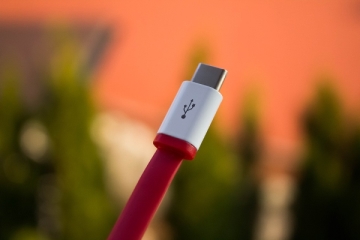
The USB Promoter Group announced that it will soon release the USB 4 specification, which updates the next-generation USB architecture while complementing the existing USB 3.2 and USB 2.0 architectures. The USB 4 architecture is being developed based on the Thunderbolt protocol specification provided by Intel. This specification doubles the USB bandwidth and simultaneously supports multiple data and display protocols. The new USB 4 architecture defines a method for sharing a single high-speed link among various types of end devices, enabling data to be transmitted in the form and application that is most suitable for each use case.
2019.03.05by 이수민 기자
"Deep Learning Acceleration on Laptops" Intel Unveils 10th Generation 'Ice Lake' Core Processor
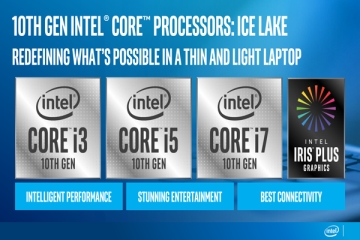
Intel has launched eleven 10th generation Intel Core processors. Intel's new processors, designed to implement large-scale high-performance AI on PCs, feature Intel Iris Plus Graphics for entertainment performance. They also support Wi-Fi 6 and up to four Thunderbolt 3 ports. Most PC OEMs plan to showcase systems utilizing Intel's new processors by year-end. The 10th generation Intel Core processors are designed to enable AI functionality on notebooks and 2-in-1 devices. Intel Deep Learning Boost is a new dedicated instruction set that accelerates neural networks on the CPU, maximizing responsiveness in scenarios such as automatic image enhancement, photo indexing, and photorealistic effects.
2019.08.03by 이수민 기자
ESP32 Development Environment Selection and GPS Application Implementation
The ESP32 is a microcontroller that integrates Wi-Fi, Bluetooth, 12-bit ADC, capacitive touch, PWM, DAC, and UART in a single SoC. However, the abundance of features does not by itself solve the designer's problems. The real challenges lie in selecting the appropriate development environment, determining which pins can be used and which must be avoided, and converting raw data from modules into usable information. This document addresses ESP32 peripheral constraints (ADC2 and Wi-Fi coexistence limitation, UART1 occupancy, ADC non-linear regions), the trade-offs between Arduino IDE and ESP-IDF, and the process from connecting NEO-6M/NEO-M8N GPS modules to UART2, parsing NMEA sentences, and visualizing routes in Google Earth, all organized based on documented references.
2026.10.12by 편집부
MIPI CSI-2, DSI-2, C-PHY, D-PHY Test Solution Technical White Paper
The MIPI interface adopts a burst mode that transitions between low-power (LP) and high-speed (HS) states for low-power consumption, and in return, strict timing rules are imposed on state transitions. Additionally, the high-speed section operates as a packet-based protocol with headers, ECC, and CRC, so verification engineers must handle waveforms and protocols simultaneously. Traditional configurations combining general-purpose oscilloscopes and AWGs reveal limitations in setup complexity, measurement uncertainty, and lack of reproducibility when faced with these requirements. This white paper, based on webinar materials, organizes the structure of this problem and describes how the SV5C-DPTXCPTX generator for receiver testing and SV5C-DPRXCPRX analyzer for transmitter testing integrate state transition testing, stressed eye testing, and protocol analysis into a single bench, along with their application boundaries.
2026.10.12by 편집부











