



[Analog Day] Team Leader Seong Gwan-yeong: "Preemptive action on EMC standardization is essential."
 Published2022.11.15 16:22
Launch of convergence products featuring heterogeneous technologies↑
Reduce development costs by proactively responding to EMC
[Editor's Note] Electromagnetic noise generated during IT product design can cause fatal defects, including performance degradation and malfunctions. With the recent shift to electrification of automobiles, product miniaturization, and the expansion of high-bandwidth frequencies (millimeter waves) such as 5G and 6G communications, the possibility of device and system malfunctions due to intentional and unintentional electromagnetic noise is gradually increasing. As the importance of EMI/EMC design is receiving increasing attention, e4ds news hosts Analog Day every year, bringing together EMI/EMC experts to share the latest technology trends and seek solutions.
We met with Team Leader Seong Gwan-yeong, who will be presenting on 'EMI/EMC Standards/Certification Trends' at the open session that opens this year's Analog Day . Team Leader Seong Gwan-yeong is a veteran expert who has been in charge of home appliance R&D and overseas certification at LG Electronics for 18 years. He is currently in charge of domestic and international testing and certification in the electrical and electronic fields at the Korea Testing & Research Institute (KTR).
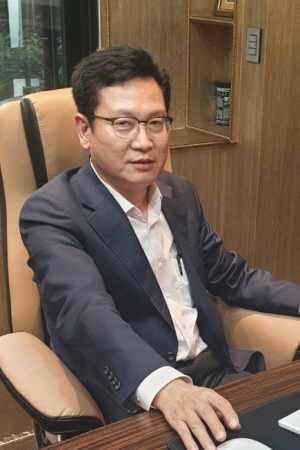 ■ Please introduce your duties.
He is currently working as an international standardization expert in the IEC CISPR and TC77 technical committees in the field of electromagnetic compatibility (EMC) and as the chairman of the F division of the Information and Communications Specialist Committee of the Korea Industrial Standards Council. We proactively respond to the establishment and revision of EMC-related national standards and international standardization to ensure that our opinions are reflected, and we contribute to the development of related technologies and industries.
■ EMI/EMC design is emerging as a critical issue in the development of automotive and communications technologies. What are the trends in EMI/EMC standard certification?
The megatrends in the automotive industry can be summarized as follows: △ Acceleration of eco-friendly vehicles due to the Paris Agreement on Climate Change, Dieselgate, and strengthening environmental regulations in each country; △ Acceleration of autonomous vehicles due to the Fourth Industrial Revolution, including artificial intelligence, big data, 5G, and IoT; and △ Acceleration of MaaS (Media as a Service) due to the spread of the sharing economy and platform businesses.
These trends are based on safety-ensuring and sensor-based technology that recognizes objects and V2X, which is based on vehicle-to-vehicle, vehicle-to-infrastructure, vehicle-to-pedestrian, vehicle-to-network communication and GPS communication.
Current industry and technology trends predict that the use of RF wireless communications will accelerate, ultimately leading to the use of more radio waves.
Vehicle-related standards and certifications include international standards such as IEC and ISO, as well as standards and certifications from automobile manufacturers such as Hyundai Motor Company. International automotive EMC standards are handled by IEC and ISO.
Looking at EMC trends based on international standards, the IEC CISPR Subcommittee D is developing methods for evaluating radiated emissions (RE) and radiation resistance (RI) related to ADAS, developing standards for radiation resistance testing methods and acceptance criteria related to V2X evaluation, and developing standards related to electromagnetic field exposure (EMF).
In addition, revisions are being made to the EMC section of the Safety of the Intentional Functionality (SOTIP) field to ensure performance safety from sensor misrecognition due to external environmental factors, and to the international standards related to functional safety due to function and component failure.
■ You must have encountered many cases of complaints from industry insiders and others on the ground. Could you tell us about things to keep in mind during the certification process and things to prepare for in the future?
For EMC issues, it is important to design countermeasures for each process, from the development concept derivation stage to the circuit design stage and prototype production stage, based on knowledge of electromagnetic phenomena and basic EMC response design techniques, taking into account frequency bands, electromagnetic wave transmission paths, etc.
Even in hardware circuit design, prototypes are often manufactured after the design is complete and EMC performance verification is performed. In some cases, EMC performance is even verified after the finished product is manufactured. This type of verification of EMC measures after the product or component is completed significantly increases the costs associated with debugging and troubleshooting in the event of a defect.
In other words, the more we respond from the early stages of design, the shorter the development period and the more effective and low-cost development becomes. Furthermore, with the advancement of communication technology and the introduction of various products that combine different technologies into the market, it is necessary to proactively collect information on EMC standardization trends.
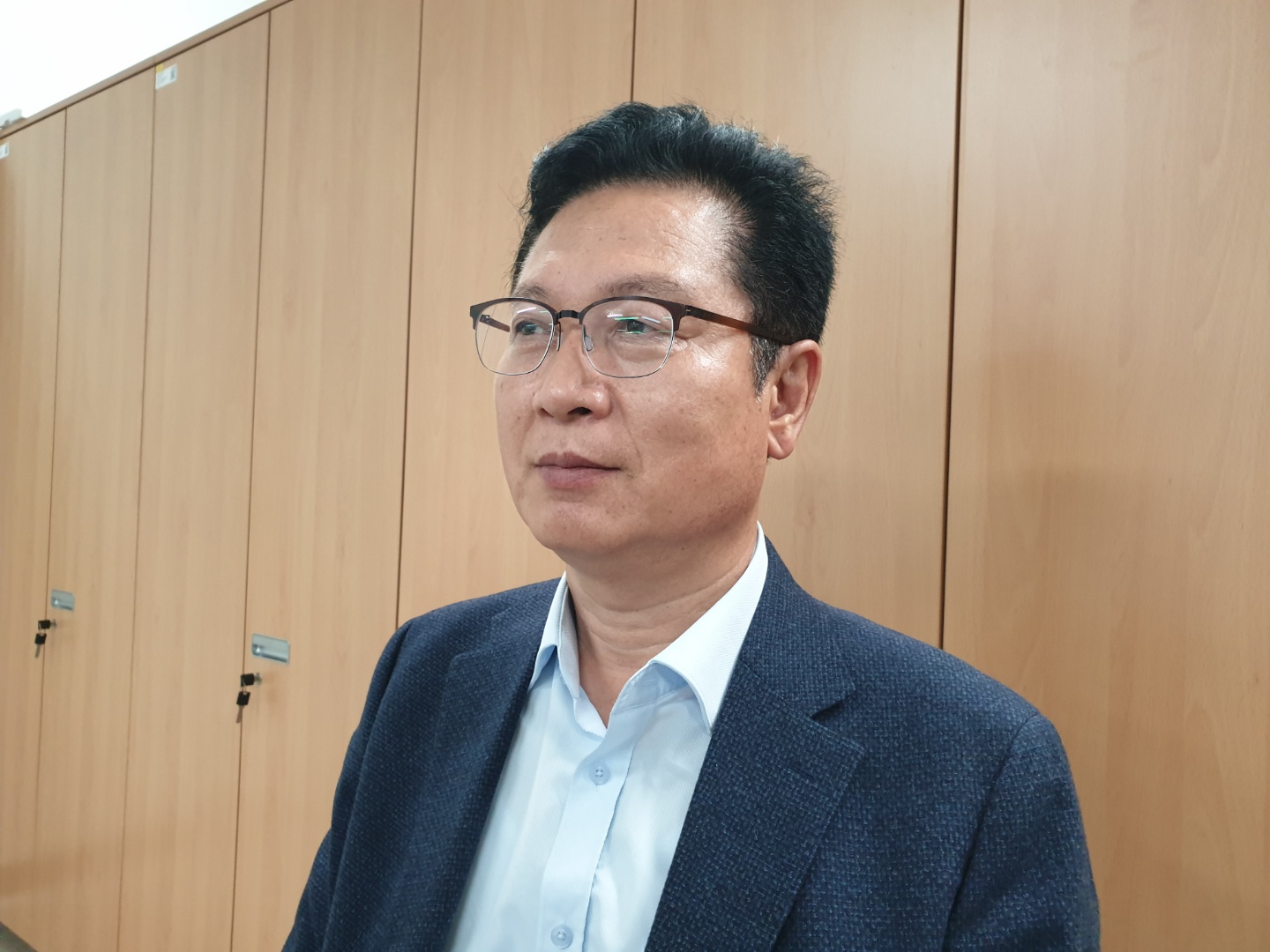
▲Seong Gwan-yeong, Team Leader, Korea Testing & Research Institute for Chemical Industry
■ Please briefly introduce the topics that will be covered at this Analog Day.
In this Analog Day , we will briefly introduce the basic concepts of electromagnetic waves and, in addition to the functional aspects of electromagnetic waves used in broadcasting and communication, we will explain the dysfunctional aspects of electromagnetic wave use, namely, unnecessary electromagnetic waves that cause malfunctions or failures in electrical and electronic devices.
Furthermore, regarding electromagnetic compatibility (EMC) standards, we will explain the international standards-setting organizations and applicable standards. Furthermore, we will briefly introduce each country's certified manufacturing process, which requires EMC products to pass the certification process before they can be sold on the market. We will then explain EMC measurement methods, testing methods, and acceptance criteria based on international standards, and present trends in international EMC standardization.
■ Lastly, please say a word to the readers of e4ds news.
I believe that e4ds provides useful and beneficial knowledge and information on various fields and topics that are currently being discussed. I sincerely hope that readers will actively participate and utilize this as a reference for their work, and that it will provide an opportunity to expand and deepen their knowledge.
thank you
Meanwhile, Analog Day, which will feature various sessions such as ‘EMI/EMC Standard/Certification Trends’ by Team Leader Seong Gwan- yeong of the Korea Testing & Research Institute for Chemical Industry, ‘SMPS Noise Countermeasures’ by KAIST Visiting Professor Kim Ji-seong, and △Technical Trends Related to Electromagnetic Wave Shielding and Absorbing Materials, △Wireless Charging Market Outlook and EMI Countermeasures According to the Development of Wireless Power Transmission Technology, will be held on December 9th in the main auditorium of the Gangnam Station Conference Center.

Comments
Related news

[Analog Day] Professor Kim Ji-seong, “New technology emerges, EMI possibility high”
[Editor's Note] Electromagnetic noise generated during IT product design causes critical defects such as product performance degradation and malfunction. Recently, as automotive electrification transitions accelerate, products become miniaturized, and the use of high-frequency bands (millimeter waves) such as 5G and 6G communications expands, the possibility of device and system malfunctions caused by both intentional and unintentional electromagnetic noise is growing. As the importance of EMI/EMC design gains attention, e4ds news hosts Analog Day annually, bringing together EMI/EMC experts to share the latest technology trends and seek solutions.
2022.11.14by 명세환 기자

Intel Unveils Next-Generation 'Core Ultra Series 3' and vPro Platform for Enterprise PCs
Intel has officially unveiled the "Intel Core Ultra Series 3" for next-generation enterprise PCs and the latest vPro platform, addressing a wide range of demands from enterprise notebooks to high-performance workstations.
2026.03.26by 배종인 기자

ROHM Launches ESD Protection Diode Compatible with High-Speed Interfaces of 10Gbps or Higher
Semiconductor specialist ROHM has developed the 'RESDxVx series' of ESD (electrostatic discharge) protection diodes capable of responding to next-generation high-speed data communication environments exceeding 10Gbps, simultaneously enhancing both signal quality maintenance required in high-speed interfaces and IC protection performance.
2026.03.26by 배종인 기자
ST Launches 75V Drive IC Targeting 48V Industrial Motor Driving
ST Microelectronics has unveiled the 'STSPIN9P' series of 75V motor drive ICs tailored for 48V-class industrial drive system design. The new product family is characterized by half-bridge and full-bridge configurations that enable design scalability according to motor type and output conditions. Power supply circuits, protection functions, and current sensing circuits are integrated on-chip to simplify system configuration, and the devices are designed to support applications up to 500W maximum. The company plans to provide reference designs and demo boards to support development and evaluation in industrial automation, robotics, pumps, fans, lighting, and textile machinery.
2026.03.26by 배종인 기자
Nordic supports security updates for the entire lifecycle of IoT devices at a single fixed cost
Nordic Semiconductor, a global leader in low-power wireless connectivity solutions, has unveiled a single fixed-cost licensing model that delivers FOTA (Firmware Over-the-Air) and device management capabilities throughout the device lifecycle via nRF Cloud, and introduced a new firmware update solution to prepare for the enforcement of the European Union's Cyber Resilience Act (CRA).
2026.03.26by 배종인 기자











