



5G 28GHz Allocation Limits for the Three Major Telecom Companies
 Published2022.11.21 16:06
SKT shortens 5G 28GHz service period, LG U+ and KT cancel
The three major mobile carriers are fiercely competing for additional 3.7-4.0 GHz spectrum.
"A policy to activate 28GHz 5G to implement advanced services is essential."
The Ministry of Science and ICT announced on the 18th the results of the implementation review process for the allocation conditions imposed during the 5G frequency allocation in 2018, which was completed.
While all operators were assessed as having met allocation requirements for the 3.5GHz band, their commitment to activating the 28GHz band was low. SKT scored 30.5 points in the 28GHz band, LG U+ 28.9 points, and KT 27.3 points. Consequently, SKT announced that its usage period would be shortened, while LG U+ and KT were notified of their allocation cancellations.
In 2018, the Ministry of Science and ICT simultaneously allocated the 3.5 GHz band (280 MHz width) and the 28 GHz band (2,400 MHz width) to reflect the opinions of the three telecommunication companies that more than 800 MHz width was needed in the 28 GHz band along with the 3.5 GHz band to achieve maximum 5G performance. The 28㎓ band was supplied with a limited period of use of 5 years, lowering the unit price and minimizing network construction obligations.
On the other hand, compared to the global trend of expanding the construction of 28㎓ band networks, including that of Verizon Telecom in the US, it was revealed that in Korea, unlike the 3.5㎓ band, the 28㎓ band has not even been built in minimum quantity.
The government said that it has been discussing ways to activate the 28 GHz band ecosystem in Korea through the following measures: △ implementation of 5G pilot services at the 2018 Pyeongchang Winter Olympics, △ joint public-private technology verification of the 28 GHz band, △ demonstration of subway Wi-Fi performance improvement using 28 GHz band backhaul, and △ policy discussions and operation of public-private working groups.
The Ministry of Science and ICT emphasized the need to activate the 5G 28 GHz band to realize ultra-high speed, ultra-low latency, and hyper-connectivity, and announced its position that it will actively pursue the entry of new operators into one of the canceled frequency bands in the future. In particular, it was announced that it plans to review the supply of frequencies for signal control (anchor frequencies) and new allocation methods.
Park Yoon-gyu, Second Vice Minister of Science and ICT, said, “The government has continuously encouraged the three mobile carriers to comply with the allocation conditions and provided support in various ways, but this result is regrettable.” He added, “Going forward, the government will promote a policy to activate 5G through competition among operators, such as promoting the entry of new operators and allowing only one of the existing operators to use the frequency.”
The three major mobile carriers are targeting 3.7-4.0 GHz bands to enhance their business operations.
Telecommunication companies are focusing on additional allocation of the 3.7-4.0 GHz band to enhance their business.
According to a 5G policy discussion hosted by Ministry of Science and ICT lawmakers Kim Young-sik and Byun Jae-il in June, 5G services were initially introduced with uncertainty when they were commercialized. Despite various attempts to implement services for commercialization, utilization remains low. Representative Kim stated, "The fundamental problem is that the short range of 28 GHz results in a lack of demand."
Some say that the 3.7-4.0 GHz band is more efficient in improving service quality than the 28 GHz 5G band, and that is why mobile carriers are being strict about allocating this bandwidth.
Currently, mobile carriers are using 100 MHz each in the 3.4-3.7 GHz band. SKT has requested the Ministry of Science and ICT to allocate an additional 3.7-3.72 GHz band in the adjacent band (3.6-3.7 GHz), and LG U+ has proposed building a joint network of three companies in the 3.7-4.0 GHz band.
Meanwhile, if SKT is allocated additional adjacent bands, it will hold a total of 120 MHz, which is raising objections from LG U+ and KT. The Ministry of Science and ICT is expected to come up with specific measures that take into account fairness and network utilization efficiency.
■ How to develop policies to support 5G 28 GHz activation?
In order to activate 5G 28㎓, it seems most urgent to secure various applications so that there is no doubt about the suitability of 5G 28㎓.
Ultimately, it appears necessary for the government to expand support for the existing 5G 28 GHz project and to discover operators beyond B2C and B2B.
In particular, 5G connectivity is also becoming a method. E-5G is a specialized 5G network that can be used as a dedicated network for use in specific areas or buildings by general companies, not just telecommunications companies.
As of now, the operators who have been allocated the 5G frequency for I-eum are 7 organizations: Naver Cloud (December 2021), LG CNS (March, June 2022), SK Networks Service (May 2022), Naver Communications (August 2022), CJ Olive Networks (August 2022), KTMOS Northern Co., Ltd. (October 2022), and Sejong Telecom (October 2022). The 5G frequency for I-eum is designated for 3 organizations (Navy, Korea Electric Power Corporation, KT).
On the other hand, although B2B demand is gradually emerging, there are also predictions that it is still too early to decide on a full-scale base station construction plan. Ultimately, it is expected that whether or not more operators, including telecommunications companies, will continue to invest in the 5G 28㎓ band will be important.
Comments
Related news
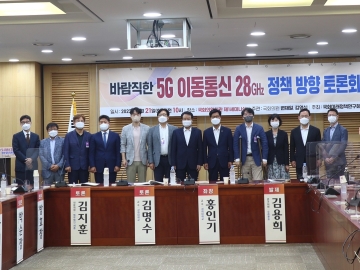
"Half-baked 5G: Advanced or Alternative?" The National Assembly's first 28GHz policy debate.
A discussion forum on "Desirable Directions for 5G Policy" was held on the 21st at the National Assembly Members' Hall, organized by Representatives Kim Young-sik (People Power Party) and Byun Jae-il (Democratic Party) of the Science, Technology, Information and Broadcasting and Communications Committee, and hosted by the National Assembly Future Policy Research Institute.
2022.06.22by 김예지 기자
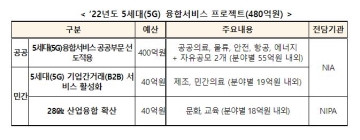
The Ministry of Science and ICT will invest 48 billion won in the Ieum 5G project.
The Ministry of Science and ICT, the Korea Intelligence Information Society Promotion Agency, and the Information and Communications Industry Promotion Agency announced on the 29th that they are launching a demonstration project for the '5G Mobile Communication Convergence Service Project'. This project comprises three demonstration businesses, and will invest a total of 48 billion won this year in the public and private sectors to demonstrate 11 tasks.
2022.07.01by 김예지 기자
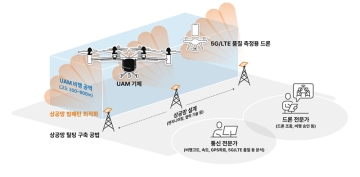
SKT, K-UAM demonstration project 5G commercial network construction
SK Telecom operated a communication quality measurement drone in a trial test related to 5G aerial network near the Goheung National Aviation Testing Center, verifying service quality based on communication altitude and distance.
2022.08.08by 김예지 기자

Keysight 5G Test Solutions Accelerate 5G Specialized Network Deployment
Keysight Technologies announced that AI-LINK has selected Keysight's 5G testing tools to accelerate the construction of 5G private networks for comprehensive smart warehouse applications, enabling end-to-end performance validation of cloud-based 5G radio access network (RAN) equipment in a digital twin environment.
2022.08.24by 김예지 기자
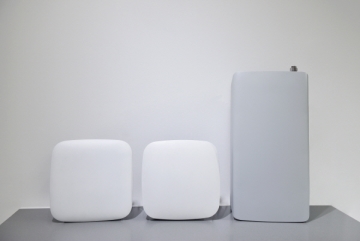
Samsung Electronics Expands Public-Private 5G Equipment Supply
Samsung Electronics is expanding its supply of Open RAN 5G equipment for both public and private sectors, driving continued expansion of the Open RAN 5G ecosystem and promoting digital innovation.
2022.08.31by 배종인 기자











