



Anticancer drug efficacy, “predicted by AI”
 Published2022.12.19 14:43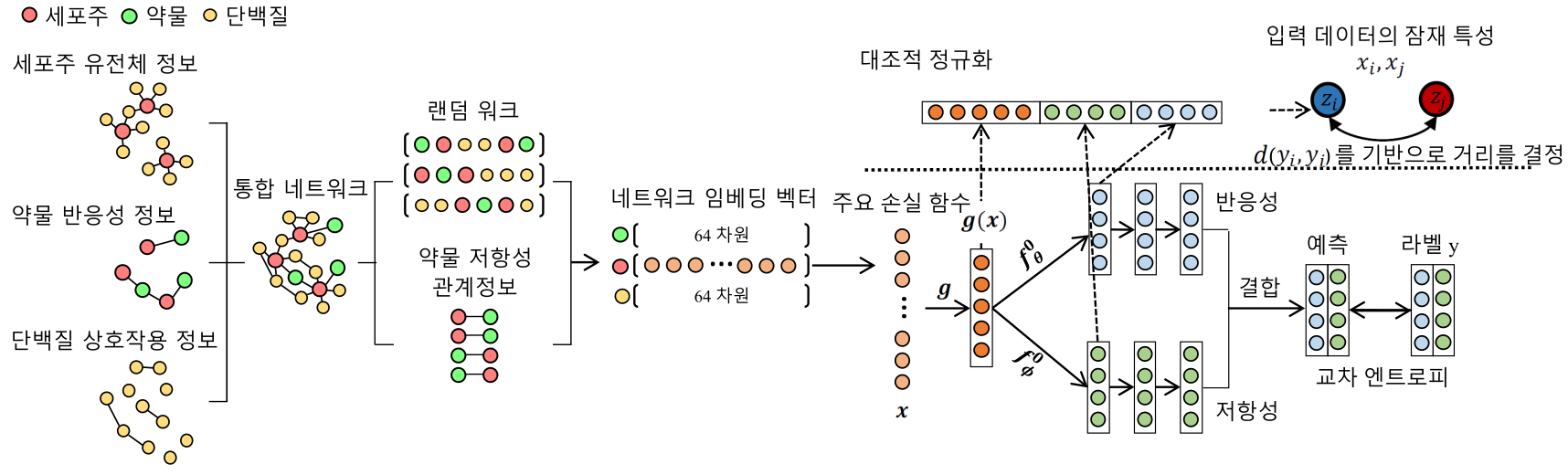
▲Conceptual diagram of RAMP, a patient-tailored anticancer drug efficacy prediction model (Data - UNIST)
Even for the same cancer patient, the efficacy of anticancer drugs can vary. This is because the responsiveness of anticancer drugs varies depending on individual genetic mutations. Artificial intelligence (AI) technology that provides advance information on such patient-specific results is being developed and is gaining attention.
Ulsan National Institute of Science and Technology (UNIST) announced on the 19th that Professor Lee Se-min's team in the Department of Biomedical Engineering, together with Professor Jeong Won-gi's team from Korea University and Professor Seo Ji-won's team from Hanyang University, have developed a 'machine learning model for predicting patient-tailored anticancer drug responsiveness based on multi-omics1) data.'
The research team reported that they achieved much better performance than existing anticancer drug response prediction models by utilizing large-scale anticancer drug response data and multi-omics data. This was made possible through network embedding technology and the latest deep learning model.
Cancer is a typical genome-related disease, or 'genome disease'. Disease occurs when mutations continue to accumulate in the genome, the 'blueprint of life' that each person possesses. In cancer tissue, the gene expression pattern is also different from that of normal tissue. These genetic mutations and gene expression profiles show significant differences even among patients with the same cancer, and are known to have a significant correlation with patient-specific anticancer drug responsiveness.
Accordingly, there have been many recent attempts to develop 'patient-tailored anticancer drug response prediction models' based on multi-omics data that encompass cancer patient-specific genetic mutations and gene expression patterns. However, the biological data for learning these models has many types and factors, but the number of samples is insufficient, which limits the accuracy of machine learning models.
To overcome this, the research team applied ‘network embedding technology’ to effectively reflect the correlation between multidimensional data. Extracting embedding that reflects the correlation of the network set formed by nodes and edges is the core of this study.
This is because by using embedding vectors, we can know the representative value of each node, so we can effectively handle high-dimensional data. The research team trained the embedding vector using a deep neural network, an AI technique,5) to derive the efficacy of anticancer drugs tailored to patients.
“We applied various artificial intelligence techniques to supplement the biased reactivity data toward resistance,” said first author Dr. Kang-Geun Lee of Korea University. “The new model’s anticancer drug reactivity prediction performance was shown to be approximately 93% accurate, which is significantly improved from the existing model.”
“We achieved excellent performance through deep neural networks and network embedding technology that effectively extracts interactions between elements existing in high-dimensional multi-omics data,” said co-author Cho Dong-bin, a researcher at Hanyang University.
Dr. Jin-Ho Jang of UNIST, a co-author, also expressed his expectations, saying, “This technology will accelerate personalized treatment by suggesting suitable drug candidates for cancer patients.”
Meanwhile, the results of this study were published in 'Briefings in Bioinformatics', the top academic journal in the field of bioinformatics, and were supported by the 'Next Generation Information Computing Technology Development Project' and the 'University Key Research Institute Support Project' of the National Research Foundation of Korea.

Comments
Related news
UNIST Develops Virtual AI Manufacturing Technology for Metal Surfaces
A research team led by Professor Jung Im-doo from the Department of Mechanical Engineering at UNIST has successfully developed a technology that virtually manufactures 'predicted 3D surface morphology of metals according to metal processing conditions' based on actual data, as announced on the 15th.
2022.11.21by 김예지 기자
.jpg)
UNIST's Power Management and Sensor IC Technology Receives Global Recognition
The Department of Electrical and Electronics Engineering at UNIST has had three papers accepted to the "Semiconductor Design Olympics (ISSCC)," with UNIST's power management and sensor IC technologies receiving recognition on the global stage.
2022.12.01by 배종인 기자
UNIST Leads the Southeast Region's AI Innovation Ecosystem
Ulsan is taking the lead in AI technology development and ecosystem building as a regional hub to foster specialized AI talent and promote the AI industry.
2022.12.08by 명세환 기자
[e4ds Tech Day 2026 ⑨] Sim Sang-gyu, Autocrypt CTO: "In the Physical AI Era, Automotive Security Must Extend Beyond the Vehicle"
At e4ds Tech Day 2026, Sim Sang-gyu, CTO of Autocrypt, explained automotive cybersecurity strategies in the era of Physical AI and SDV (Software-Defined Vehicle). Automobiles are evolving as part of an ecosystem connected to AI, cloud, chargers, IoT, and robots, and he emphasized that the scope of security must expand beyond the vehicle interior to the entire connected environment. In particular, AI model tampering, adversarial attacks, OTA updates, and EV charger hacking were identified as major threats. He explained that response measures require zero trust, AI model integrity protection, intrusion detection, Security by Design and Default, and full lifecycle security management, and that proactive security system establishment beyond regulatory compliance is critical for securing future mobility competitiveness.
2026.10.12by 배종인 기자

NVIDIA to Invest $1 Billion in U.S. Science Over Next Five Years
NVIDIA has announced plans to invest $1 billion over the next five years to strengthen U.S. scientific and technological competitiveness. The company will enhance cutting-edge artificial intelligence research and development capabilities in key areas including quantum computing, healthcare, and energy security, while expanding support for higher education research institutions and cloud service providers. NVIDIA is participating as a major industry partner in the White House Office of Science and Technology Policy's Genesis Mission, and is promoting supercomputer construction in collaboration with national laboratories including Argonne and Los Alamos.
2026.10.12by 배종인 기자











