



US imposes export controls on AI chips from China... China's demise vs. China's demise
 Published2022.12.22 12:07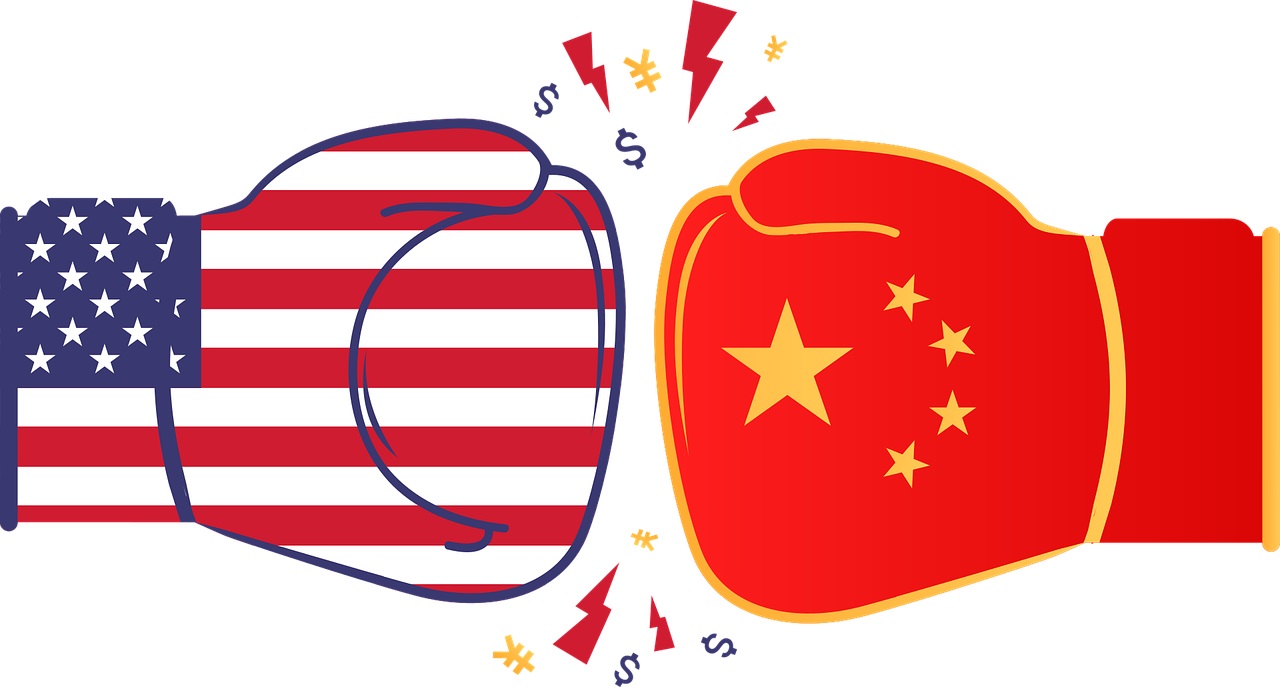
▲ The will to defeat China VS the will not to be defeated is what matters
China's AI Rise: Unwavering Will VS China's Crushing America
The expression "Jungkkeolma (the important thing is an unwavering spirit)" was a trend this year. This expression, which took the sports world by storm, now finds its meaning in the tense tug-of-war between the United States, a technological powerhouse trying to curb China's rise in the next-generation cutting-edge industry, artificial intelligence (AI), and China, an underdog determined to remain unwavering.
On the 16th, the U.S. Department of Commerce's Bureau of Industry and Security (BIS) placed 36 Chinese and Japanese companies on the Entity List for supporting China's military modernization or engaging in human rights abuses. Given that these Japanese companies are Japanese subsidiaries of China's state-owned semiconductor company Yangtze Memory Technology (YMTC), all 36 companies are clearly targeting Chinese companies.
In particular, the EL list this time includes 21 AI-related companies, including Chinese AI semiconductor company Cambricon Technology, which is expected to cause disruption to China's AI semiconductor development. These companies were subject to strong sanctions, including a ban on exports of US-made software, equipment, and technology, using the Foreign Direct Product Rules (FDPR) to produce their products.
Cambricon, dubbed China's AI semiconductor unicorn, garnered attention with a spectacular debut on the Chinese stock market in 2020. With the goal of becoming China's equivalent of NVIDIA, Cambricon's 1A chip is used in deep learning processors for edge AI, while its 1H and 1M chips have been adopted by over 100 million mobile devices and servers, powering Huawei's latest smartphones and Alibaba's servers.
Cambricon's aggressive growth can also be seen in its patent applications. According to the Patent Office, the U.S. has been the top country in terms of patent applications related to AI accelerators, with 2,255 applications, or 45%, filed over the past 10 years, followed by China with 1,156 applications, or 23%.
When looking at a single company, Intel had the most cases with 438 cases over the 10 years from 2011 to 2020, followed by Samsung with 272 cases, Cambricon with 262 cases, IBM with 158 cases, and Google with 151 cases, making up the top five.
Park Jae-il, head of the Artificial Intelligence and Big Data Examination Division at the Korean Intellectual Property Office, said, “The importance of ‘AI accelerators’ that enable AI to learn and reason quickly is increasing, and the competition to secure technological leadership will also become fierce,” adding, “There is a need to secure innovative core patents for AI accelerators, which are the underlying technology.”
Most of Cambricon's patents are based on domestic Chinese patents. Although this EL listing preemptively blocks Cambricon's global market expansion, the overwhelming domestic market in China alone provides sufficient demand, giving Cambricon ample momentum for AI technology development.
SenseTime, already considered China's leading AI software company, successfully completed its initial public offering (IPO) on the Hong Kong Stock Exchange in 2019 despite being listed on the EL List and an investment ban that came into effect in February 2022. SenseTime, which boasts world-class facial recognition technology, is attempting to sustain its growth by expanding into product and component defect detection in industries such as the automotive industry. Some argue that SenseTime is attempting to offset the effects of sanctions by leveraging its competitive technology and domestic market presence.
Ellen Estevez, the U.S. Under Secretary of Commerce for Industry and Security, explained the reasoning behind the sanctions list, saying, “To protect our national security, we want to strictly limit China’s ability to use powerful, commercially available technologies, such as AI and advanced computing, to modernize its military and abuse human rights.”

Comments
Related news
.jpg)
[Planning] Biden's Visit to Korea: Heightened China Risk vs. K-Semiconductor Leap
US President Joe Biden visited South Korea and made Samsung's semiconductor manufacturing plant in Pyeongtaek his first stop. This scene symbolically reflects the elevated international standing of the semiconductor industry. As the importance of technology and economic security in national security grows, there is heightened interest in what changes the domestic semiconductor industry, positioned at the center of US friend-shoring, will face following this visit.
2022.05.24by 명세환 기자
With the US EO14028 deadline approaching, it's essential to strengthen software supply chain security.
The U.S. government issued an executive order last year for "Improving the Nation's Cybersecurity," requiring the implementation of Zero Trust architecture across the federal government. Consequently, suppliers delivering products with embedded software to U.S. federal agencies are now required to submit SBOMs (Software Bill of Materials, a specification document for identifying software components), and the deadline for compliance with this software Executive Order is fast approaching.
2022.11.21by 명세환 기자
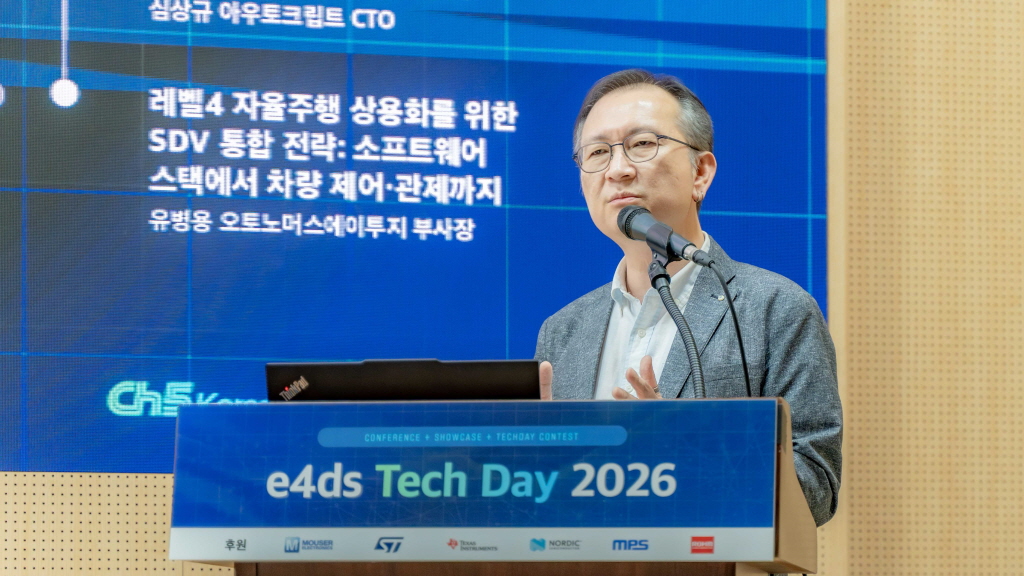
[e4ds Tech Day 2026 ⑨] Sim Sang-gyu, Autocrypt CTO: "In the Physical AI Era, Automotive Security Must Extend Beyond the Vehicle"
At e4ds Tech Day 2026, Sim Sang-gyu, CTO of Autocrypt, explained automotive cybersecurity strategies in the era of Physical AI and SDV (Software-Defined Vehicle). Automobiles are evolving as part of an ecosystem connected to AI, cloud, chargers, IoT, and robots, and he emphasized that the scope of security must expand beyond the vehicle interior to the entire connected environment. In particular, AI model tampering, adversarial attacks, OTA updates, and EV charger hacking were identified as major threats. He explained that response measures require zero trust, AI model integrity protection, intrusion detection, Security by Design and Default, and full lifecycle security management, and that proactive security system establishment beyond regulatory compliance is critical for securing future mobility competitiveness.
2026.10.12by 배종인 기자
NVIDIA to Invest $1 Billion in U.S. Science Over Next Five Years
NVIDIA has announced plans to invest $1 billion over the next five years to strengthen U.S. scientific and technological competitiveness. The company will enhance cutting-edge artificial intelligence research and development capabilities in key areas including quantum computing, healthcare, and energy security, while expanding support for higher education research institutions and cloud service providers. NVIDIA is participating as a major industry partner in the White House Office of Science and Technology Policy's Genesis Mission, and is promoting supercomputer construction in collaboration with national laboratories including Argonne and Los Alamos.
2026.10.12by 배종인 기자
ETRI Unveils 3 Next-Generation Media Technologies Including AI-Dedicated Video Compression
ETRI has unveiled three next-generation media technologies optimized for AI. These include AI-based video encoding (VCM), 3D human generation based on sparse cameras, and generative AI-based pre-visualization technology. In environments where AI directly processes video such as autonomous vehicles, robots, and drones, these technologies enable efficient compression and transmission of large-scale data, and can be applied across various industrial sectors including smart cities, video security, and sports broadcasting.
2026.10.12by 배종인 기자











