



AI Talk②-Kim Hyun-seok, CEO of AMC PLANET, “Object Tracking, ID Continuity Confirmation Required”
 Published2023.02.01 15:00
AI Tech Concert to Present Fire Detection AI Technology
[Editor's Note] Artificial intelligence (AI) technology is becoming increasingly sophisticated and is on the rise in terms of commercialization. Autonomous driving has received considerable attention and is currently at the center of the trend, but various services such as facial recognition, object detection, and AI chatbots are becoming more sophisticated and are making their presence felt in the market. We met with AMC PLANET CEO Kim Hyeon-seok, an AI expert, to ask about fire detection solutions using computer vision and hear about the related market outlook and AI development.
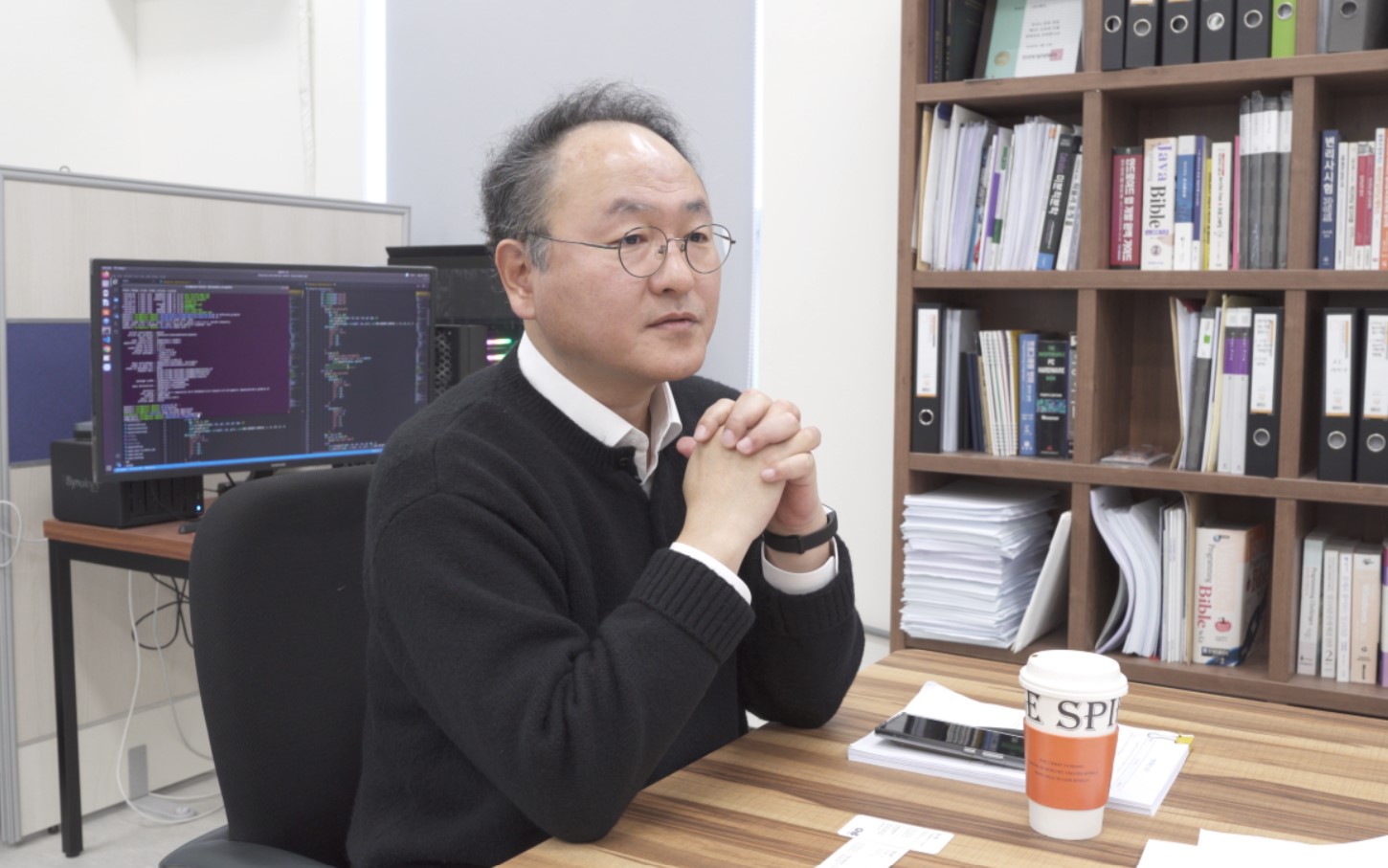
▲ Kim Hyun-seok, CEO of AMC PLANET
■ What level do you think the current technology is at in the market?
As of September 2022, the recognition rate of papers published in Korea up to that point was around 97-98%.
Until then, there had been no recognition rate of over 99% like ours. It's been 4 or 5 months, so I don't know now.
■ Is a difference of 1 or 2% in recognition rate a huge deal?
That's huge. Isn't that a fire hazard? Even 0.1% is dangerous.
■ Is object detection technology the core of computer vision, such as fire detection solutions and facial recognition?
First of all, the fire detection solution is object detection. Object detection is, to be precise, looking at the entire photo and going through a labeling process in advance. Using the label tool, it is processed into a form that can be learned and recognized by AI. When this type of feature appears, you ask us to recognize this as the object we have designated, and so it continues to learn. It looks at various types of photos, but this is continuing to learn the characteristics of AI.
Neural networks include MobileNet and ResNet. Let me explain based on this. MobileNet has very few parameters. It has about 5 to 10 million parameters, and ResNet has about 30 to 80 million parameters.
Parameters for as little as 5 million and as large as 80 million are combined with each other. In this photo or this video, this part is the object we designated, and the result of sending out the result with all 80 million trained is now object detection.
Then, recognition is a bit different story.
It is true that detection must be done first. Detection must come first, and in the case of fire detection, the scope can be limited to object detection, so the network can be made small.
However, in the case of facial recognition, the object must first be detected, and then the features of the face itself must be further refined. The designated points must be further refined and recognized through a separate network.
When looking at the features comprehensively, the recognition that “Oh, this is person A” can be made only when it is probabilistically accessible.
■ What should you pay attention to when implementing object detection technology?
When doing people counting, object detection is done first. Then, the people on the screen must be followed. At this time, a square follows along.
At this time, the mistake that AI engineers who are just starting out with AI development or are intermediate level AI engineers make is that they only recognize one screen at a time. If you recognize one, the object will continue to be detected. So if you look at this continuously, it looks like it is following. Contrary to what you see, it is not actually following.
Now, surveillance, or in other words tracking, is usually called surveillance in the AI field, but it is called object tracking, and it is not tracking, it is just detecting a screen and showing it to the user.
One way to tell the difference is to assign an ID to each object and see whether it actually goes with that ID or not.
However, when I went to the AI competition in Korea in December of the year before last, most of them seemed to be doing object detection but not tracking well. Because sometimes the screen blinks with a square or there is no ID, that means tracking is not working.
The difference in application between tracking and not tracking is that when there are multiple cameras and a person is passing from one side to the other, when the person goes in this direction, he or she goes from the range of camera A to the range of camera B.
At this time, this person may have ID a on camera A, but the moment he switches, he may become person b on camera B.
■ We will share more detailed stories at the e4ds special webinar AI Tech Concert . Lastly, please say a word to E4ds readers.
When I first encountered artificial intelligence, it was a little difficult to learn. As you may know if you have studied it a little, we hardly do any math after graduating from school.
When you study computer engineering, you focus on a specific area of mathematics. That's why when you first come across artificial intelligence, you come across differentiation, integration, probability, and statistics, and I think probability and statistics are the most difficult things in mathematics.
Since there are so many of these, it is very difficult to approach them and it is also difficult to understand the symbols. You may feel that the barrier to entry is quite high.
But I think that may not necessarily be the case. When software develops, an OS comes out, a framework comes out, and then apps come out, and app developers start to appear. In the past, people who developed systems like the OS also developed apps.
At that time, it was very difficult to come up with even one software or application. So at that time, people like us were very popular. The price was high, but not anymore. People who develop apps appeared separately.
Likewise, AI is now evolving into a framework form. Then, if the framework for AI is perfect, if a platform like a system framework is fully established like now, anyone with creative ideas about AI can create their own AI.
I hope you don't think too hard about it. Rather than thinking hard about it, I think if you approach AI by thinking about how it can make our lives richer and more fun, you will be able to develop it more enjoyably.
Thank you.

Comments
Related news
AI Talk ① - Kim Hyun-seok, CEO of AMC PLANET, “Fire Detection Solution, YOLO·GhostNet Based, Achieves 99% Recognition Rate”
[Editor's Note] As artificial intelligence (AI) technology continues to advance, commercialization trends are accelerating. While autonomous driving has received considerable attention and remains at the center of current trends, various services such as △facial recognition △object detection-based services and △AI chatbots are becoming increasingly sophisticated and gaining prominence in the market. In response, we met with Kim Hyun-seok, CEO of AI specialist AMC PLANET, to discuss fire detection solutions utilizing computer vision, as well as hear perspectives on related market prospects and AI development.
2023.01.27by 명세환 기자
[e4ds Tech Day 2026 ⑨] Sim Sang-gyu, Autocrypt CTO: "In the Physical AI Era, Automotive Security Must Extend Beyond the Vehicle"
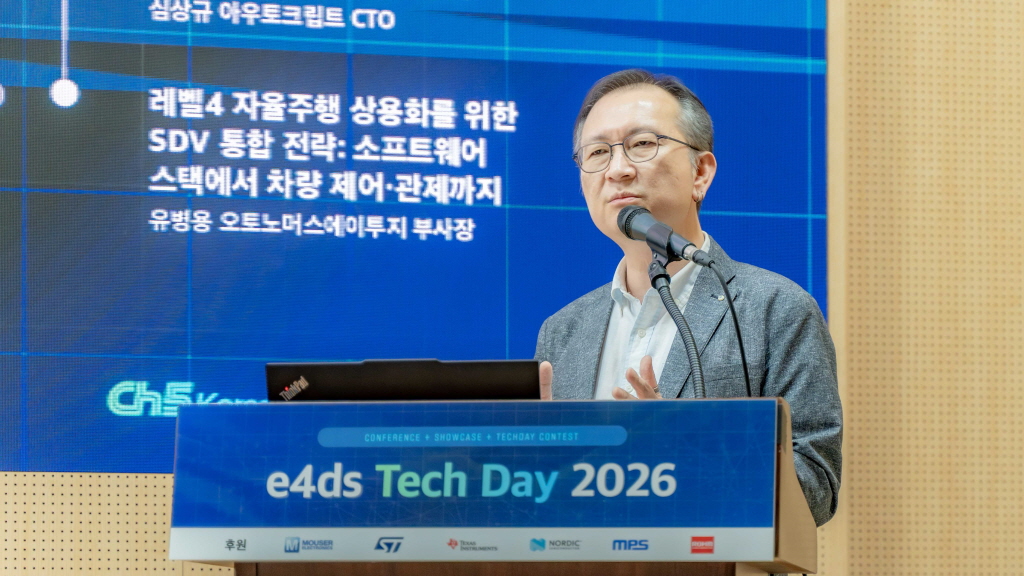
At e4ds Tech Day 2026, Sim Sang-gyu, CTO of Autocrypt, explained automotive cybersecurity strategies in the era of Physical AI and SDV (Software-Defined Vehicle). Automobiles are evolving as part of an ecosystem connected to AI, cloud, chargers, IoT, and robots, and he emphasized that the scope of security must expand beyond the vehicle interior to the entire connected environment. In particular, AI model tampering, adversarial attacks, OTA updates, and EV charger hacking were identified as major threats. He explained that response measures require zero trust, AI model integrity protection, intrusion detection, Security by Design and Default, and full lifecycle security management, and that proactive security system establishment beyond regulatory compliance is critical for securing future mobility competitiveness.
2026.10.12by 배종인 기자
NVIDIA to Invest $1 Billion in U.S. Science Over Next Five Years
NVIDIA has announced plans to invest $1 billion over the next five years to strengthen U.S. scientific and technological competitiveness. The company will enhance cutting-edge artificial intelligence research and development capabilities in key areas including quantum computing, healthcare, and energy security, while expanding support for higher education research institutions and cloud service providers. NVIDIA is participating as a major industry partner in the White House Office of Science and Technology Policy's Genesis Mission, and is promoting supercomputer construction in collaboration with national laboratories including Argonne and Los Alamos.
2026.10.12by 배종인 기자
ETRI Unveils 3 Next-Generation Media Technologies Including AI-Dedicated Video Compression
ETRI has unveiled three next-generation media technologies optimized for AI. These include AI-based video encoding (VCM), 3D human generation based on sparse cameras, and generative AI-based pre-visualization technology. In environments where AI directly processes video such as autonomous vehicles, robots, and drones, these technologies enable efficient compression and transmission of large-scale data, and can be applied across various industrial sectors including smart cities, video security, and sports broadcasting.
2026.10.12by 배종인 기자
KETI Connects Domestic and Uzbekistan Museums Through Robot Telepresence for Remote Exhibition
The Korea Electronics Technology Institute (KETI) has hosted a remote experiential exhibition that connects domestic museums with an Uzbekistan museum in real-time using robot telepresence technology. Elementary school students in the Sangju area were able to directly operate autonomous robots to remotely view 7th-century Goguryeo envoy palace murals at the Afrasiab Museum in Samarkand, and the exhibition provides spatial experience comparable to on-site visits by combining real-time high-quality video transmission, AI docent, and autonomous driving technologies.
2026.10.12by 배종인 기자











