


IBM Goes All-In on AI and Hybrid Cloud
 Published2023.02.07 15:13
Cybersecurity, talent shortages, and supply chains: responding with data, AI, and automation.
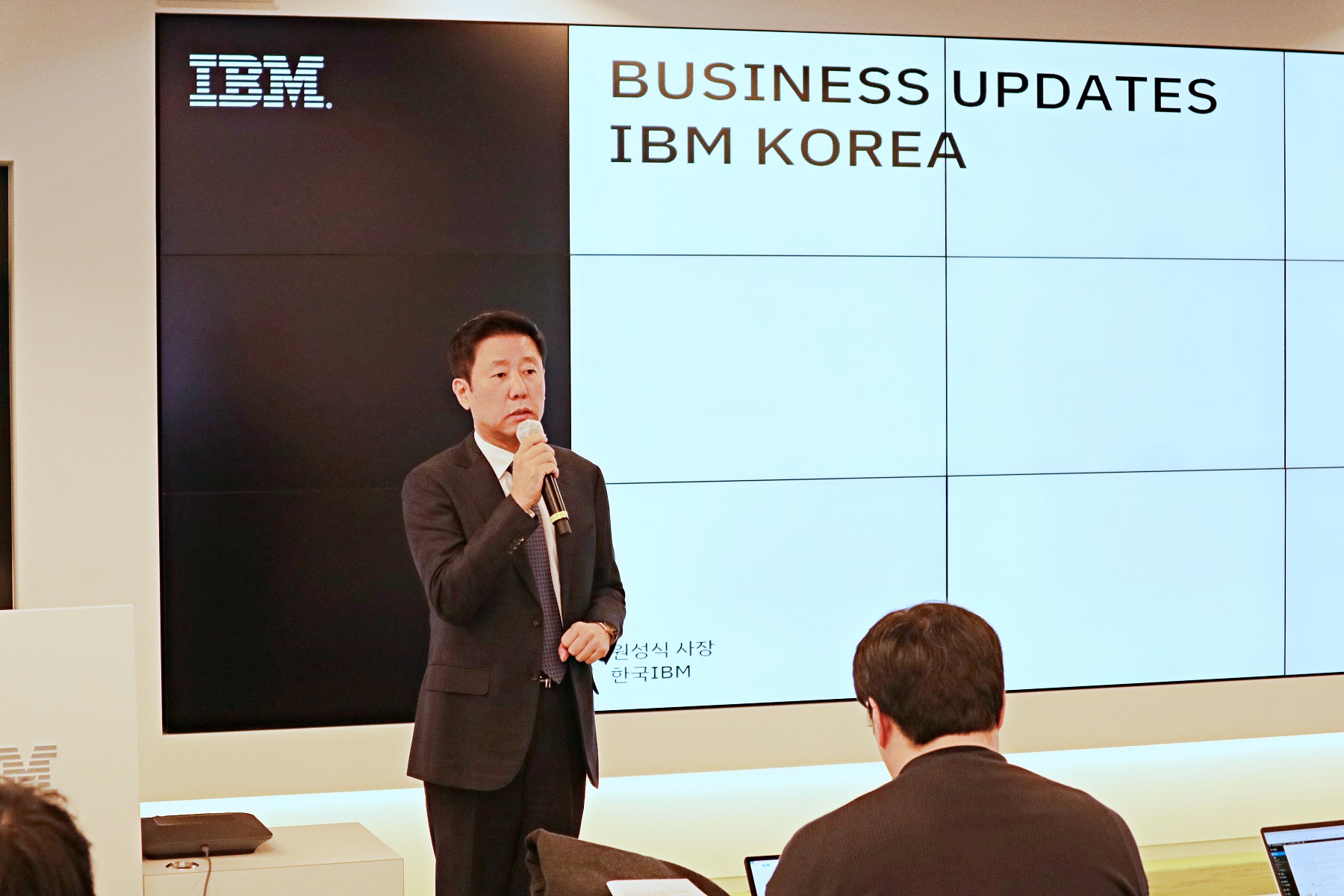
▲ Won Seong-sik, CEO and President of IBM Korea, giving a presentation.
Won Sung-sik, CEO and President of IBM Korea, said this about IBM in 2022, declaring that the company will go all-in on continuous growth.
IBM Korea held its 2023 New Year's meeting at the IBM Innovation Studio in Yeouido on the 7th. At the meeting, the company announced its business performance for last year and its 2023 strategy.
IBM Transforms into an AI and Hybrid Cloud-Centric Company
IBM CEO Won Sung-sik announced that IBM has now transformed into a software services company focused on AI and hybrid cloud. Global IBM reported $60.5 billion in revenue last year, with $22.4 billion coming from the hybrid cloud sector, and the software and consulting sectors accounting for nearly 70% of total revenue.
IBM Korea announced that its infrastructure sectors, including hybrid cloud, data management for AI, automation software, power servers, and ESS storage, drove growth, while consulting and security also contributed to improving domestic performance.
In the SW sector, the company said it will focus on solutions for improving development and IT management efficiency, such as ISW and AIOps, for companies experiencing a shortage of human resources and skills, as well as AI-based data fabric and data lakehouse solutions, such as Cloud Pak for Data, that support big data management and efficiency.
Additionally, we plan to focus on providing sustainability solutions such as Envizi and macro-level, integrated security services to meet the growing national demand for ESG and cybersecurity.
In the infrastructure sector, IBM is responding to the needs of financial, distribution, and public market customers to modernize their systems to hybrid clouds with products such as Power10, ESS, tape libraries, and flash systems. IBM Consulting has a strategy to support companies' digital transformation with differentiated technologies and expertise, including global know-how and IBM Garage Methodology.
“We will pursue IBM’s growth centered on hybrid cloud and AI,” said CEO Won. “Many companies operate within a hybrid cloud environment, and IBM will move toward supporting their digital transformation through software solutions and services.”
Trends for 2023: "Data Fabric, AI, and Automation Must Be Considered";
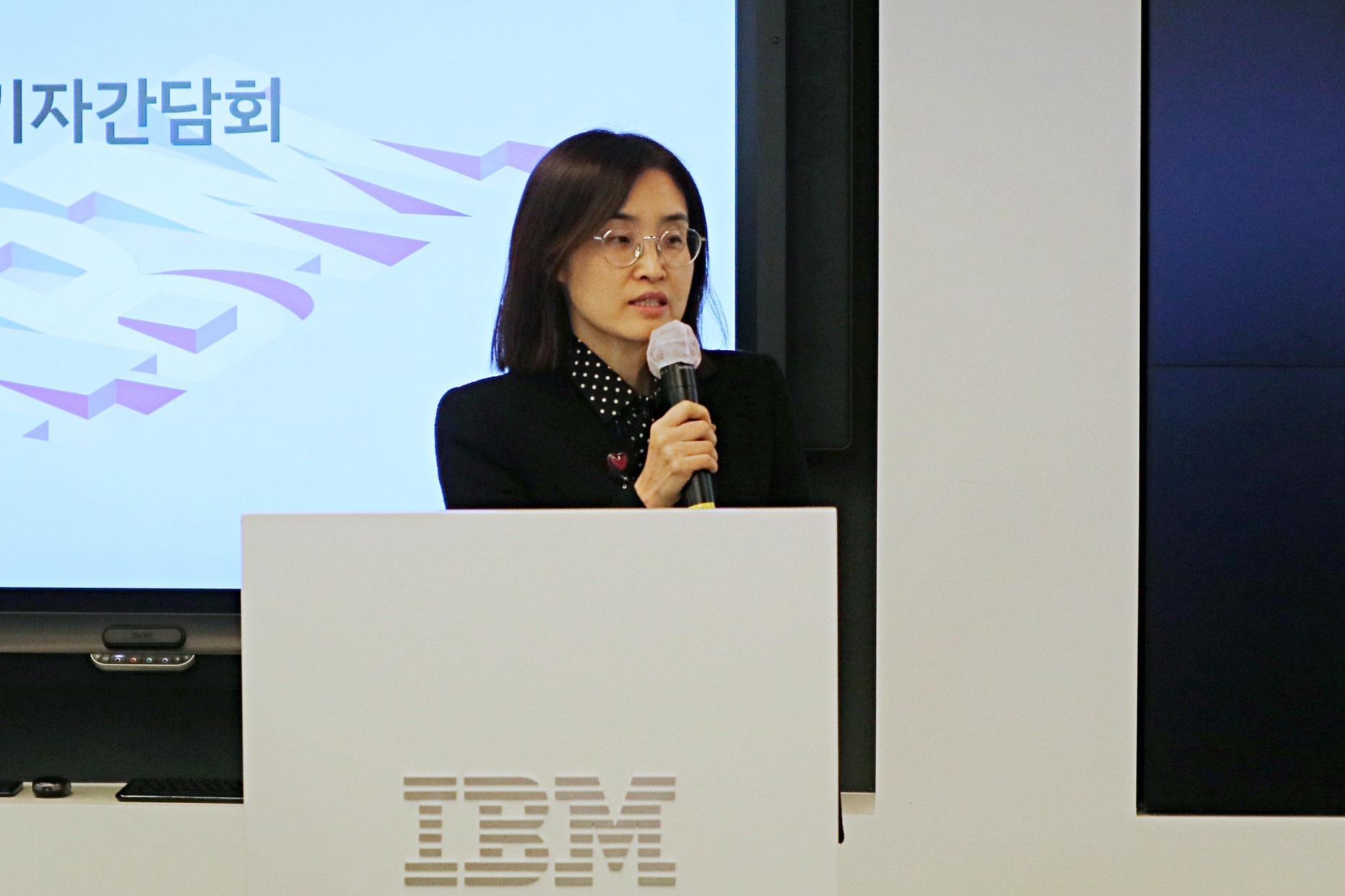
▲Lee Ji-eun, Chief Technology Officer (CTO) of IBM Korea
IBM, which focuses on SW power, announced five digital trends that will lead the future.
Lee Ji-eun, Chief Technology Officer (CTO) of IBM Korea, pointed out the following trends for 2023: △ Limited growth due to talent shortages and rising wages △ Increasing complexity of customer relationships due to privacy and personalization △ Unstable supply chains and difficulty maintaining resilience △ Demand for realistic sustainability strategies △ Exponential increase in cyberattacks.
The report also noted that the global talent and skills shortage is expected to result in 85 million job vacancies by 2030, and the slowdown in response due to the lack of professionals could negatively impact security and supply chain response. Sixty-eight percent of consumers responded that trust is important when choosing a brand, and 37% said they would even switch brands for privacy reasons.
Amidst this, data breaches are becoming increasingly widespread and costly, with the average loss from a data breach for a Korean company estimated at 4.3 billion won. With an estimated 14.4 billion IoT devices active by 2022, and quantum computers projected to overpower public security systems by 2030, companies are increasingly required to proactively respond five to ten years in advance.
In today's world, it's essential for businesses to adapt to rapid change, and the CTO added, "We need to consider technologies like data fabric, AI, and automation to address talent shortages and broader supply chain and security issues." He emphasized, "The five keywords are not independent issues, but are highly interconnected, and the importance of data will gradually increase."
Meanwhile, domestic companies are hesitant to adopt AI technology compared to the global average. According to the IBM AI Adoption Index Report, the AI adoption rate among domestic companies stands at just 22%, relatively low compared to the global average of 34%. When asked by this magazine about the reasons for this, IBM Korea responded, "We believe this is because many domestic companies are still unsure about the reliability and accuracy of AI."
The analysis concluded that businesses will hesitate to adopt AI systems with an accuracy level of 80-90%, and that technologies that enhance AI's transparency, reliability, and explainability should be considered. IBM Korea stated, "AI chatbot adoption is active in Korea, and AI can be applied across most industries," but emphasized, "However, the AI life cycle, including data collection, preprocessing, learning, construction, monitoring, and feedback, must be properly implemented to deliver business value."
Meanwhile, data fabric is emerging as a next-generation architecture that integrates all heterogeneous data across the cloud, on-premises, and edge, enabling data analysis and modeling through AI technologies such as machine learning, enabling insightful data operation and management.

Comments
Related news
IBM Korea Announces Integrated Digital Platform for Enterprise Cloud Environments
As expansion into hybrid cloud accelerates, issues such as increased complexity and security threats stemming from distributed IT environments, shortage of specialized personnel, and vendor lock-in are becoming more pronounced. Now enterprises must build a standardized, secure, open digital platform that supports each company's cloud IT environment. In response, Korea IBM has introduced the 'IBM Enterprise Digital Platform,' which supports enterprises' integrated cloud operations.
2021.09.07by 이수민 기자
IBM Korea's 'Data Fabric' Increases Efficiency in Enterprise Data Management
IBM held a media conference on the 15th and introduced data management solutions through AI-based 'Data Fabric' that can be utilized in diverse IT environments, as well as domestic enterprise adoption cases.
2022.09.15by 김예지 기자
.jpg)
IBM Korea, Ecosystem Strategy 'Partnership'
As digital transformation advances and the solutions and services demanded by enterprises become increasingly complex, companies are focusing their efforts on establishing ecosystems with diverse partner companies in order to provide integrated solutions.
2022.11.28by 명세환 기자
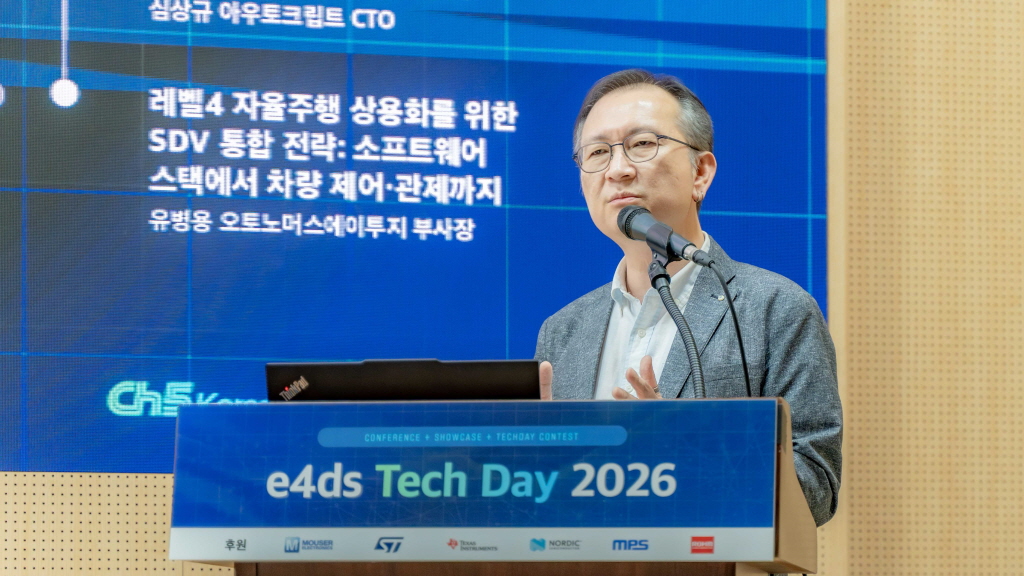
[e4ds Tech Day 2026 ⑨] Sim Sang-gyu, Autocrypt CTO: "In the Physical AI Era, Automotive Security Must Extend Beyond the Vehicle"
At e4ds Tech Day 2026, Sim Sang-gyu, CTO of Autocrypt, explained automotive cybersecurity strategies in the era of Physical AI and SDV (Software-Defined Vehicle). Automobiles are evolving as part of an ecosystem connected to AI, cloud, chargers, IoT, and robots, and he emphasized that the scope of security must expand beyond the vehicle interior to the entire connected environment. In particular, AI model tampering, adversarial attacks, OTA updates, and EV charger hacking were identified as major threats. He explained that response measures require zero trust, AI model integrity protection, intrusion detection, Security by Design and Default, and full lifecycle security management, and that proactive security system establishment beyond regulatory compliance is critical for securing future mobility competitiveness.
2026.10.12by 배종인 기자

NVIDIA to Invest $1 Billion in U.S. Science Over Next Five Years
NVIDIA has announced plans to invest $1 billion over the next five years to strengthen U.S. scientific and technological competitiveness. The company will enhance cutting-edge artificial intelligence research and development capabilities in key areas including quantum computing, healthcare, and energy security, while expanding support for higher education research institutions and cloud service providers. NVIDIA is participating as a major industry partner in the White House Office of Science and Technology Policy's Genesis Mission, and is promoting supercomputer construction in collaboration with national laboratories including Argonne and Los Alamos.
2026.10.12by 배종인 기자











