


Fabless companies should aim for the edge.
 Published2023.02.10 15:22
엣지단서 NPU기술 주목…팹리스-빅테크 AI칩 협업必
“AI칩을 개발하는 중소 개발사들은 엣지에 집중하는 게 매우 중요할 것이다”
“개인화된 인공지능, 리소스 효율성 위해 엣지단 움직임이 활발하다”
“AI반도체와 합쳐지는 솔루션 시장이 앞으로 더욱 커질 것이다”
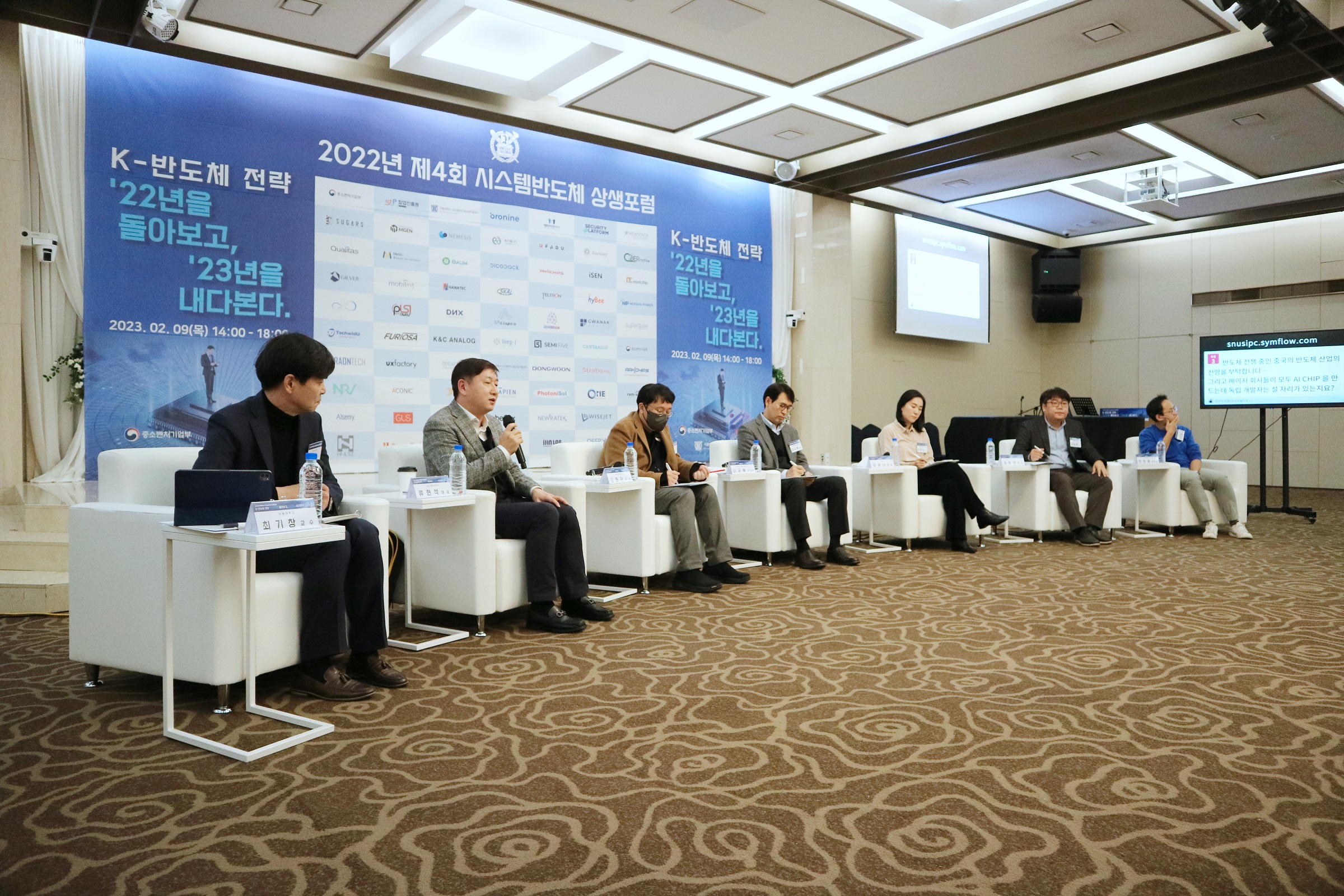
▲시스템반도체 상생포럼 패널토의가 진행되는 모습. 왼쪽부터 △최기창 서울대 교수 △류현석 뉴로리얼리티비전 대표 △김동순 세종대 교수 △이규복 한국전자기술 연구원 부원장(반도체공학회 회장) △임하늬 로아인텔리전스 대표 △김양팽 산업연구원 전문연구원 △전진원 위벤처스 부사장
다수의 업계 전문가들이 엣지단에서의 AI반도체 비전에 긍정적인 발언을 쏟아냈다. 데이터의 폭증, 모빌리티의 전동화, 저전력 요구 증가로 엣지AI시장이 만개할 준비를 마쳤다.
서울대학교 시스템반도체산업진흥센터가 9일 서울대학교 교수회관에서 시스템반도체 상생포럼을 개최했다. ‘K-반도체 전략, 2022년을 돌아보고 2023년을 내다본다’를 주제로 차세대 반도체 기술과 CES 2023 등 다양한 업계 동향을 조망했다.
이날 포럼에는 △임하늬 로아인텔리전스 대표 △김동순 세종대학교 교수 △이규복 한국전자기술연구원 부원장이 참석해 발표를 진행했다.
■ 차세대 반도체, AI가 뜬다
임하늬 대표는 자체 칩 개발에 나선 빅테크 기업들을 조망했다. △TensorFlow 구동에 특화된 인공지능 프로세서 TPU를 개발한 구글 △애플칩 개발하고 있는 애플 △머신러닝 학습에 특화된 Trainium칩을 언급했다.
이들이 자체 칩 개발에 나선 이유로 △서비스 차별화 △칩 공급 부족 △반도체 시장의 공급망 복잡성에 기인했다고 주장했다. 그는 “빅테크 기업들이 반도체 공급망 틈새를 치고 들어갈 룸이 있다고 판단된다”며 “생성AI 많아질수록 컴퓨팅 수요 증가할 것이므로 AI 추론칩 수요가 증가하고 있다”고 덧붙였다.
김동순 교수는 “AI반도체를 통해 국내 산업도 경쟁력을 갖추기 좋은 전환기를 맞이했다”며 “높은 개인화된 인공지능, 네트워크 및 컴퓨팅 리소스의 효율화 요구가 증가하며 빅데이터 연산 효율성 제고를 위해 엣지단에서의 클라우드·AI 서비스 모델이 활발히 창출되고 있다”고 설명했다.
더불어 모빌리티의 전동화가 대세로 자리 잡으며 엣지와 모빌리티를 잡기 위한 저전력 경량 AI 지원 시스템반도체가 차세대 핵심 기술로 부상하고 있음을 강조했다.
■ 엣지AI, 팹리스 성장 동력
임하늬 대표는 엣지AI 집중 전략에서 “단순히 디바이스 차원에서의 엣지뿐 아니라 특정 애플리케이션에서의 특정 사용성에 집중해 서비스적인 엣지를 찾아가야 한다”고 강조했다. 틱톡을 만드는 바이트댄스도 자체 칩을 만든다는 것을 예로 들며 기능적인 측면에서의 엣지AI가 접합이 된다는 것을 염두에 둬야 한다고 말했다.
김동준 교수도 “인텔, 퀄컴 등에서 엣지단 NPU 기술을 주목하고 있다”며 “국내 팹리스가 성과를 낼 수 있는 분야가 엣지AI이며 본격 시장 성숙은 3~4년 정도, 피크는 10년 후 정도로 예측된다”고 전망했다.
이규복 부원장도 “엣지단을 타케팅하는 게 더 유효하며 IoT, 스마트팩토리 등 엣지단에서 AI가 필요하다”며 CES 2023서 주목을 받은 존 디어사의 자율주행 트랙터에 주목할 것을 주문했다.
자율주행을 컨트롤하는 중심 컴퓨팅에는 엔비디아 등 글로벌 기업의 칩셋이 들어가겠지만 자동차 엣지단에는 수많은 모듈이 들어가며 중앙 컴퓨팅 리소스를 줄이고 저전력을 구현하기 위해선 엣지AI는 필연적일 수밖에 없다.
존 디어의 파종기는 센서를 통해 파종과 비료 투입 등을 조절하는데 이 부원장은 “이러한 트랙터에 개별 모듈이 수십개 달려 있으며 카메라와 엣지단에서 해결하는 것이 필요하다”고 덧붙였다.
포럼에 참석한 한 팹리스 기업 대표는 “AI반도체를 중소기업이 어프로치하기가 막막하다”며 “쿠팡, 배달의 민족, 네이버 등 빅테크 기업들이 AI 가장 많이 쓰는데 이들과 같은 수요기업과의 연계가 매우 중요하다”고 말했다.
AI칩은 범용 솔루션 마켓이 존재하지 않으며 빅테크 기업 등이 자기 수요 소비 차원에서 만드는 경우가 많다. 국내 시스템반도체 생태계 활성화를 위해 빅테크-팹리스 간 연계를 통한 수요기업용 AI칩셋 개발 프로젝트 등 상생 전략 마련이 필요해 보인다.
Comments
Related news
Seoul National University's SIPC seeks solutions for K-fabless companies to expand overseas.
Domestic fabless companies account for only 1% of global market sales, but with active efforts to cultivate excellent semiconductor talent and build a semiconductor ecosystem, future growth is anticipated. On the 3rd, the first System Semiconductor Coexistence Forum of 2022, hosted by Seoul National University's System Semiconductor Industry Promotion Center, took place simultaneously at the Professors' Hall Convention Hall and online.
2022.05.06by 명세환 기자
.jpg)
System Semiconductor Symbiosis Forum Shares Global Expansion Investment Strategies
While efforts to nurture Korea's domestic semiconductor ecosystem are gaining momentum, investment environments are contracting due to inflation and rising interest rates, foreshadowing difficulties in corporate operations. Accordingly, a forum has been established where fabless companies and system semiconductor sector stakeholders can share investment and support strategies and know-how.
2022.08.26by 명세환 기자
Samsung Electronics Strengthens System Semiconductor Momentum
Even as market sentiment suggests the semiconductor industry has entered a downcycle, there is active movement to seek future growth drivers. Samsung Electronics is focusing its efforts to strengthen momentum in the system semiconductor sector, which is a key next-generation market.
2022.10.07by 명세환 기자

[e4ds Tech Day 2026 ⑨] Sim Sang-gyu, Autocrypt CTO: "In the Physical AI Era, Automotive Security Must Extend Beyond the Vehicle"
At e4ds Tech Day 2026, Sim Sang-gyu, CTO of Autocrypt, explained automotive cybersecurity strategies in the era of Physical AI and SDV (Software-Defined Vehicle). Automobiles are evolving as part of an ecosystem connected to AI, cloud, chargers, IoT, and robots, and he emphasized that the scope of security must expand beyond the vehicle interior to the entire connected environment. In particular, AI model tampering, adversarial attacks, OTA updates, and EV charger hacking were identified as major threats. He explained that response measures require zero trust, AI model integrity protection, intrusion detection, Security by Design and Default, and full lifecycle security management, and that proactive security system establishment beyond regulatory compliance is critical for securing future mobility competitiveness.
2026.10.12by 배종인 기자
NVIDIA to Invest $1 Billion in U.S. Science Over Next Five Years
NVIDIA has announced plans to invest $1 billion over the next five years to strengthen U.S. scientific and technological competitiveness. The company will enhance cutting-edge artificial intelligence research and development capabilities in key areas including quantum computing, healthcare, and energy security, while expanding support for higher education research institutions and cloud service providers. NVIDIA is participating as a major industry partner in the White House Office of Science and Technology Policy's Genesis Mission, and is promoting supercomputer construction in collaboration with national laboratories including Argonne and Los Alamos.
2026.10.12by 배종인 기자











