



[Interview] Lee Chang-hee, Infineon Director: "Magnetic induction wireless charging devices must comply with the Qi 1.3 standard."
 Published2023.02.15 18:07
5W 이상 충전 지원할 때 암호화 인증 기능 必
인피니언 무선 충전 솔루션, Qi 1.3 표준 지원
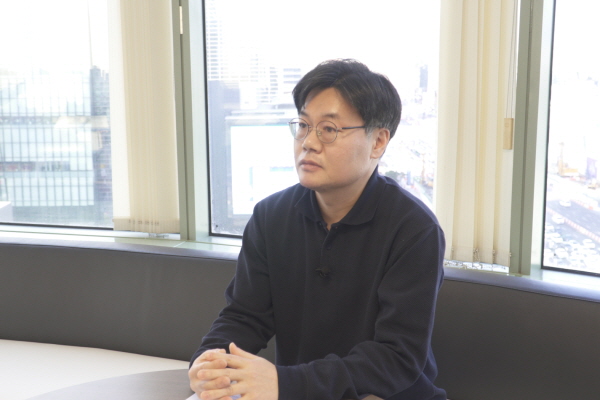
▲이창희 인피니언 코리아 PSS 사업부 이사
무선 충전 기술은 크게 자기유도(Inductive)와 자기공명(Resonant) 방식으로 나눌 수 있다.
현재 시장 지배적인 기술은 자기유도 방식으로, 충전 가능 거리가 수 mm 내로 매우 짧지만 전력 효율이 80% 이상으로 매우 높고 세계 무선 충전 표준협회(WPC: Wireless Power Consortium)의 표준 기술로서 기기 호환성이 우수하다. 자기유도 방식의 Qi 1.3 표준에서는 보안 인증을 통해 15W에서 50W까지의 급속 충전을 지원하고 있다.
최근 자기유도와 자기공명 방식이외의 무선 충전 기술로 NFC charging 기술이 표준화되었다. 무선 충전 코일을 적용하기 어려운 소형 웨어러블 기기에 적합하며 최대 1W까지 충전이 가능하다.
최근 스마트폰이나 IoT 기기 등의 폭발적인 증가와 전기 자동차의 보급에 따라 무선 충전을 지원하는 기기가 점점 증가하고 있다. 언론에 따르면 무선 충전 시장의 규모는 매년 약 30%씩 성장하고 있으며 2026년에는 한화 약 49조원에 이를 것으로 예상된다.
■ 무선 충전 솔루션을 개발하는 데 주의해야 할 사항은 무엇이 있나
첫째로 인증 측면에서 2023년부터 출시되는 자기유도 방식의 무선 충전 기기는 Qi 1.3 표준을 준수해야 한다.
Qi 1.3 에서는 5W 이상의 충전을 지원할 때 암호화 인증 기능이 필요하며, 인증 테스트의 항목이 기존의 120개에서 632개로 증가했기 때문에 이에 대한 대비가 필요하다.
둘째로 안전성 측면에서 충전 전력이 증가함에 따라 금속 등의 이물질에 의한 과열 사고의 위험과 높은 전압과 전류에 의한 시스템 손상 위험이 증가하기 때문에 이에 대한 보호 기능 강화가 필요하다.
마지막으로 호환성 측면에서 무선 충전 기기의 증가와 무선 충전 표준의 변경에 따라 상호 호환성 테스트 기기의 개수와 테스트 복잡도 증가에 대비해야 한다.
■ 무선 급속 충전에 대한 소비자들의 요구가 늘어나고 있다. 무선 급속 충전과 관련된 인피니언의 솔루션이 있는지 궁금하다
인피니언의 무선 충전 솔루션인 WLC1115 마이크로컨트롤러는 Qi 1.3 표준을 지원하며 BPP(Base Power Profile) 모드에서 5W, EPP(Extended Power Profile) 모드에서 15W를 지원한다. 또한 각 제조사별 독점 프로토콜인 PPDE(Proprietary Power Delivery Extensions) 모드를 통해 최대 50W까지 급속 충전을 지원한다.
급속 충전에 따른 보호 기능으로 이물질이 감지되었을 때 충전 전력을 줄이거나 차단하는 △이물질 감지(FOD: Foreign Object Detection) 메커니즘 △과전압 방지(OVP: Over Voltage Protection) △과전류 방지(OCP: Over Current Protection) △과열방지(OTP: Over Temperature Protection) △부족 전압 차단(UVLO: Under Voltage Lock Out) 기능 등의 시스템 보호 기능을 지원한다.
더불어 인피니언 OPTIGA™ Trust Charge 솔루션과 연계하여 Qi 1.3 보안 인증 기능을 지원한다.
■ 인피니언의 무선 충전 솔루션의 적용 범위와 특장점에 대해 말씀 부탁드린다
인피니언의 무선 충전 솔루션인 WLC1115는 Qi 1.3을 지원하는 다앙한 무선 충전 전송 시스템에 적용 가능하다.
인피니언의 AC-DC 파워 솔루션인 PAG1과 같이 적용하여 USB-C 충전기와 무선 충전기를 턴키 방식으로 개발할 수 있으며, 인피니언의 USB-C PD MCU 솔루션인 PMG1과 같이 사용하여 USB-C 모니터나 도킹 스테이션에 무선 충전 기능을 추가할 수 있다.
또한 인피니언의 USB-C PD 소스 컨트롤러인 CYPD7171 솔루션과 같이 사용하면 전력 부하 분산 (Load sharing)이 가능한 유/무선 충전 시스템을 개발할 수 있다.
인피니언의 무선 충전 솔루션 WLC1115의 특장점은 하드웨어적인 측면에서 USB-C 컨트롤러, Buck-Boost, LDO(Low Drop Output), 게이트 드라이버를 자체 내장하여 비용 효율적이며 인피니언의 우수한 MOSFET 및 보안 솔루션과 같이 연계하여 시스템을 효과적으로 구성할 수 있다는 점이 있다.
소프트웨어 측면에서 통합 개발 환경인 ModusToolbox™와 무선 충전 SDK를 사용하여 호환성 이슈에 대한 지원이 유연하고, 제조사 독점 프로토콜인 PPDE의 개발이 용이하다.
마지막으로, 펌웨어 업데이트 기능을 지원하고 Configuration Utility를 사용하여 이물질 감지(FOD) 및 다양한 시스템 설정을 할 수 있어 개발 및 유지보수에 강점이 있다.
■ 다가오는 e4ds 웨비나에서 발표하시는 내용에 대한 간단한 소개와 독자분들께 한 마디 부탁드린다
이번 웨비나에서는 무선 충전 기술에 대해 간략히 소개하고, USB-C를 통합한 인피니언의 무선 충전 솔루션인 WLC1115의 기능과 특징, 그리고 개발 환경에 대해 설명한 후, 다양한 어플리케이션에서 해당 솔루션의 적용 방안에 대해 소개할 예정입니다.
무선 충전에 관심 있는 분들과 해당 솔루션을 개발하시는 분들께 도움이 되고자 이번 웨비나를 준비했습니다.
많은 참석 부탁드립니다.
Comments
Related news

Intel Unveils Next-Generation 'Core Ultra Series 3' and vPro Platform for Enterprise PCs
Intel has officially unveiled the "Intel Core Ultra Series 3" for next-generation enterprise PCs and the latest vPro platform, addressing a wide range of demands from enterprise notebooks to high-performance workstations.
2026.03.26by 배종인 기자

ROHM Launches ESD Protection Diode Compatible with High-Speed Interfaces of 10Gbps or Higher
Semiconductor specialist ROHM has developed the 'RESDxVx series' of ESD (electrostatic discharge) protection diodes capable of responding to next-generation high-speed data communication environments exceeding 10Gbps, simultaneously enhancing both signal quality maintenance required in high-speed interfaces and IC protection performance.
2026.03.26by 배종인 기자
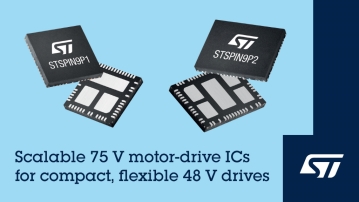
ST Launches 75V Drive IC Targeting 48V Industrial Motor Driving
ST Microelectronics has unveiled the 'STSPIN9P' series of 75V motor drive ICs tailored for 48V-class industrial drive system design. The new product family is characterized by half-bridge and full-bridge configurations that enable design scalability according to motor type and output conditions. Power supply circuits, protection functions, and current sensing circuits are integrated on-chip to simplify system configuration, and the devices are designed to support applications up to 500W maximum. The company plans to provide reference designs and demo boards to support development and evaluation in industrial automation, robotics, pumps, fans, lighting, and textile machinery.
2026.03.26by 배종인 기자
Nordic supports security updates for the entire lifecycle of IoT devices at a single fixed cost
Nordic Semiconductor, a global leader in low-power wireless connectivity solutions, has unveiled a single fixed-cost licensing model that delivers FOTA (Firmware Over-the-Air) and device management capabilities throughout the device lifecycle via nRF Cloud, and introduced a new firmware update solution to prepare for the enforcement of the European Union's Cyber Resilience Act (CRA).
2026.03.26by 배종인 기자
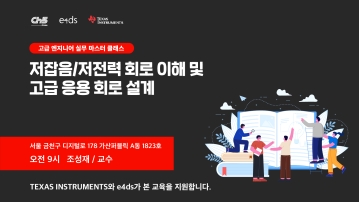
Practical Training in Low-Noise, Low-Power Circuit Design All in One Place… Training Fee Support
The "2026 Advanced Engineer Practical Masterclass" to strengthen competencies in high-sensitivity analog circuit and sensor-based system design will be held on April 16 at the e4ds Conference Center in Gasan-dong, Seoul. This program will be conducted as an offline paid hands-on training session, not online, and is targeted at engineers seeking on-site intensive learning. Texas Instruments will provide educational support for this training, allowing participation at 150,000 won, a 100,000 won discount from the original price of 250,000 won.
2026.03.26by 배종인 기자











