



Opinions on the semiconductor tax credit are divided: "The effect is uncertain" vs. "The deduction rate should be increased."
 Published2023.03.14 13:44
野, 구체적 공제율 논의 전 업계관계자 회동
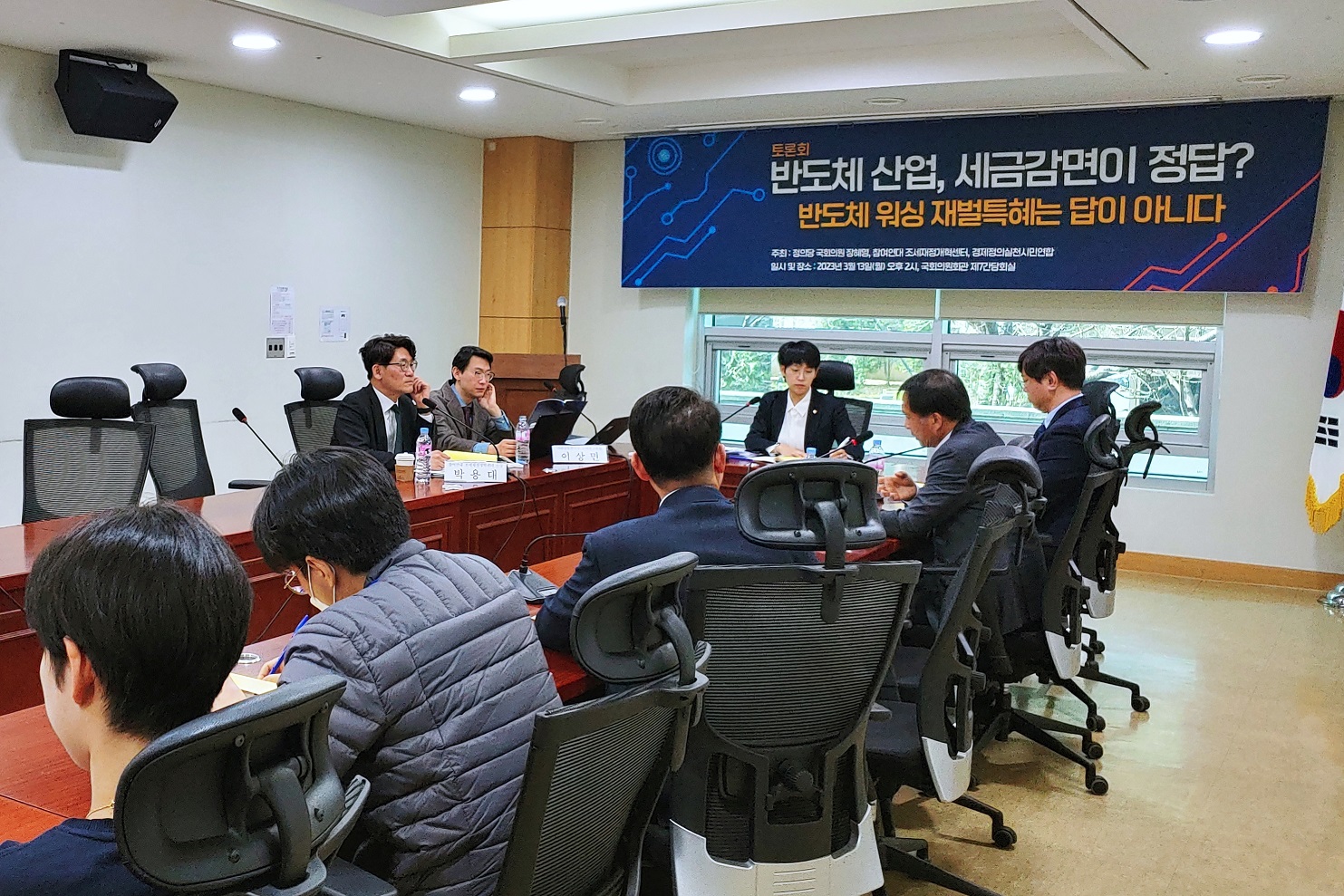
▲장혜영 정의당 국회의원 주최 ‘반도체 산업, 세금감면이 정답?’ 국회 토론회

국회에서 반도체 설비 투자 세액공제 확대안을 두고 구체적인 공제율 논의가 오가고 있다. 여·야당 모두 현재 기준에서 공제율 확대 기조와 함께 국가첨단전략산업에 수소·전기차 분야 추가 요구도 나오는 상황이다. 이 가운데 일각에선 반도체 세액공제에 효과가 불확실하다며 조세수입 감소와 대기업·외국기업 밀어주기 특혜가 될 수 있다는 우려의 목소리가 나오고 있다.
■ 장혜영 의원, “반도체 세제혜택, 투자유치 견인 No”
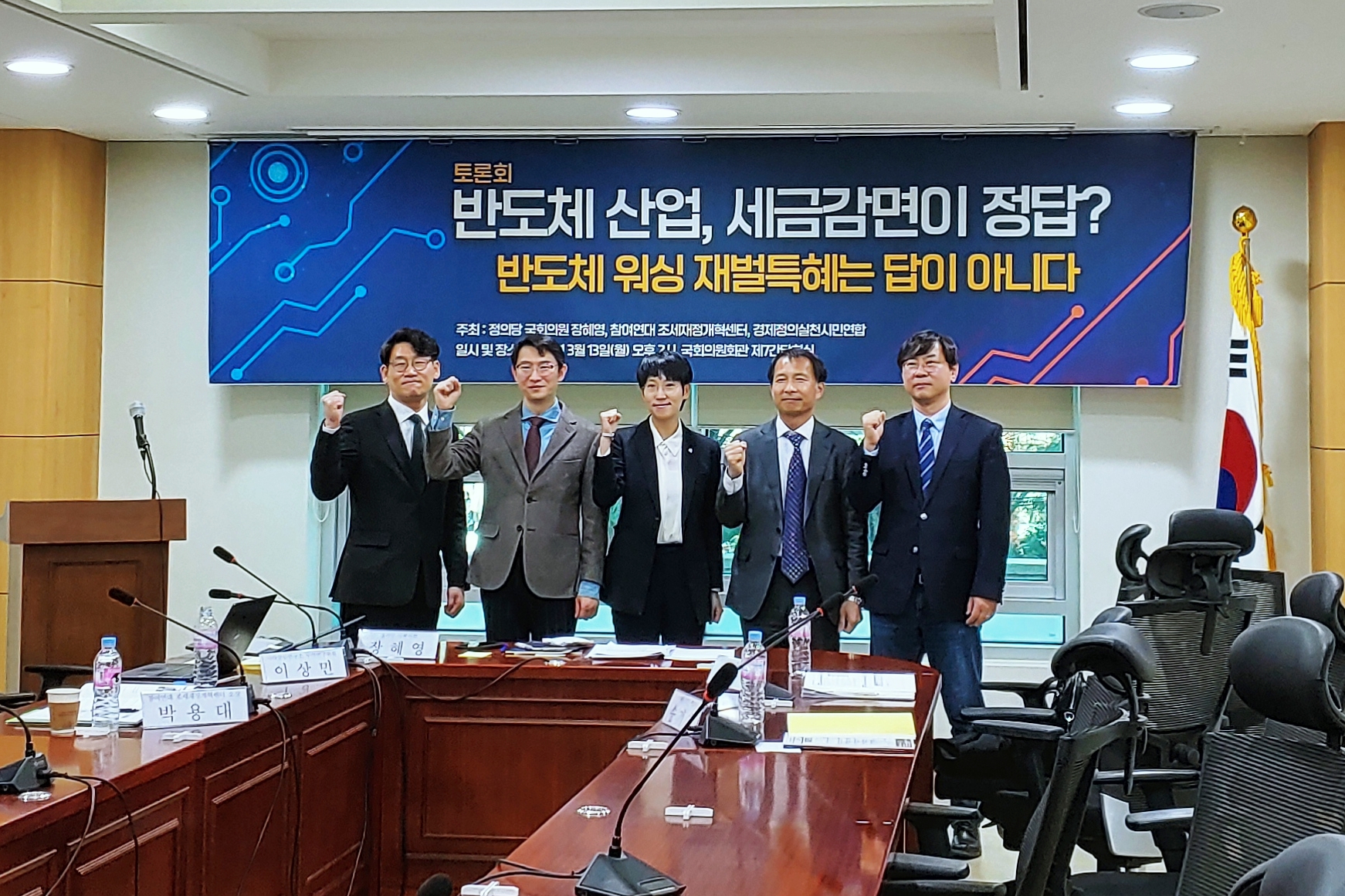
▲왼쪽부터 박용대 참여연대 조세재정개혁센터 소장, 이상민 나라살림연구소 수석 연구위원, 장혜영 정의당 국회의원, 송기호 국제통상전문 변호사, 박상인 서울대학교 행정대학원 교수
지난 13일 여의도 국회의원회관에서 ‘반도체 산업, 세금감면이 정답?’이란 국회 토론회가 개최됐다. 이날 토론회서 반도체 세제혜택에 대한 의문과 함께 명확한 투자효과 추정이 필요하단 주장이 제기됐다.
장혜영 정의당 국회의원은 “세액공제 8%도 세계 최고 수준인데 15%로 추가 상향하는 근거는 무엇이며 대통령 입김에 기준이 고무줄처럼 변한다”고 지적했다. 5년 간 7조원에 이르는 세수 감소에 대한 우려하는 장 의원은 “세금 감면이 투자로 이어진다는 보장도 없는 정책은 대기업 특혜에 불과하다”고 토로했다.
이상민 나라살림연구소 수석 연구위원은 한국의 정부지출 규모가 40%를 밑돈다며 “작은 정부지만 경제 관련 지출은 GDP 대비 14%, 연구개발 투자 지출은 OECD 최상위권, 복지 지출은 최하위권”이라고 못박았다.
이 수석은 “시설투자 감면액 15%에 더해 추가시설투자 감면액 10%까지 세액공제 받는다면, 삼성전자는 최대 7.9조원, SK하이닉스는 최대 1.8조원까지 세금 감면 혜택이 가능하다”며 반도체 세액 감소가 법인 세액 감소보다 많을 것이라고 주장했다.
박상인 서울대 행정대학원 교수는 한국 반도체 산업이 넛크래커 현상에 직면했다며 후발주자의 저가 공세 치이고 선진국의 첨단기술력에 부딪히는 형국이라고 평가했다. 박 교수는 “정부의 추가적 조세 혜택은 이미 계획된 투자에 세금 혜택만 주는 꼴로 칩메이커들의 국내 투자에 영향을 주기 어렵다”고 꼬집었다.
그는 △RE100 달성 여부와 친환경 에너지 수급 계획 우선 △소부장 및 시스템 반도체 산업 육성을 반도체 생태계 발전 전략의 궁극적인 방향성이라고 덧붙였다.
■ 野, 세액공제 대·중견 15%·중소 25% 상향 논의
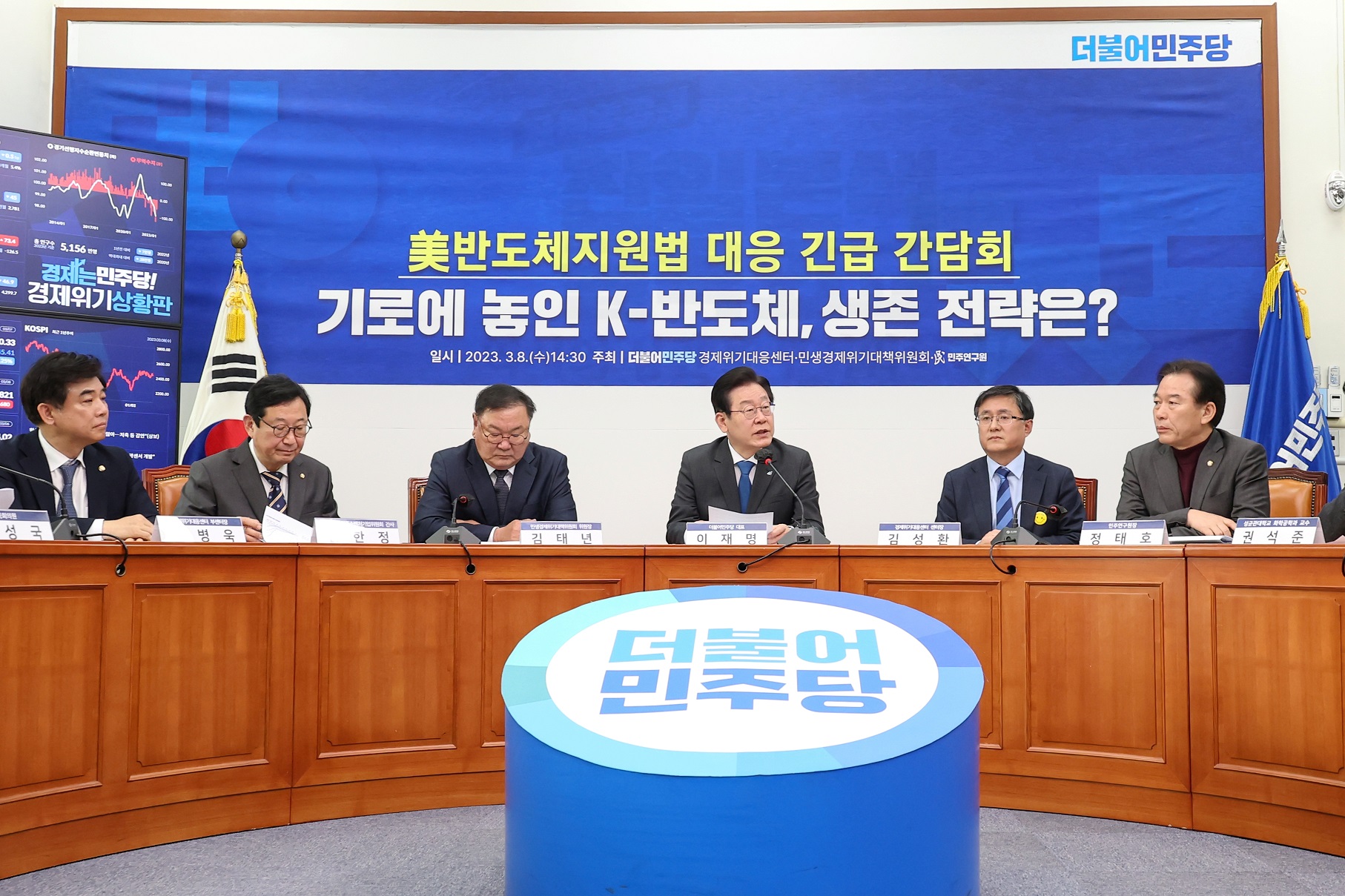
▲8일 진행된 美반도체지원법 대응 긴급 간담회(사진:더불어민주당)
야당은 15∼25% 반도체 세액공제 상향을 논의하고 있으며, 김학용 국민의힘 의원은 20∼30%까지 반도체 세액공제 확대하는 개정안을 발의해 귀추가 주목되고 있다.
13일 더불어민주당은 삼성전자·SK하이닉스·한국반도체산업협회 등 업계 관계자들과 비공개로 회동했다. 이날 간담회에서 반도체 등 국가첨단전략산업에 관한 투자 세액공제와 미국 칩스법에 대한 업계 의견을 청취한 것으로 전해졌다.
한국은 반도체를 포함한 국가전략기술의 R&D 비용 세액공제율이 현행 30~50%, 설비투자 세액공제율은 6~20%에 달하는 것에 더해 최근 추가 확대를 도모하며 첨단 산업에 올인(All-in)하고 있다.
대만이 최근 반도체 R&D 비용에 대한 세액공제율을 기존 15%에서 25%로 상향하고, 설비투자는 5%로 신설하는 법안이 지난 1월 통과된 가운데 국내 현행이 이보다 웃도는 수준으로 세제 감면 혜택을 지원하고 있다.
여기에 더해 국회서 논의되고 있는 반도체 시설투자 세액공제 비율은 대·중견기업 현행 8%에서15%, 중소기업 현행 16%에서 25%로의 상향이 유력하다. 3월 중 여야 합의가 전망되는 한편, 민주당은 수소 및 전기차까지도 투자 세액공제 혜택이 적용되는 국가전략기술 범위에 넣어야 된다고 확대를 요구하고 있다.
일각에선 20~30%선까지 상향 조정하는 개정안도 나왔다. 김학용 국민의힘 의원은 대·중견기업 20%, 중소기업 30%까지 상향 조정해 지원을 대폭 강화하는 개정안을 지난 9일 발의했다.
다가오는 16일 기획재정위원회 조세소위원회서 이번 반도체 시설투자 세액공제 개정이 포함된 조세특례제한법 개정안 심사가 예정된 가운데 어느정도 수준의 세액공제 비율이 여야 합의로 심사 문턱을 넘어 본회의에 상정될지 귀추가 주목되고 있다.

Comments
Related news
Semiconductor tax support expanded to up to 25%+α
The semiconductor equipment investment tax credit rate, which saw only a slight expansion in the amended Tax Incentives Limitation Act that passed through the National Assembly in December of last year, is expected to be significantly increased and resubmitted to the National Assembly. If passed, it is anticipated that tax support for the semiconductor industry will be strengthened.
2023.01.03by 배종인 기자
The Ministry of Trade, Industry and Energy will invest KRW 499.4 billion in R&D for eco-friendly and autonomous vehicles.
The government is investing 499.4 billion won in future vehicle technology development, including eco-friendly vehicles and autonomous vehicles, focusing on future vehicle technology development and corporate support.
2023.02.09by 배종인 기자
Investing 170 trillion won in science and technology R&D over 5 years
The government will invest 170 trillion won over five years in the development of 12 state-strategic technologies including space and quantum, as well as key areas such as carbon neutrality, through a mid-to-long-term investment strategy legislated for the first time.
2023.03.14by 배종인 기자

Intel Unveils Next-Generation 'Core Ultra Series 3' and vPro Platform for Enterprise PCs
Intel has officially unveiled the "Intel Core Ultra Series 3" for next-generation enterprise PCs and the latest vPro platform, addressing a wide range of demands from enterprise notebooks to high-performance workstations.
2026.03.26by 배종인 기자

ROHM Launches ESD Protection Diode Compatible with High-Speed Interfaces of 10Gbps or Higher
Semiconductor specialist ROHM has developed the 'RESDxVx series' of ESD (electrostatic discharge) protection diodes capable of responding to next-generation high-speed data communication environments exceeding 10Gbps, simultaneously enhancing both signal quality maintenance required in high-speed interfaces and IC protection performance.
2026.03.26by 배종인 기자











