


Will the semiconductor investment tax cut really work? The industry is watching closely for passage.
 Published2023.03.17 11:17
Semiconductor societies and industry expect swift passage of the global competitive crisis.
National efforts are being focused on fostering the semiconductor industry. With the government's vision for fostering system semiconductors unveiled alongside private investment, the industry is closely watching the passage of the revised semiconductor facility investment tax credit bill, known as the "K-Chips Act."
On the 16th, the Semiconductor Special Act on Expanding Tax Credits for Semiconductor Facility Investments passed the Tax Review Subcommittee of the National Assembly Planning and Finance Committee. The amendment includes raising the tax rate from 8% to 15% for large and medium-sized enterprises and from 16% to 25% for small and medium-sized enterprises.
This amendment, which passed the Tax Subcommittee, is expected to be submitted to the plenary session on the 30th after being deliberated by the full meeting of the Planning and Finance Committee and the Legislation and Judiciary Committee on the 22nd.
The main contents of the amendment are as follows: △Designating hydrogen and future mobility as national strategic technologies directly in the law along with semiconductors, secondary batteries, vaccines, and displays; △In order to strengthen the competitiveness of national strategic industries, the tax deduction rate for facility investment in national strategic industries will be expanded from the current 8% to 15% for large and medium-sized enterprises, and from the current 16% to 25% for small and medium-sized enterprises; and △Introducing a temporary investment tax deduction system that will increase the tax deduction rate by 2%p and 6%p for new growth, original technology, and general technology for 2023 only, and deduct 10% of all integrated investment increases, the Strategy and Finance Committee announced.
The industry is anxiously awaiting the passage of the government and National Assembly's semiconductor support policy. On the 8th, the semiconductor academic community sent a statement to the People Power Party, the Democratic Party of Korea, and the Justice Party, urging the National Assembly to quickly pass the ‘Semiconductor Industry Tax Credit Amendment Bill.’
This statement, issued by four semiconductor-related academic societies including the Korean Institute of Electrical Engineers, the Korean Microelectronics and Packaging Society, the Korean Society of Semiconductor and Display Technology, and the Semiconductor Engineering Society, emphasized the need to protect the semiconductor industry as a top priority asset in order to secure technological supremacy and economic security at a crossroads in the global competitive environment.
On the 15th, the Korea Semiconductor Industry Association also released a statement expressing its support for the announcement of the national advanced industry development strategy, saying, “We ask for the government’s continued interest and support so that our country’s semiconductor industry can go beyond its status as a memory semiconductor industry and be reborn as a true comprehensive semiconductor powerhouse,” and “We hope for the swift passage of the investment tax credit amendment currently being discussed in the National Assembly.”
At a time when the entire semiconductor industry is concentrating its efforts on new private investments to build semiconductor mega clusters, including those of Samsung Electronics and SK Hynix, companies are eagerly awaiting an expansion of the semiconductor investment tax reduction.
The Federation of Korean Industries released a statement welcoming the passage of the K-Chips Act through the Tax Subcommittee on the 16th, saying, “The domestic semiconductor industry is facing an unprecedented crisis, with exports recently halved and the gap between major companies such as Samsung Electronics and SK Hynix and Taiwan’s TSMC widening.” They added, “We expect this amendment to play a key role in relieving the industry of its breathing space and opening up new avenues.”
While relevant organizations eagerly await passage in the plenary session, voices from the industry are also rising, demanding regulatory reforms and the creation of conditions for human resource supply and demand that will allow domestic companies to actively invest, develop products, and create jobs.
one side Some voices opposed the expansion of the investment tax credit, claiming it favors large conglomerates. Justice Party lawmaker Jang Hye-young questioned the effectiveness of the tax benefits, claiming the amendment would only provide tax breaks for planned domestic investments.

Comments
Related news
Semiconductor tax support expanded to up to 25%+α
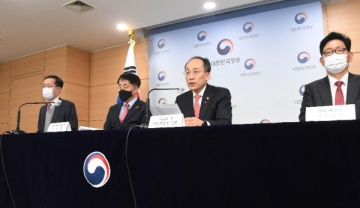
The semiconductor equipment investment tax credit rate, which saw only a slight expansion in the amended Tax Incentives Limitation Act that passed through the National Assembly in December of last year, is expected to be significantly increased and resubmitted to the National Assembly. If passed, it is anticipated that tax support for the semiconductor industry will be strengthened.
2023.01.03by 배종인 기자
Opinions on the semiconductor tax credit are divided: "The effect is uncertain" vs. "The deduction rate should be increased."
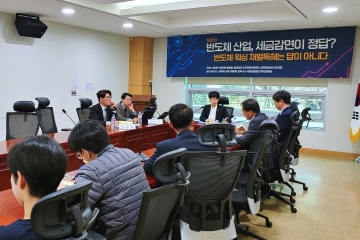
In the National Assembly, concrete discussions on deduction rates are underway regarding the expansion of tax credits for semiconductor equipment investment. Both the ruling and opposition parties are aligned on the direction of expanding deduction rates based on current standards, while there are also requests to add hydrogen and electric vehicle sectors to national advanced strategic industries. Meanwhile, some voices are raising concerns that the effects of semiconductor tax credits are uncertain, and that it could result in decreased tax revenue and become preferential treatment favoring large corporations and foreign companies.
2023.03.14by 명세환 기자
'300 trillion' semiconductor cluster to be built in Yongin
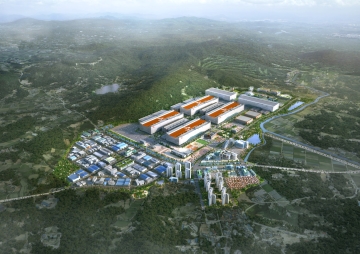
It is anticipated that a world-leading semiconductor mega cluster will be established in the Seoul metropolitan semiconductor memory manufacturing complex by linking more than 150 domestic and international parts, materials, and equipment (PME) companies and Pangyo fabless firms.
2023.03.15by 명세환 기자
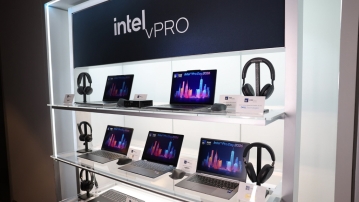
Intel Unveils Next-Generation 'Core Ultra Series 3' and vPro Platform for Enterprise PCs
Intel has officially unveiled the "Intel Core Ultra Series 3" for next-generation enterprise PCs and the latest vPro platform, addressing a wide range of demands from enterprise notebooks to high-performance workstations.
2026.03.26by 배종인 기자
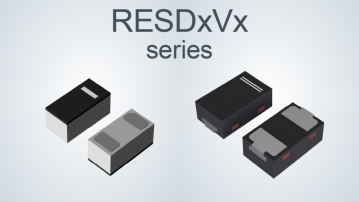
ROHM Launches ESD Protection Diode Compatible with High-Speed Interfaces of 10Gbps or Higher
Semiconductor specialist ROHM has developed the 'RESDxVx series' of ESD (electrostatic discharge) protection diodes capable of responding to next-generation high-speed data communication environments exceeding 10Gbps, simultaneously enhancing both signal quality maintenance required in high-speed interfaces and IC protection performance.
2026.03.26by 배종인 기자











