



System semiconductors aren't something you can just build.
 Published2023.03.22 11:40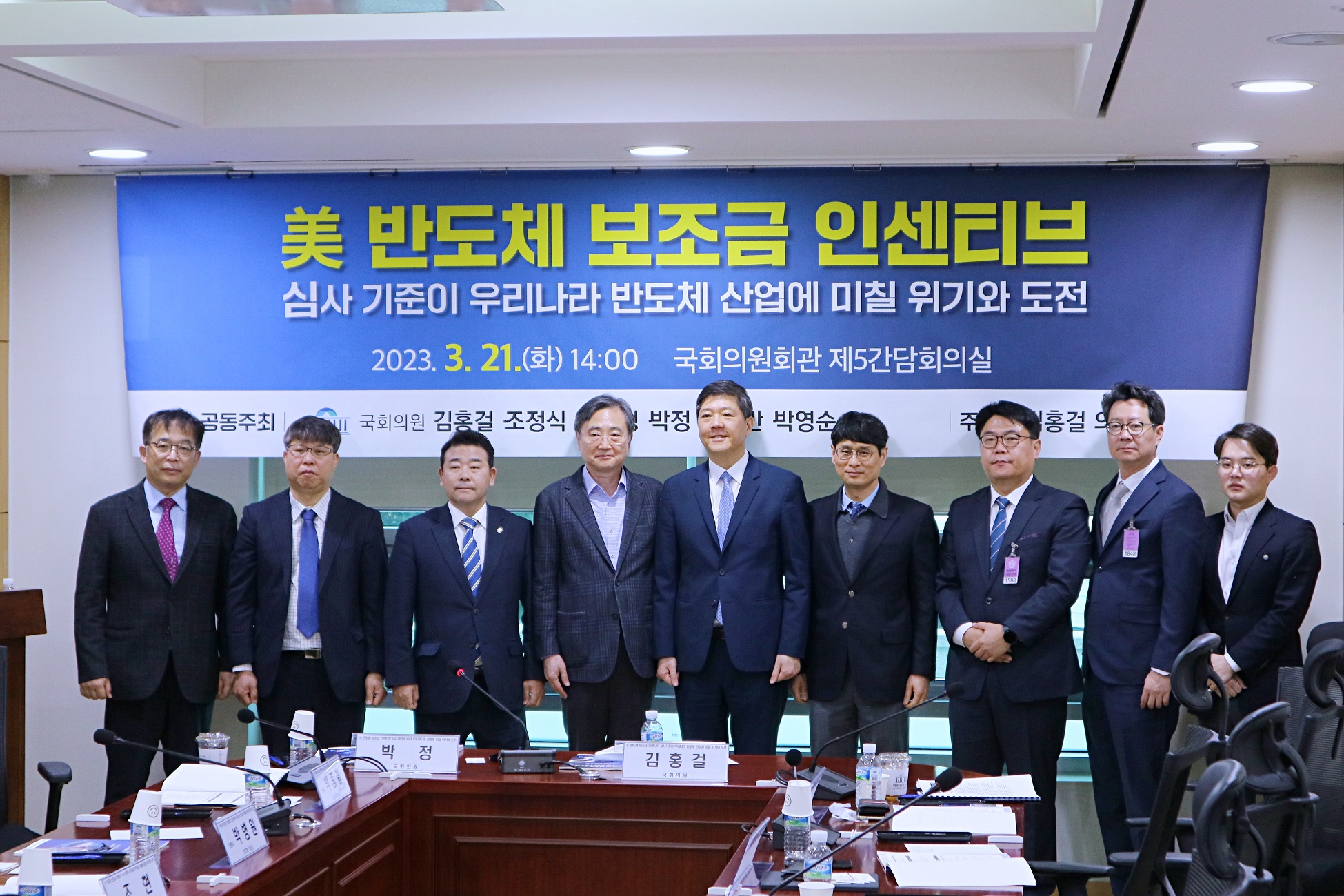
▲美 반도체 보조금 인센티브 대응 토론회. 오른쪽부터 백서인 한양대 교수, 왕성호 네메시스 대표이사, 김양팽 산업연구원 전문연구원, 이왕휘 아주대 교수, 김홍걸 의원
“尹, 시스템반도체 이해도 떨어진다”
팹리스업계, IP·인재·생태계 부족 토로

“시스템반도체 토양은 IP 확보에서부터 시작된다”
윤석열 정부가 시스템반도체 메가 클러스터 구축을 공표한 가운데 시스템반도체 생태계를 제대로 이해하지 못했다는 지적이 연이어 터져 나오고 있다.
21일 여의도 국회의원회관에서 미국 반도체 보조금 인센티브에 대응하기 위한 국회 토론회가 개최됐다. 미국의 보조금 심사 기준이 국내 반도체 산업에 미칠 영향에 대해 논의하는 이번 자리는 김홍걸 의원실에서 주관하고 △김양팽 산업연구원 전문연구원 △왕성호 네메시스 대표이사 △백서인 한양대 교수 등이 참여해 관련 대응법을 모색했다.
■ 美, ”보조금’이라 쓰고 ‘계륵’이라 읽는다
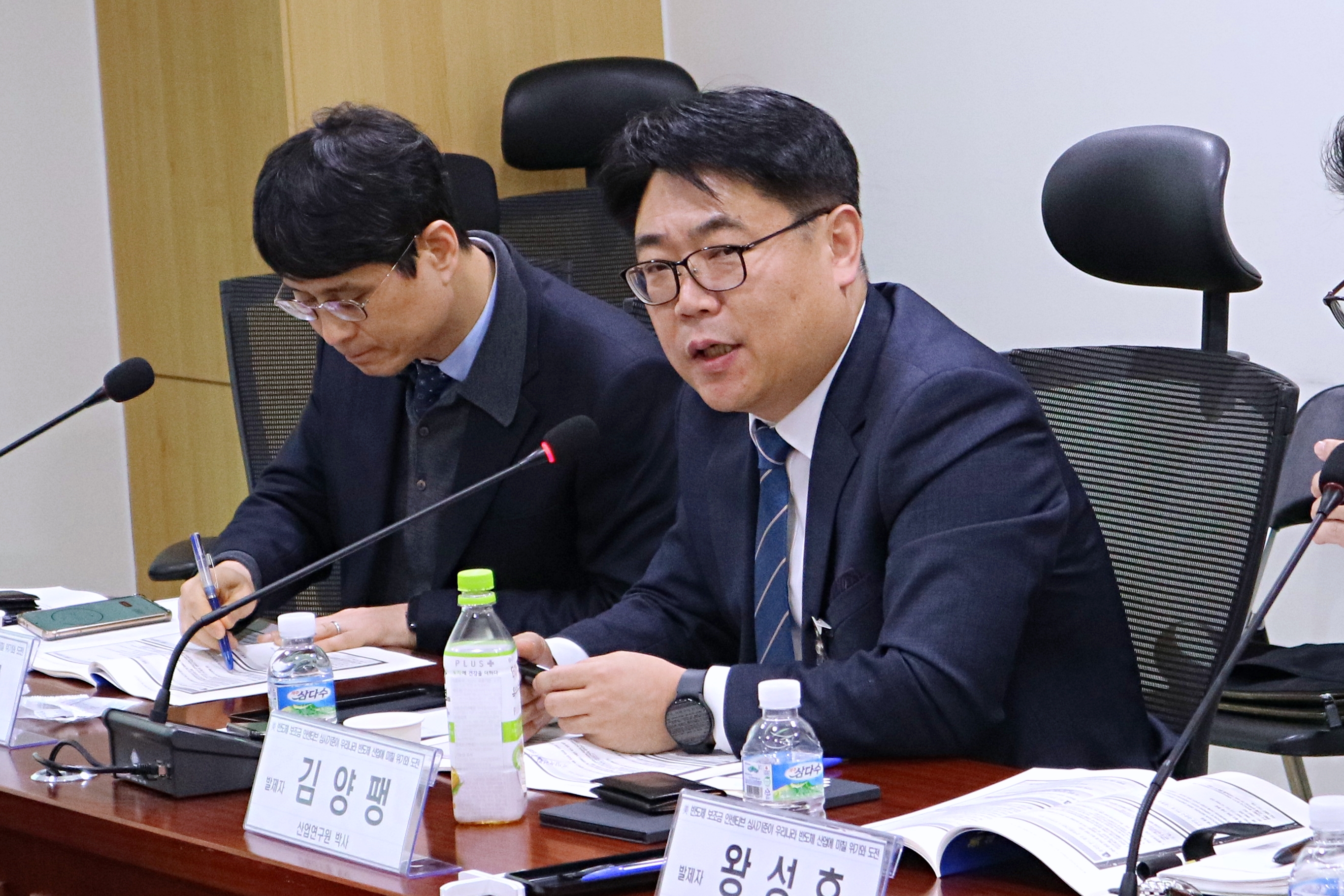
▲김양팽 산업연구원 전문연구원
김양팽 산업연구원 전문연구원은 “미국은 반도체 생태계에 속하는 국가들이 대중국 통제에 동참할 것을 요구하고 있다”며 이 과정에서 반도체 인센티브는 국가 안보라는 목표를 달성하기 위한 수단이 될 것이라고 전했다. 그는 최근 미국 상무부가 반도체 보조금 지원 조건을 내걸며 △초과 이익에 대한 지급 보조금 환수 △향후 10년 간 중국 투자 및 협력 제한 등을 발표한 내용을 거론하며 이 같이 말했다.
지나 레이몬도 상무장관은 지난 2월 조지워싱턴대학교 강연에서 “반도체 보조금 수혜는 경기 침체기 어려움을 겪는 기업에 대한 지원 목적이 아니며, 미국에서 기업이 더 많은 수익을 내도록 돕는 것도 아니다”라며 “우리의 투자는 국가 안보 목표 달성에 있다”고 발언했다.
김양팽 연구원은 “삼성전자·SK하이닉스 관계자들과 만나보면 SK하이닉스는 아직 미국 내 공장 구축을 진행하지 않아 보조금 신청계획이 없다”며 “삼성전자와 TSMC만이 보조금 신청을 고려하고 있지만 최근 TSMC가 보조금 신청하지 않을 수도 있단 보도가 나오며 삼성이 관련 동향 파악에 나서고 있는 상태”라고 전했다.
업계는 보조금 수혜를 받고 미국 상무부가 내건 조건대로 이행할 경우 재료, 수익구조, 기술 등 반도체 개발·생산에 들어가는 노하우가 상당부분 노출될 우려가 있어 고심이 깊은 것으로 전해진다. 게다가 초과 이익 환수로 1억5,000만달러 이상 받은 혜택 가운데 75%를 토해낸다고 하면 보조금 혜택은 사실상 없는 것과 다르지 않다.
이런 조건임에도 불구하고 장비·IP 등 원천기술이 미국으로부터 직·간접적으로 비롯되는 만큼 소극적으로라도 보조금 수혜를 받을 것이라는 게 김 박사의 예상이었다. 미국 제재가 가해질 경우 중국 내 한국기업 공장이 가동 자체가 어려울 수 있다는 것이다.
김홍걸 의원은 개회사에서 “자유시장경제의 미국이 점점 선을 넘고 있어 이대로 가면 일본 반도체 산업이 쇠퇴했던 전철을 국내 반도체 산업이 밟을 수 있다”고 우려하며 “윤석열 정부가 반도체 메가 클러스터 구축 계획을 발표했지만 너무 하드웨어 및 제조공장 구축에만 치중한다”고 취약한 팹리스에 대비가 부족함을 지적했다.
■ 시스템반도체, IP·인재·생태계 부족 삼중고
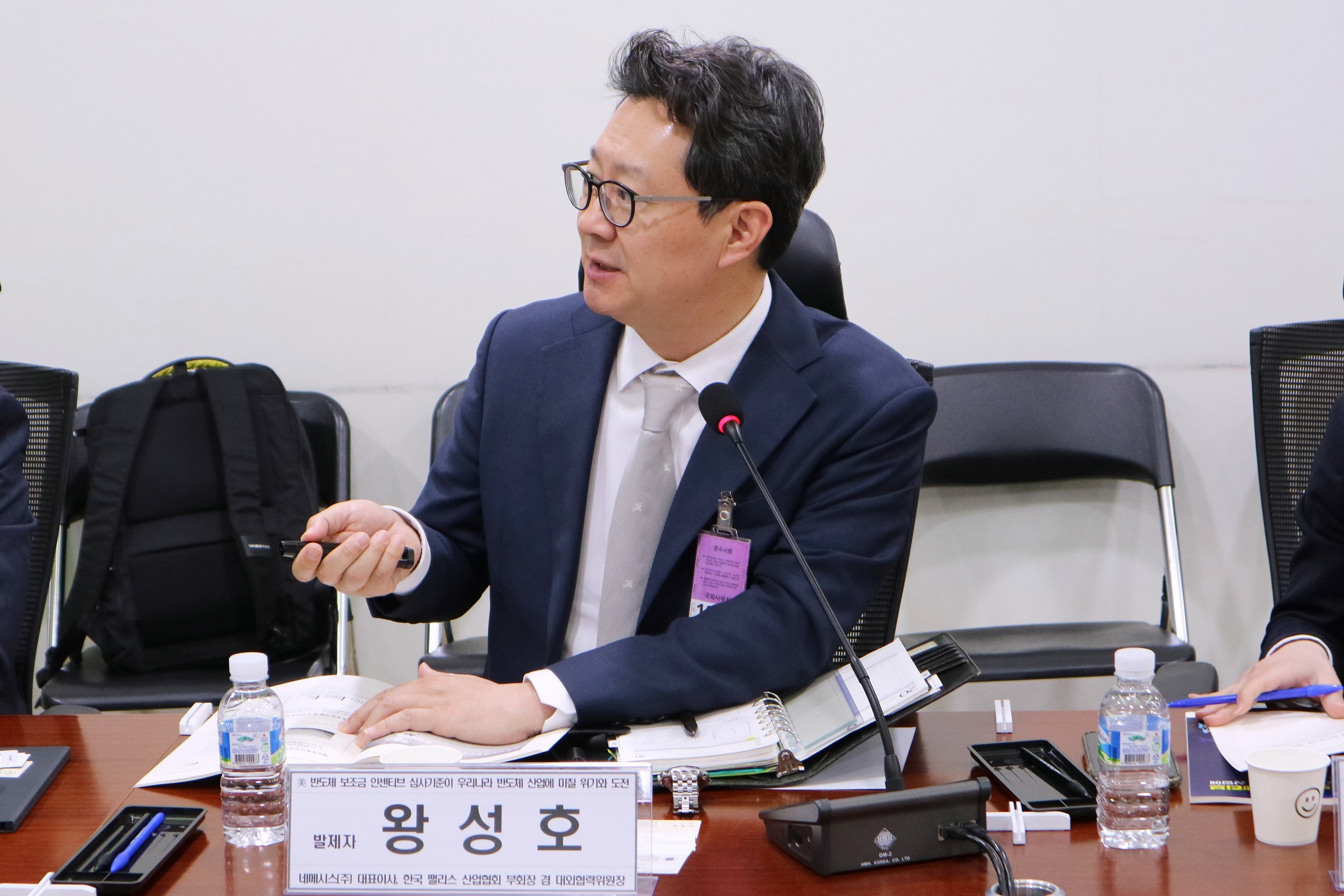
▲왕성호 네메시스 대표이사
시스템반도체 설계자산(IP)이 팹리스 기업 생태계 토대가 되는 만큼 원천 IP 개발에 집중 투자와 지원이 필요하다는 팹리스 업계 목소리가 전해졌다.
바이오 분야 팹리스 기업을 운영하는 네메시스 왕성호 대표이사는 “펩리스 생태계를 구성하는 디자인하우스·파운드리를 한 곳에 다 몰아넣는다고 생태계가 아니다”라며 국내 팹리스의 취약점으로 IP를 손꼽았다.
IP를 키우는 것이 급선무라는 왕 대표는 “튼튼한 팹리스를 위해선 괜찮은 IP를 개발하는 방향으로 육성해야 하며 이를 위해 정부 보조금이 IP 개발에 집중적으로 투입될 필요가 있다”고 피력했다.
정치권과 토론패널에선 정부가 임기 내 성과를 내기 위해 단기적인 국가산업단지 구축에만 예산을 투입하려 하고 있다며, 이는 지자체에 예산을 퍼주는 꼴밖에 안 돼 정작 육성해야 할 반도체 산업에는 큰 도움이 되지 않는다고 지적했다.
왕성호 대표는 국내 팹리스 기업들은 규모가 작아 시장에서 대기업들이 잘 찾아주지 않는다고 토로하며, 국내 팹리스 한계 원인을 △인재 부족 △스타제품의 부재 △글로벌 진출 어려움 △규모의 경제 한계 등으로 손꼽았다. 그는 적극적인 인수합병을 통한 규모 및 브랜드 파워 확대와 스타트업 엑시트 사례 증가로 인재를 끌어와야 한다고 주장했다.
더불어 ‘비 첨단공정 공익 시스템반도체 파운드리’ 개념을 제시해 미국 진출을 고려해보는 아이디어를 제시하기도 했다. 12인치 기반의 민간·정부 합작으로 팹리스용 파운드리를 미국 내 구축하고 이를 미국 진출의 교두보로 활용하는 전략이다. 국내 팹리스는 아날로그 IC와 16~32비트 커스터마이즈 MCU 개발 등에 잠재력을 가진 기업이 많은 만큼 관련 팹리스 육성에 가능성을 제시했다.
박병원 과학기술정책연구원 선임연구위원은 “5년 후 미국 내 팹이 모두 지어질 경우 한국 반도체 산업은 위기를 맞이할 것이며, Arm과 같은 기업으로 성장할 수 있는 잠재력 있는 기업이 10개, 100개라도 나온다면 그것을 기반으로 버텨낼 수 있을 것이다”라고 언급했다.

Comments
Related news
Samsung Electronics Strengthens System Semiconductor Momentum
Even as market sentiment suggests the semiconductor industry has entered a downcycle, there is active movement to seek future growth drivers. Samsung Electronics is focusing its efforts to strengthen momentum in the system semiconductor sector, which is a key next-generation market.
2022.10.07by 명세환 기자
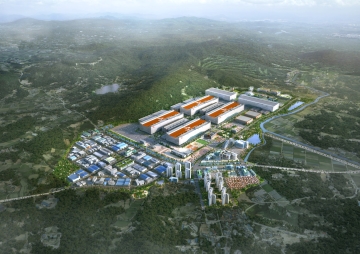
'300 trillion' semiconductor cluster to be built in Yongin
It is anticipated that a world-leading semiconductor mega cluster will be established in the Seoul metropolitan semiconductor memory manufacturing complex by linking more than 150 domestic and international parts, materials, and equipment (PME) companies and Pangyo fabless firms.
2023.03.15by 명세환 기자
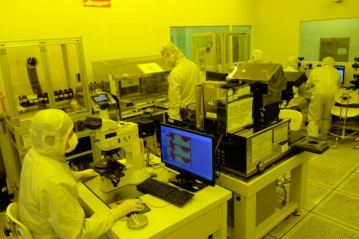
Will the semiconductor investment tax cut really work? The industry is watching closely for passage.
National capacity is being concentrated on fostering the semiconductor industry. With the government's vision being disclosed alongside private investment in system semiconductor development plans, the industry is closely monitoring the passage of amendments to semiconductor facility investment tax credits, referred to as the "K-Chips Act."
2023.03.17by 명세환 기자
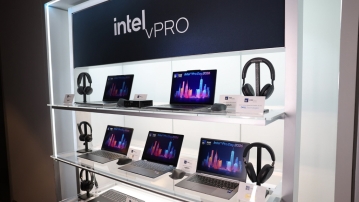
Intel Unveils Next-Generation 'Core Ultra Series 3' and vPro Platform for Enterprise PCs
Intel has officially unveiled the "Intel Core Ultra Series 3" for next-generation enterprise PCs and the latest vPro platform, addressing a wide range of demands from enterprise notebooks to high-performance workstations.
2026.03.26by 배종인 기자
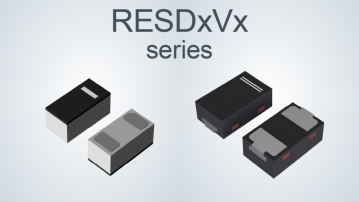
ROHM Launches ESD Protection Diode Compatible with High-Speed Interfaces of 10Gbps or Higher
Semiconductor specialist ROHM has developed the 'RESDxVx series' of ESD (electrostatic discharge) protection diodes capable of responding to next-generation high-speed data communication environments exceeding 10Gbps, simultaneously enhancing both signal quality maintenance required in high-speed interfaces and IC protection performance.
2026.03.26by 배종인 기자











