



“ChatGPT, a shield or spear for cybersecurity”
 Published2023.05.04 11:30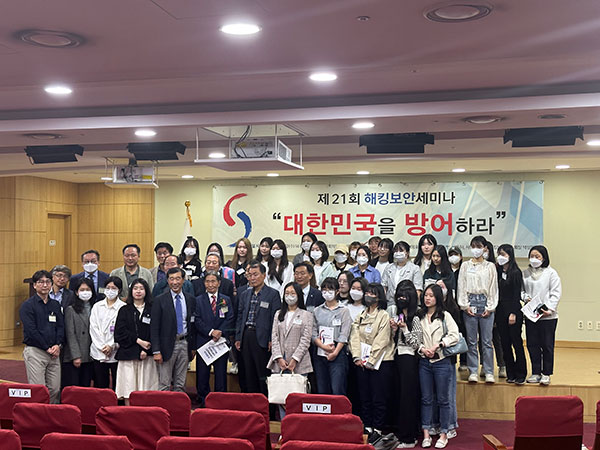
Differentiation from existing AI… Coexistence of positive and negative influences
ChatGPT New Cyber Attacks ↑135%… Countermeasures Must Be Prepared
LG CNS-MS Join Hands to Build Generative AI Security Architecture
As the global competition for AI technology hegemony intensifies, consideration and response to cybersecurity aspects of ultra-large AI technologies such as ChatGPT are required as next-generation core competencies.
At the 21st 'Hacking Security Seminar' held at the National Assembly Members' Hall on the 3rd, KT Vice President Seok-Joong Kim gave a presentation on the topic of 'Opportunities and Threats of ChatGPT' and discussed the opportunities and threats that ChatGPT poses in cybersecurity.
Vice Minister Kim said, “ChatGPT, which is different from existing AI, can have both positive and negative effects,” and argued, “ChatGPT should be used as a tool to eliminate security threats in advance and improve cybersecurity.”
Since the ChatGPT craze that surpassed 100 million users earlier this year swept the world, global big tech companies such as MS, Google, and Meta have been focusing on creating more sophisticated large-scale language models by investing in numerous GPUs.
ChatGPT, which can communicate naturally with humans, is a type of chatbot service, and past language models are widely used as statistical techniques.Unlike before, GPT has been transformed into a model based on an artificial neural network.
However, ChatGPT, which is being utilized in various fields, has both a positive aspect in terms of cybersecurity in that it can actively utilize AI to strengthen security, and a negative aspect in that it can pose a threat to the security industry as a malware generation program language.
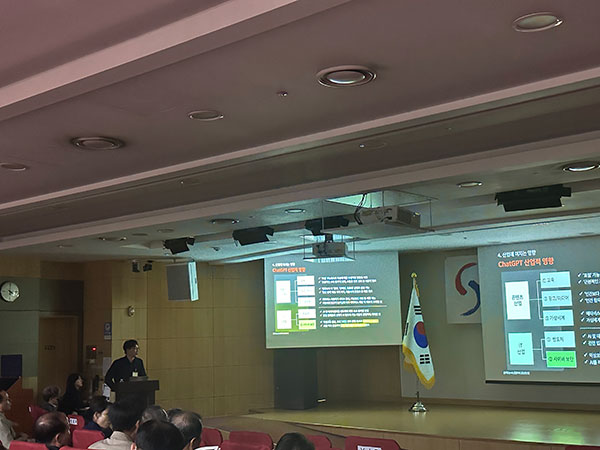
AI is most useful in virtual reality. ChatGPT can simulate the connection part on the OS network to configure the virtual environment. It can also easily access the programming language to perform tasks such as requirement analysis in digital forensics. It is proficient in coding tasks such as malware analysis, annotation work, and code vulnerability analysis.
On the other hand, there is also a threat from ChatGPT. ChatGPT does not respond to ethical issues, but methods to resolve them are being devised. In addition, users’ personal information can lead to phishing scams, such as the disclosure of hacking codes and the leakage of sensitive data such as company payment information.
There has also been an increase in security threats in the form of stealing credit card and financial information when downloading extensions related to ChatGPT. Vice President Kim added, “Since ChatGPT, the number of new social engineering attacks has increased by 135%, in line with the trend of adoption in the advertising sector.”
Vice President Kim predicted that the global generative AI trend will continue for the time being as the recent advancement of AI technology has reduced labor costs and increased development speed, and that countermeasures such as establishing a legal system to crack down on abuse cases are necessary so that ChatGPT can help improve security across industries undergoing digital transformation.
■ Meta, Add a Business Account to Facebook
According to foreign media, Meta recently reported that malware disguised as ChatGPT and similar AI software has increased rapidly. This is a method of stealing user account credentials when downloading mobile apps disguised as ChatGPT tools. In particular, Meta said that there has been an increase in cases targeting business managers and personal accounts of platform users on Facebook.
To combat this, Meta plans to introduce a new type of business account called 'Meta Work' in the future, which will allow users to access Facebook Business Manager tools without a personal Facebook account.
Meta is also releasing tools to help businesses prevent malware. Step-by-step instructions on how to identify and remove malware, including using third-party antivirus tools.
■ KT·LG CNS accelerates AI-based security business
.jpg)
It is based on over 200 million email data analyzed annually through KT's AI analysis platform, and the DB has been optimized to fit the domestic environment. Accordingly, the detection accuracy is up to 22% higher than that of overseas security companies, and the malware detection speed is up to 180 times faster than the existing dynamic analysis method.
KT said, “In order to effectively defend against APT attacks, we are continuously updating our email security solution by creating a threat database containing an average of 10 new or variant APT attacks per day.”
LG CNS accelerates its security business with MS (Microsoft). Based on the collaboration with MS, we will pursue the following: △Design of generative AI security architecture2) △Development of customer-tailored detection and response platform △Strengthening of cloud security business, etc.
In particular, we design and build a security architecture for generative AI such as ChatGPT based on the MS Azure OpenAI Service3).
LG CNS is a solution provider for companies that want to utilize generative AI but are hesitant due to data leaks. It analyzes the customer's business environment and IT system to define the elements that require security, designs and builds an architecture to provide a customized security environment. Through this, customers can obtain the information they need through generative AI and prevent personal information leaks.
Comments
Related news
.jpg)
Super-large AI, high-quality data acquisition... domain-specific service is essential
The KIEI Industrial Education Research Institute held a 'Seminar on Business Models by Sector Utilizing Generative AI Technology' on the 14th. The seminar covered △introduction to generative AI technology paradigms and utilization research △legal and regulatory frameworks related to generative AI △AI technology development and business strategies by sector.
2023.04.18by 김예지 기자
MS, “Integration of mega-AI cloud services is key”
Experts have presented arguments that by securing high-performance computing infrastructure capable of improving scalability through the convergence of ultra-large-scale AI and cloud services, companies can enhance their competitiveness through the development of customized AI services.
2023.04.28by 김예지 기자
The government will prepare a "Digital Bill of Rights" in September, kicking off a public debate on AI.
The government is preparing a "Digital Rights Charter" in September of this year to address digital deepening, which is comparable to the information technology revolution of the early 1990s, and to enhance social acceptance. The Digital Rights Charter will establish △the vision and objectives of digital deepening △universal values to be pursued △rights and responsibilities by stakeholder (citizens, enterprises, government, etc.) △common standards and principles for resolving digital deepening issues. It will be reflected in policies at each ministry to address digital deepening issues in their respective sectors.
2023.05.03by 김예지 기자
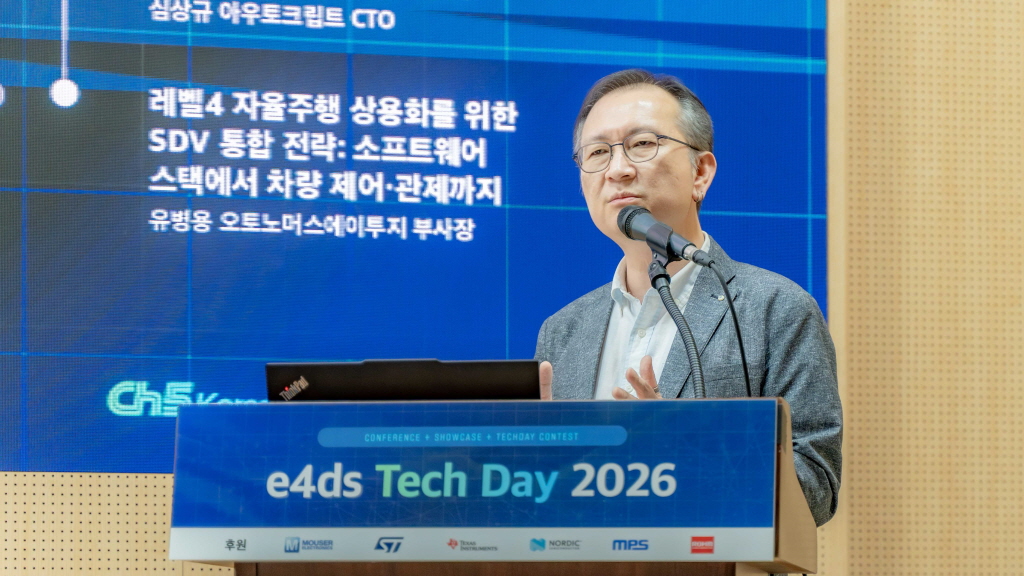
[e4ds Tech Day 2026 ⑨] Sim Sang-gyu, Autocrypt CTO: "In the Physical AI Era, Automotive Security Must Extend Beyond the Vehicle"
At e4ds Tech Day 2026, Sim Sang-gyu, CTO of Autocrypt, explained automotive cybersecurity strategies in the era of Physical AI and SDV (Software-Defined Vehicle). Automobiles are evolving as part of an ecosystem connected to AI, cloud, chargers, IoT, and robots, and he emphasized that the scope of security must expand beyond the vehicle interior to the entire connected environment. In particular, AI model tampering, adversarial attacks, OTA updates, and EV charger hacking were identified as major threats. He explained that response measures require zero trust, AI model integrity protection, intrusion detection, Security by Design and Default, and full lifecycle security management, and that proactive security system establishment beyond regulatory compliance is critical for securing future mobility competitiveness.
2026.10.12by 배종인 기자
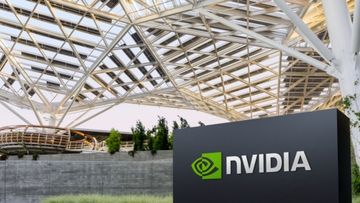
NVIDIA to Invest $1 Billion in U.S. Science Over Next Five Years
NVIDIA has announced plans to invest $1 billion over the next five years to strengthen U.S. scientific and technological competitiveness. The company will enhance cutting-edge artificial intelligence research and development capabilities in key areas including quantum computing, healthcare, and energy security, while expanding support for higher education research institutions and cloud service providers. NVIDIA is participating as a major industry partner in the White House Office of Science and Technology Policy's Genesis Mission, and is promoting supercomputer construction in collaboration with national laboratories including Argonne and Los Alamos.
2026.10.12by 배종인 기자











