


[Interview] ST Manager Son Seong-bae – “Increasing Demand for Virtualization, Security, Safety, and OTA in Automotive MCUs”
 Published2023.05.10 17:00
Stellar P·G 제품군, Domain·Zone 등 통합 플랫폼 적합
Stellar 메모리, ST PCM NVM 사용 OTA 효율성 극대화
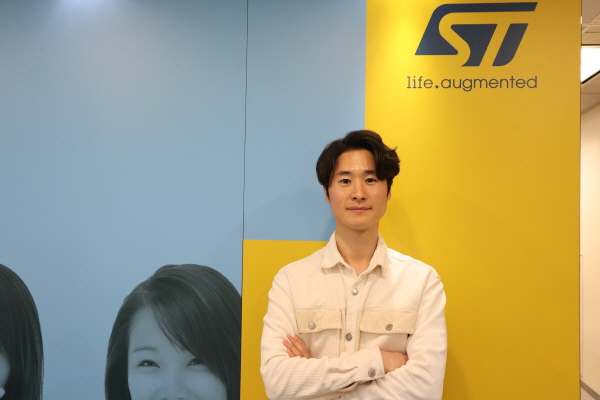
▲손성배 ST 과장
■ Stellar에 대한 소개와 Stellar가 주목받는 이유는 무엇인가
새로운 자동차 아키텍처의 복잡성으로 인해 차량용 MCU는 이전보다 더 높은 기능을 제공해야 한다.
ST Stellar는 Body 및 Convenience 애플리케이션 통합을 위한 존 컨트롤러(Zone controller)뿐만 아니라 구동계 및 Electrification 통합을 위한 도메인 컨트롤러(Domain controller)를 처리하는 차세대 차량 아키텍처를 위한 안전하고 확실한 솔루션을 제공한다.
■ 주요 적용 애플리케이션은 어디인가
5월25일 웨비나를 통해 소개하는 Stellar P, G 제품군은 Domain / Zone 등의 통합 플랫폼에 적합하다고 말씀드릴 수 있다.
P제품군은 BMS(Battery Management System)이나 Transmission 등에 활용 가능할 것으로 예상하며, G제품군은 Gateway나 Body integration에 활용될 수 있을 것으로 예상하고 있다.
■ 시장/업계의 주요 요건은 무엇인가
자동차 아키텍처의 복잡성이 증가하고 있고, 이러한 트렌드와 함께 많은 변화가 진행 중이다.
이에 따라 고성능, 가상화, 강화된 보안과 안전 기능, 그리고 OTA 기능에 부합하는 MCU가 요구되고 있다.
■ 주요 이점(benefit)은 무엇인가
Stellar MCU의 주요 이점은 4가지다.
첫 번째는 향후 발전하게 되는 다양한 아키텍처를 대응할 수 있도록 높은 퍼포먼스를 지원하고 있다. 6개의 Cortex-R52 core를 사용하여 7~16K DMIPS를 제공하며, 빠른 real-time, Safety, security 역시 제공한다.
두 번째는 H/W 가상화를 통한 안전한 통합 제어기 환경을 제공한다는 것이며 세 번째는 Cortex-M4인 독립된 subsystem core를 사용하여 효율적인 라우팅 가속기를 제공할 수 있다.
마지막으로 두개의 cell로 하나의 bit로 표현하도록 설계된 Stellar의 PCM의 특성을 사용하여 OTA 시 두배의 메모리 공간을 사용할 수 있다.
■ 경쟁사 제품과 비교할 때 어떠한 차별성이 있나
Stellar SR6 MCU는 최대 400MHz로 동작하는 6개의 cortex-R52 core와 200MHz로 동작하는 3개의 cortex-M4 core를 탑재하여 최대 7,000에서 16,000 DMIPS의 퍼포먼스를 가진다.
또한 Security 측면에서는 더욱 향상된 HSM 2nd gen과 400MHz로 동작하는 총 4개의 Crypto module를 지원한다.
Stellar의 메모리는 ST만의 특별한 PCM(Phase Change Memory) NVM(비휘발성 메모리)을 사용하여 OTA 구현에 비용적으로 효율성을 극대화할 수 있다. PCM은 기존의 NOR flash보다 빠른 access time과 programing speed를 지원하며, erase 시 구분된 섹터 전체를 지워야 하는 NOR flash의 한계와는 달리 single bit overwrite가 가능하기 때문에 전체적인 flash programing 시간이 약 4.5배 빠르다.
이는 자동차 아키텍처 트렌드에 맞추어 점점 더 커지는 MCU flash programing에 있어 펌웨어 업데이트에 큰 장점이 된다.
또한 ECU 통합 및 도메인 컨트롤러를 위해 물리적인 Hypervisor를 통한 가상화 기능이 지원된다.
이 가상화 기능을 통하여 물리적 MCU에서 다중으로 애플리케이션을 공존할 수 있기 때문에 설계에 유연성을 향상시킬 수 있다. 또한 Stellar의 하드웨어 Hypervisor를 사용한 가상머신의 제공은 순수하게 Software 만으로 구현한 Hypervisor보다 훨씬 적은 overhead와 real-time 성을 제공할 수 있다.
■ 오늘 소개한 내용과 관련해 e4ds 독자들에게 한 말씀 부탁드린다
Stellar MCU는 새로운 차량용 아키텍처를 위한 높은 성능과 다양한 기능들을 제공하며, 고객의 개발편의성을 위해 Stellar Development Kit도 제공하고 있습니다.
Stellar MCU에 많은 관심 부탁드리며, 궁금한 점이 있으시면 언제든 연락 부탁드립니다.
Comments
Related news
[e4ds Tech Day 2026 ⑨] Sim Sang-gyu, Autocrypt CTO: "In the Physical AI Era, Automotive Security Must Extend Beyond the Vehicle"
At e4ds Tech Day 2026, Sim Sang-gyu, CTO of Autocrypt, explained automotive cybersecurity strategies in the era of Physical AI and SDV (Software-Defined Vehicle). Automobiles are evolving as part of an ecosystem connected to AI, cloud, chargers, IoT, and robots, and he emphasized that the scope of security must expand beyond the vehicle interior to the entire connected environment. In particular, AI model tampering, adversarial attacks, OTA updates, and EV charger hacking were identified as major threats. He explained that response measures require zero trust, AI model integrity protection, intrusion detection, Security by Design and Default, and full lifecycle security management, and that proactive security system establishment beyond regulatory compliance is critical for securing future mobility competitiveness.
2026.10.12by 배종인 기자
Practical HIL Construction Strategy for Automotive and Off-Highway Controller Validation
As vehicle E/E architecture transitions to zonal structures and shifts to software-defined vehicles (SDV), the number of controllers (ECUs) requiring validation and software complexity are surging dramatically. Meanwhile, real vehicle testing cannot provide repeated verification under identical conditions and entails lead time and safety concerns. This white paper explains the principles of HIL (Hardware-in-the-Loop) validation and the structure of the NI platform composed of PXI, SLSC, and VeriStand, and through two actual implementation cases—Camera Record & Replay HIL for In-Cabin Monitoring Controller (ICMU) and Forklift Controller (VCU) HILS—describes how controller-level regression testing becomes possible. Additionally, it explicitly states application boundaries and limitations, such as lack of A2B support.
2026.10.12by 편집부
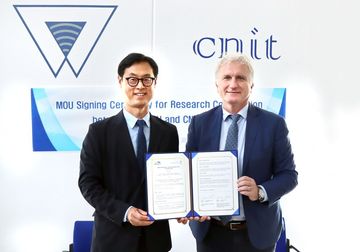
Korea Automotive Research Institute Signs MOU with Italy National Institute for Wireless Communications
The Korea Automotive Research Institute will sign an MOU with Italy's National Institute for Wireless Communications and launch joint research on next-generation mobility technologies based on 6G, V2X, and connected vehicles. The two organizations will conduct research to apply advanced wireless communication technologies to vehicles and discover international joint projects to advance next-generation connected vehicle technology development.
2026.10.12by 배종인 기자
Color Accuracy Issues in Vehicle Interior Ambient Lighting and Intelligent LED Drivers
Vehicle interior ambient lighting is spreading across all price segments, and the level of color accuracy required of lighting designers is rising accordingly. This white paper quantitatively addresses why temperature drift and individual variations of RGB LEDs cannot be corrected by standard constant-current drivers, and explains an intelligent LED driver approach that integrates an MCU, calibration data, and a LIN network interface into the driver. It covers implementation details of the LITIX Interior TLD4020-3ET currently in production, portfolio roadmap, and evaluation/development environments, and clarifies application boundaries including lack of 48V support, lack of RGBi/ISELED support, and absence of direct optical degradation diagnostics.
2026.10.08by 명세환 기자
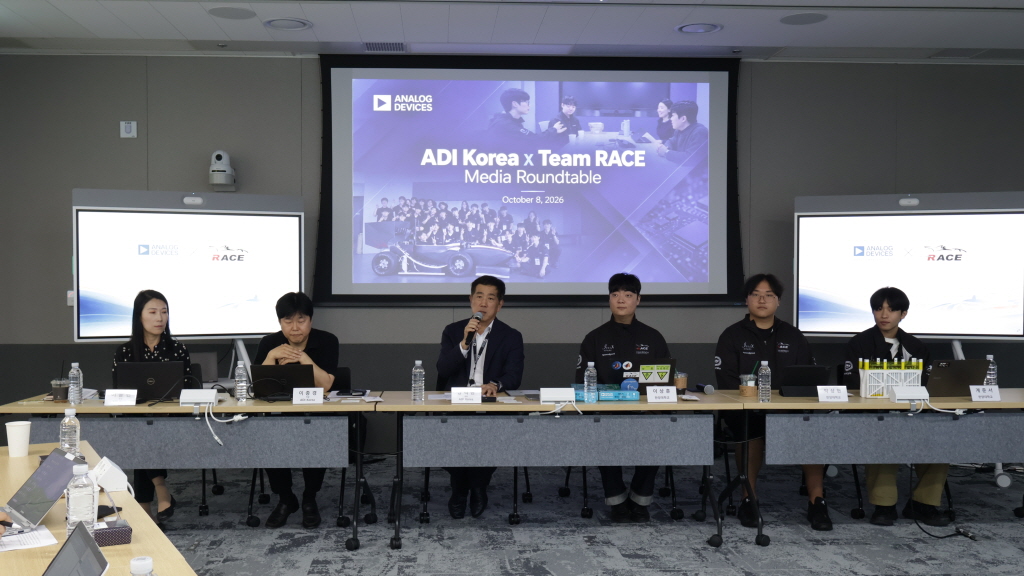
ADI, "Fostering Future Engineers Beyond Component Support"
Global semiconductor company Analog Devices (ADI) is drawing attention for moving beyond simply sponsoring university student car projects to serve as a partner in nurturing future engineers. Over the past three years, ADI has collaborated with Hanyang University's automotive research club Team RACE to support electric formula vehicle development, and recently has been providing technical consultation and semiconductor solutions to enable students to directly develop battery management systems (BMS), creating a model case of industry-academic cooperation.
2026.10.08by 배종인 기자











