


Jensen Huang: "Chip manufacturing is ideal for accelerated computing and AI."
 Published2023.05.24 08:36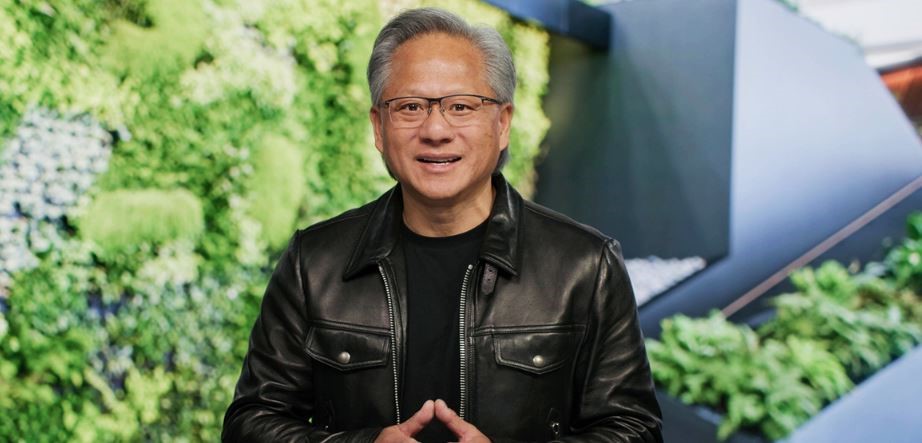
▲ Jensen Huang , founder and CEO of NVIDIA (Photo: NVIDIA)
KLA, TSMC, and Applied Materials Adopt AI for Chip Manufacturing
Next-Generation AI: The Future of Interactive, Intelligent, Multimodal AI
Chip manufacturing is an ideal application for accelerated computing and AI computing.
These are the words of NVIDIA during a video lecture on the role of accelerated computing and AI at the recent ITF World 2023 semiconductor conference held in Antwerp, Belgium.
NVIDIA founder and CEO Jensen Huang detailed how the latest advancements in computing are accelerating “the world’s most important industry” and how advances in accelerated computing, AI, and semiconductor manufacturing intersect, speaking to leaders from the semiconductor, technology, and telecommunications industries at the ITF World 2023 semiconductor conference in Antwerp, Belgium.
■ Artificial Intelligence and Accelerated Computing: Catalysts for the Next Industrial Revolution
Jensen Huang said, “The exponential performance improvement of CPUs has been going on for almost 40 years.“While traditionally dominant in the technology industry, CPU design has reached a mature node in recent years,” he explained. “Semiconductor advancements are slowing down, while demand for computing power is skyrocketing.”
With data center power consumption soaring due to global demand for cloud computing, he said a new approach is needed to achieve net zero while supporting the "valuable benefits" of more computing power.
In this challenging situation, NVIDIA claims to be the solution, emphasizing that “NVIDIA pioneered accelerated computing by combining the parallel processing capabilities of GPUs with those of CPUs.”
Ultimately, this acceleration sparked the AI revolution. A decade ago, deep learning researchers like Alex Krizhevsky, Ilya Sutskever, and Geoffrey Hinton discovered that GPUs could be cost-effective supercomputers.
Since then, NVIDIA has reinvented the computing stack for deep learning, unlocking trillions of dollars in opportunities in robotics, autonomous vehicles, and manufacturing. By offloading and accelerating compute-intensive algorithms, NVIDIA regularly accelerates applications by 10-100x, while simultaneously drastically reducing power and cost.
AI and accelerated computing are working together to transform the technology industry. “We are experiencing two platform shifts simultaneously: accelerated computing and generative AI,” said Jensen Huang.
■ AI and accelerated computing introduced to chip manufacturing
According to Jensen Huang, advanced chip manufacturing requires over 1,000 steps, creating features the size of biomolecules. Each step must be nearly perfect to produce a functioning result.
“Sophisticated computer science is performed at every step to calculate the features to be patterned and perform defect detection for internal line process control, making chip manufacturing an ideal application for NVIDIA acceleration and AI computing,” he said.
He also gave several examples of how NVIDIA GPUs are becoming increasingly essential to chip manufacturing.
Companies like D2S, IMS Nanofabrication, and NuFlare use electron beams to manufacture mask writers. Mask writers are machines that create photomasks, stencils that transfer patterns onto wafers. NVIDIA GPUs accelerate the computationally demanding pattern rendering and mask process correction tasks for these mask writers.
Semiconductor manufacturer TSMC and equipment suppliers KLA and Lasertech use extreme ultraviolet (EUV) and deep ultraviolet (DUV) lithography for mask inspection. Here too, NVIDIA GPUs play a crucial role in classical physics modeling and deep learning processing to generate synthetic reference images and detect defects.
KLA, Applied Materials, and Hitachi High-Tech are using NVIDIA GPUs in their electron beam and optical wafer inspection and review systems. Additionally, in March, NVIDIA announced collaborations with TSMC, ASML, and Synopsys to accelerate computational lithography.
Jensen Huang explained that computational lithography simulates Maxwell's equations, which describe the behavior of light as it travels through optics and interacts with photoresists. Computational lithography is the largest computational workload in chip design and manufacturing, consuming hundreds of billions of CPU hours annually. Furthermore, massive data centers are in operation 24/7 to produce reticles for new chips.
Launched in March, NVIDIA cuLitho is a software library with tools and algorithms optimized for GPU-accelerated computational lithography. “We’ve already accelerated processing speeds by 50x,” said Jensen Huang. “We can replace tens of thousands of CPU servers with hundreds of NVIDIA DGX systems, which saves a lot of power and money.”
He added that these savings could also reduce carbon emissions or enable new algorithms to go beyond 2 nanometers.
■ Next-Level AI, Multimodal Artificial Intelligence
The market is already looking toward the next stage of AI. Jensen Huang introduced a new type of AI called "embodied AI"—intelligent systems capable of understanding, reasoning, and interacting with the physical world.
Jensen Huang presented the audience with NVIDIA VIMA, a multimodal AI system. He demonstrated that VIMA can perform tasks such as "rearranging objects in a scene" based on visual text prompts.
VIMA can learn concepts like "This is a widget," "That is an object," and "Put this widget into that object" and act accordingly. It can also learn through demonstrations and stay within a specified range.
VIMA runs on NVIDIA AI, and the digital twin runs on NVIDIA Omniverse, a 3D development and simulation platform. Jensen Huang said that physics-based AI can learn to mimic physics and make predictions based on the laws of physics.
Researchers are building systems that integrate information from the real and virtual worlds on a massive scale. NVIDIA is building Earth-2, a digital twin of Earth, to enable the fastest weather predictions, long-term weather forecasts, and ultimately, climate predictions.
Additionally, NVIDIA's Earth-2 team developed ForecastNet, a physics-based AI model that simulates global weather patterns 50,000 to 100,000 times faster. ForecastNet runs on NVIDIA AI, and the Earth-2 digital twin is built on NVIDIA Omniverse.
Such systems are expected to address one of the greatest challenges of our time: the need for affordable, clean energy.
For example, researchers at the United Kingdom Atomic Energy Authority (UKAEA) and the University of Manchester are creating a digital twin of a fusion reactor, using physics-AI to mimic plasma physics and robotics to control reactions and maintain a burning plasma.
“Scientists can explore hypotheses by testing them on a digital twin before activating the physical reactor, improving energy yield, improving predictive maintenance, and reducing downtime,” said Jensen Huang. “The reactor plasma physics-AI runs on NVIDIA AI, and the digital twin runs on NVIDIA Omniverse.”
These systems have the potential to further advance the semiconductor industry. “We look forward to seeing how physics-AI, robotics, and omniverse-based digital twins will help advance the future of chip manufacturing,” added Jensen Huang.

Comments
Related news
.jpg)
Fabless Special (5) - Hyun-Do Kim, Head of New Business Development Division at NeoWine, “Forward-deploying to the Edge of the AI Market”
"The AI chip market is progressively shifting deployment from servers to the edge. We believe demand at the edge will continue to grow as AI applications require increasingly sophisticated real-time operation."
2023.05.16by 명세환 기자
Edge AI (2) - AI in agriculture, adoption of AI for harvest automation and quality inspection vision ↑
The market in the agtech (agriculture and advanced technology convergence) sector is growing. As the artificial intelligence trend sweeps through the agricultural industry, AI technology is being applied to various agricultural applications including △monitoring △quality and defect inspection △automated harvesting △smart farming and more.
2023.05.22by 명세환 기자
.jpg)
Generative AI AI War, “AI Chip Demand Explosion”
Generative AI service products such as ChatGPT and Midjourney are attracting market attention. In this context, domestic artificial intelligence experts and industry stakeholders gathered in one place.
2023.05.23by 명세환 기자
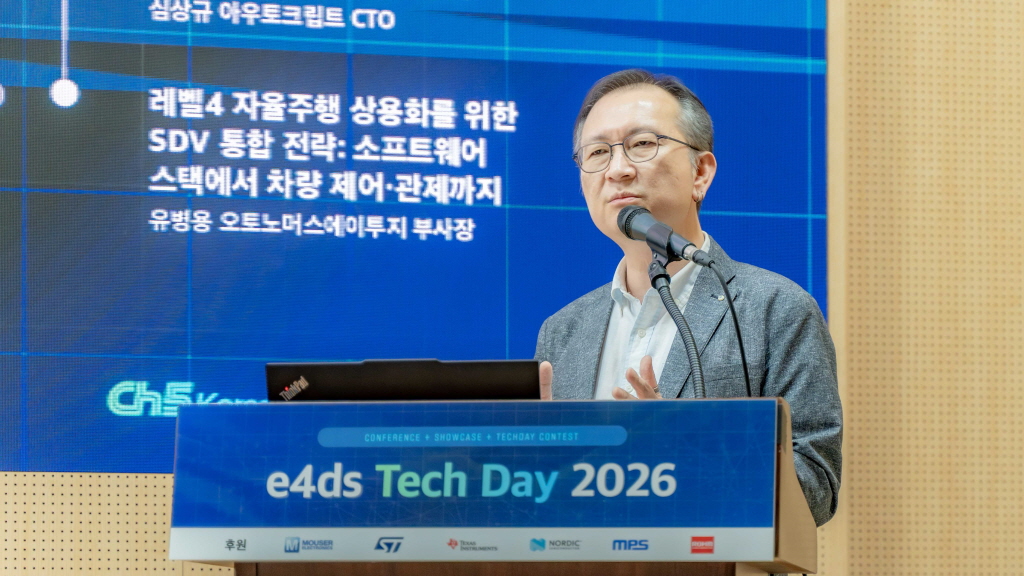
[e4ds Tech Day 2026 ⑨] Sim Sang-gyu, Autocrypt CTO: "In the Physical AI Era, Automotive Security Must Extend Beyond the Vehicle"
At e4ds Tech Day 2026, Sim Sang-gyu, CTO of Autocrypt, explained automotive cybersecurity strategies in the era of Physical AI and SDV (Software-Defined Vehicle). Automobiles are evolving as part of an ecosystem connected to AI, cloud, chargers, IoT, and robots, and he emphasized that the scope of security must expand beyond the vehicle interior to the entire connected environment. In particular, AI model tampering, adversarial attacks, OTA updates, and EV charger hacking were identified as major threats. He explained that response measures require zero trust, AI model integrity protection, intrusion detection, Security by Design and Default, and full lifecycle security management, and that proactive security system establishment beyond regulatory compliance is critical for securing future mobility competitiveness.
2026.10.12by 배종인 기자
NVIDIA to Invest $1 Billion in U.S. Science Over Next Five Years
NVIDIA has announced plans to invest $1 billion over the next five years to strengthen U.S. scientific and technological competitiveness. The company will enhance cutting-edge artificial intelligence research and development capabilities in key areas including quantum computing, healthcare, and energy security, while expanding support for higher education research institutions and cloud service providers. NVIDIA is participating as a major industry partner in the White House Office of Science and Technology Policy's Genesis Mission, and is promoting supercomputer construction in collaboration with national laboratories including Argonne and Los Alamos.
2026.10.12by 배종인 기자











