



“Must Promote Competition in Telecom Market and Foster Budget Phones… 5G Wholesale Price Reduction is Essential”
 Published2023.06.08 12:09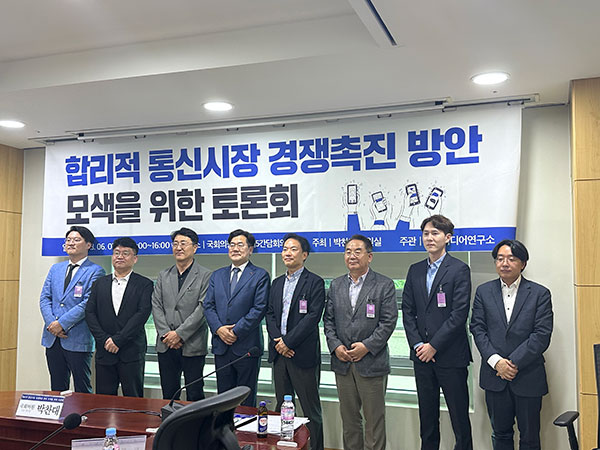
Urging reduction of budget phone wholesale prices, improvement of calculation methods, and maintenance of mandatory requirements
Innovation in simple resale services… Strengthening the introduction of Full MVNOs
Rep. Park Chan-dae: “We Must Shift to a Consumer-Centric Pricing Paradigm”
With the government set to announce policies to promote competition in the telecommunications market at the end of this month, claims have been raised that it is urgent to devise policies to secure the competitiveness of budget mobile phone operators in order to revitalize the market.
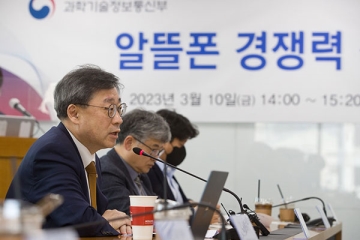
On the 7th, a forum titled "Seeking Ways to Promote Rational Competition in the Telecommunications Market," hosted by Rep. Park Chan-dae and organized by the Public Media Research Institute, was held in the 5th Conference Room of the National Assembly Members' Office Building, where experts from various fields explored ways to promote competition in the telecommunications market, which is currently monopolized by the three major domestic mobile carriers.
Park Sang-ho, a research director at the Public Media Research Institute who gave a presentation, argued, “Although budget phones were launched with the goal of reducing the burden of household communication costs and revitalizing competition in the telecommunications market, they have not yet been able to break away from a supplier-centered policy framework,” adding, “Instead of introducing a fourth mobile carrier, measures should be devised to enable budget phone operators to secure competitiveness, and in the long term, institutional improvements centered on consumer choice through the fostering of Full MVNOs are urged.”
Research Director Park pointed out that although the concentration of the telecommunications market has been dispersed following the introduction of domestic MVNOs (Virtual Mobile Network Operators), the oligopoly of the three major mobile carriers still persists.
As the three major mobile carriers continue to record record-breaking performance with combined operating profits exceeding 4 trillion won, the influx of 5G subscribers is cited as a key driver of this profit expansion. According to statistics from the Ministry of Science and ICT, the number of 5G subscribers for the three carriers surpassed 30 million as of last April, and the proportion is expected to exceed 80% by 2026.
However, budget mobile carriers hold a mere 0.7% share of the 5G market. Research Director Park stated, "This is because the three major mobile carriers have set high wholesale rates of 60% on mid-range 5G plans, making it impossible for budget mobile carriers to launch competitive plans." According to the data, the retail rates offered through bundle discounts by the three major carriers are similar to the wholesale rates charged by budget mobile carriers.
Park, the head of the research lab, proposed measures to expand the competitiveness of MVNOs, including lowering wholesale prices for mid-to-low-priced 5G plans, extending and maintaining the mandatory period for budget phones, improving the method of calculating wholesale prices, and lowering radio wave usage fees.
The explanation is that the existing 'Retail-Minus' method, based on basic public notices, should be improved to a 'Cost plus' method that calculates reasonable wholesale prices based on wholesale costs, thereby encouraging the emergence of facility-based budget phones. In addition, they argued that while the three major mobile carriers and budget phone operators are subject to the same level of radio wave usage fees, appropriate usage fees should be set to reflect latecomer operators.
Consumer-centric policies to promote budget phones were also proposed, including: expanding options for low-usage users with 10GB or less data usage through mandatory wholesale provision of QoS (low-speed data usage when allowance is exhausted); distributing the latest smartphones exclusively for budget phones; and providing exclusive bundled services through agencies.
Even within the budget phone market, the market share of subsidiaries of the three major mobile carriers has reached 31.5% of the total, and as financial companies such as Toss and KB Kookmin, as well as Kakao, expand their entry into the budget phone market, there is a growing need to establish support measures for small and medium-sized budget phone companies, such as improving existing low-cost, prepaid, and SIM-only rates.
■ Must introduce Full MVNOs providing independent services
.jpg)
There was a consensus that policies are needed to innovate the budget phone industry by enabling budget phone operators to differentiate themselves through technology and services, rather than merely reselling products from the three major mobile carriers.
'Full MVNO' refers to an independent operator that owns all facilities except the mobile network from a technical perspective. If you become a Full MVNO operator step by step, you can develop independent services such as friend referrals, separation of device and rate plan contracts, and provision of various types of bundles, which allows you to differentiate yourself from MNOs through independent billing.
Park, the head of the research institute, said, “While measures to introduce a fourth mobile carrier are necessary to restructure the telecommunications market, the cost of trillions of won is a burden,” adding, “Fostering a full MVNO is advantageous because the construction costs are relatively lower.”
He also said that consideration should be given to the role of an intermediary who introduces MVNE (Mobile Virtual Network Enabler) to negotiate network leases with mobile carriers and perform tasks such as establishing and operating billing systems.
■ Let's create a rational telecommunications market and revive the spirit of budget phones
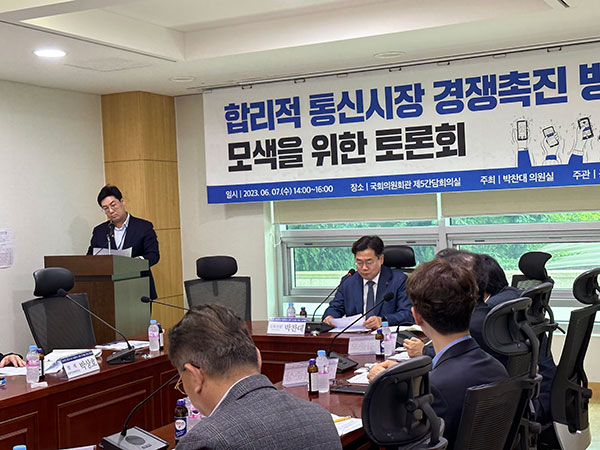
Professor Choi Yong-jun of Jeonbuk National University served as the moderator for the discussion on this day, and participants included Research Fellow Kim Yong-hee of Open Root, Professor Yoo Seong-jin of Soongsil University, Professor Yeo Jun-sang of Dongguk University, Vice President Hwang Seong-wook of the Korea Association of Mobile Virtual Network Operators, and Kim Jun-mo, Head of the Telecommunications Competition Policy Division at the Ministry of Science and ICT.
OpenRoot Research Fellow Kim Yong-hee urged budget phone operators to make upfront investments. “The important thing is the diversification of telecommunication services, and MVNO operators must devise service investment plans through alliances and collaborations rather than relying solely on government support to secure sustainability and competitiveness,” he argued.
He also added, “The reason large corporations and the financial sector have competitiveness is ultimately because they have invested,” and “since government policy support, such as tax incentives, must accompany facility investment as a foundation, various considerations, such as linking with large corporations, must be made.”
Professor Yoo Seong-jin of Soongsil University strongly advocated for support for budget phone operators. According to Professor Yoo, as the three major mobile carriers establish anti-competitive rates and wholesale prices through their dominant positions, budget phone operators are finding it difficult to respond to data-based environments that reflect the needs of 5G users. Furthermore, with increasing burdens such as the discontinuation of reductions in radio wave usage fees, they are losing the capacity to invest.
In response, they argued, “Reductions in radio wave usage fees should be supported on a medium-to-long-term basis rather than on an annual basis, and the government needs to avoid artificial market intervention and recommend practical win-win measures such as monitoring and regulating unfair practices by MNOs.”
Professor Yeo Jun-sang of Dongguk University suggested supporting budget mobile phone operators from a consumer-centric perspective. He stated, “Consumers perceive the situation not as MNO versus MVNO, but as the existing three major mobile carriers versus alternative carriers,” adding, “From a consumer perspective, it is important for MVNOs, which are recognized as alternative carriers, to discover differentiated brands, regardless of whether they are large corporations or small and medium-sized enterprises.”
Finally, Hwang Seong-wook, Vice Chairman of the Korea Mobile Virtual Network Operators Association, called for government support and regulatory improvements. “There is no visible possibility of recouping investment even if budget phone companies invest in facilities,” they appealed, adding, “In order to move away from simple resale and compete with the three major mobile carriers, the current three-year sunset clause for the wholesale provision obligation must be abolished, and regulations must be established to ensure the wholesale provision obligation continues.”
In response, Kim Jun-mo, a division head at the Ministry of Science and ICT, stated, “We will announce measures to promote telecommunications competition by focusing on discovering ‘catfish’ capable of competing with the three major mobile carriers, rather than solely on lowering communication costs,” and added, “We will ensure that policies are formulated by considering the consumer’s perspective, such as through free market evaluations.”
In addition, while refraining from elaborating on the specific details of the measures to promote telecommunications competition, he added, "Although it is difficult to negotiate the profit sharing method due to the government's lack of continuous legal authority, we will make efforts to adjust the profit sharing ratio through negotiations with SKT."
Representative Park Chan-dae stated, “With the growing demand for reduced communication costs these days, it is time to change the pricing policy paradigm by prioritizing consumer choice.”
Comments
Related news
The Ministry of Science and ICT plans to expand the number of Korean mobile carriers.
The Ministry of Science and ICT announced that it held a roundtable discussion on the 10th at the Korea Intelligence Information Society Promotion Agency to strengthen the competitiveness of MVNOs, where major MVNO operators, experts, and government officials participated in in-depth discussions. At the roundtable on that day, government officials and experts met with MVNO operators including Viva Republica (Toss), KB Kookmin Bank, and EyesVision, as well as telecom subsidiary companies SK Telink and KT M-Mobile.
2023.03.13by 김예지 기자
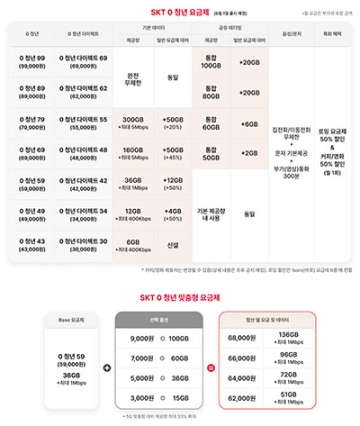
SKT Launches 25 New 5G Intermediate Rate Plans
The Ministry of Science and ICT approved on the 23rd SKT's application for new 5G rate plans that was filed on the 17th, taking into consideration customer usage patterns and age group characteristics. The 5G terms of service filed this time include the following: △establishment of three types of 5G senior rate plans for users aged 65 and over △establishment of four types of 5G mid-tier rate plans △establishment of 11 types of 5G youth rate plans for users aged 34 and under △establishment of seven types of 5G youth online rate plans.
2023.03.23by 김예지 기자
The Ministry of Science and ICT announced the abolition of the mandatory wholesale price system for discount mobile phones.
The Ministry of Science and ICT held the second meeting of the 'Special Task Force for Promoting Competition in the Telecommunications Market' on the 29th at the conference hall of the National Science and Technology Advisory Council Support Division, reviewed results discussed within the telecommunications policy and radio policy subcommittees of the task force, and exchanged opinions among experts from various sectors. The Ministry of Science and ICT reached consensus that the wholesale provision obligation system should be maintained by abolishing the sunset clause, in order to invigorate competition in the mobile telecommunications market.
2023.03.30by 김예지 기자

Operating profit of the three major mobile carriers in Q1 was 1.2411 trillion won, down 6% year-on-year.
The three domestic mobile carriers (SKT, KT, and LGU+) released their first quarter 2023 results. The combined operating profit of the three carriers totaled 1.2411 trillion won, down approximately 800 billion won year-over-year, but nevertheless exceeded the combined 1 trillion won mark for the third consecutive year.
2023.05.11by 김예지 기자
3 Telecom Companies 5G False Advertisement Fines 33.6 Billion Won
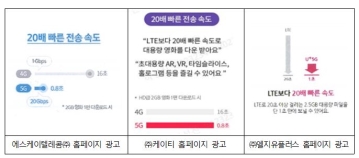
The Fair Trade Commission announced on the 24th that it has issued corrective orders, publication orders, and imposed fines totaling 33.6 billion won against SKT, KT, and LG Uplus for falsely exaggerating 5G service speeds, engaging in deceptive advertising practices, and making unfair comparative advertisements.
2023.05.24by 김예지 기자











