



Applied Materials Releases Sustainability Report, Successfully Reducing Carbon Emissions in 2022
 Published2023.06.21 09:26
Applied Materials successfully reduced its carbon emissions in 2022, demonstrating strong performance in its ESG activities.
Applied Materials announced on the 11th that it recently released a sustainability report detailing its environmental, social, and governance (ESG) programs and performance in 2022.
This report focuses on the impact of Applied Materials' ESG activities across its own organization, suppliers, and customers in the global electronics ecosystem.
“Applied Materials is leading the way in semiconductor technology, which plays an increasingly important role in our lives,” said Gary Dickerson, Applied Materials chairman and CEO. “As we deliver new, market-changing innovations, we work closely with our suppliers and customers to minimize our environmental impact by reducing product resource consumption and carbon emissions. We also strive to build an inclusive culture where everyone has a voice and equal opportunity.”
The semiconductor market is projected to nearly double to $1 trillion over the next decade, driven by the rise of AI and the proliferation of smart, connected devices. As the semiconductor manufacturing ecosystem embarks on a growth trajectory, collaborative efforts to reduce carbon emissions are essential.
Applied Materials successfully reduced its carbon emissions in 2022, following its success in 2021. It achieved 100% renewable electricity use in the U.S. and 69% globally. As a result, both Scope 1 (direct carbon emissions) and Scope 2 (indirect carbon emissions) carbon emissions decreased by 3% compared to 2019. During the same period, Applied Energy consumption increased by approximately 13%, demonstrating progress in decoupling emissions growth from business growth.
Recognizing the need to redouble its efforts going forward, Applied Materials has submitted reduction targets for Scopes 1, 2, and 3 (all carbon emissions from its entire value chain) to the Science-Based Targets initiative (SBTi). The new target is to reduce Scope 3 Category 11 (product use) emissions from new semiconductor products by 55% per wafer by 2030 compared to 2019 levels.
Applied Materials is collaborating with key customers and participating in industry alliances to accelerate demand for renewable power and accelerate the transition to a low-carbon future. Applied Materials is a founding member and board member of the Semiconductor Climate Consortium. It is also a member of the European Semiconductor Institute (IMEC)'s Sustainable Semiconductor Technologies and Systems (SSTS) program, RE100, and the Clean Energy Purchasing Association (CEBA).
Applied is committed to fostering an inclusive culture. At the heart of these efforts is the belief that attracting a workforce with diverse perspectives, backgrounds, and experiences is essential to delivering world-class innovation. Last year, Applied implemented and achieved initiatives to promote diversity, equity, and inclusion (DEI) best practices across the company. Furthermore, the company set 2030 goals to increase the percentage of women globally and the percentage of underrepresented minorities (URMs) in its U.S. organization.
Applied Materials has been publishing reports on social responsibility and environmental issues since 2005. Applied Materials' most recent Sustainability Report and appendix reflect its activities and achievements for fiscal year 2022. The full report, along with details on Applied Materials' environmental activities, inclusive culture, and human rights efforts, can be found on the Applied Materials website.

Comments
Related news
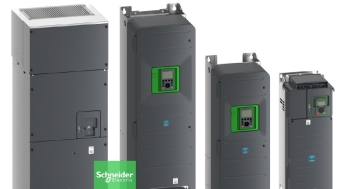
Schneider Aims for Building Energy Savings and Operational Stability with Next-Generation HVAC Drives
Schneider Electric has unveiled its next-generation HVAC drive product line 'Altivar HVAC'. The new product line's key features center on enhanced energy savings, system operational stability, and building management system integration. The products are divided into 'ATH200' for OEM and small equipment applications, and 'ATH600' for environments requiring continuous operation and advanced control. The company plans to expand the application scope from commercial buildings to facilities where HVAC system stability is critical, such as hospitals, airports, and data centers. The announcement includes over 30% energy savings, operation from -10°C to +60°C, Modbus and BACnet support, and compatibility with low global warming potential refrigerants.
2026.03.26by 명세환 기자
Ecolab Expands AI Data Center Cooling Business Through Acquisition of CoolIT
Ecolab has agreed to acquire CoolIT Systems, a liquid cooling company for AI data centers, for approximately $4.75 billion. The transaction is expected to close by Q3 2026, subject to regulatory approvals. CoolIT has been supplying direct-to-chip cooling-based coolant distribution units, cold plates, and manifolds, serving hyperscale data centers and colocation operators as customers. This acquisition is a measure to address the high-heat and high-density server environments created by AI proliferation. Ecolab plans to combine its water management and digital monitoring capabilities with CoolIT's hardware technology to expand its data center cooling business.
2026.03.26by 명세환 기자

AI Semiconductor Era, Key is 'Materials Technology'… KIEC Holds Seminar on High-Performance Semiconductor Materials
With rapid growth in the global semiconductor market driven by expanded AI data center investments and increased demand for high-bandwidth memory (HBM), a specialized seminar examining next-generation semiconductor materials and packaging technologies will be held. The Korea Chemical Industry Institute will host a "High-Performance Semiconductor Materials Technology Seminar" on April 24 at the FKI Tower of the Korea Economic Association in Yeouido, Seoul. Applications to participate in the seminar are being accepted on a first-come, first-served basis through the Korea Chemical Industry Institute's official website, with early bird discounts available until March 27 and advance registration open until April 22.
2026.03.25by 배종인 기자
.jpg)
KIMS Shares Techniques for Industrial Application of Casting Technology
The Korea Institute of Materials Science held a casting technology seminar at its headquarters in Changwon, South Gyeongsang Province, and introduced core process technologies utilized in industrial applications. The seminar covered fundamental principles of casting processes and defect control methods, lightweight-oriented die-casting technology, and trends in aluminum casting alloys for mobility applications. At the conclusion of the event, consultations on industrial technical challenges were also conducted, providing an opportunity to expand the interface between research institutions and industry.
2026.03.25by 명세환 기자
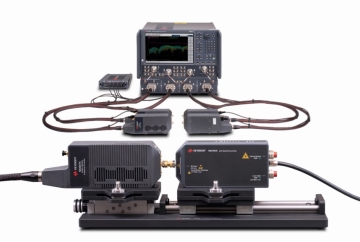
Keysight Launches 220GHz Optical Component Analyzer… Aims at Verifying Next-Generation Optical Transceivers
Keysight Technologies has introduced the N4378A optical wave component analyzer, which can measure the characteristics of opto-electronic conversion components up to 220GHz. This equipment is targeted at the rapidly advancing data center optical interconnection market driven by AI and cloud expansion, and supports single-sweep broadband measurements at 1310nm and 1550nm wavelengths. The device focuses on enhancing measurement accuracy and design verification efficiency in the development process of next-generation 1.6T and 3.2T class optical transceivers through optical modulator and photodetector verification, differential measurements for dual-drive optical modulators, and 0.5mm coaxial connector protection structures. Keysight demonstrated this equipment for the first time at OFC 2026.
2026.03.25by 명세환 기자











