


4th 5G 28GHz Carrier Must Find Their Own Revenue Sources
 Published2023.07.12 09:56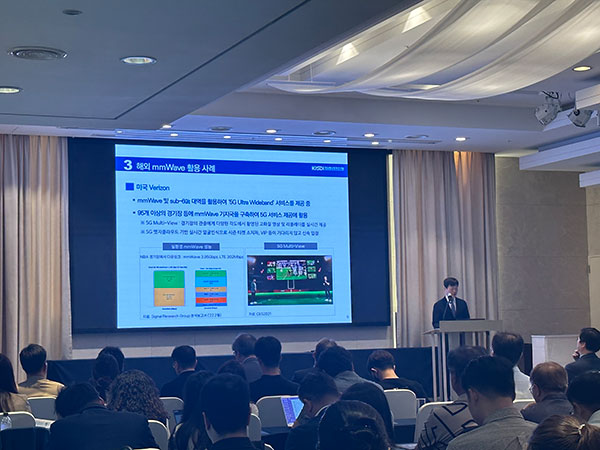
Kim Ji-hwan, Head of the Radio and Mobile Communication Future Strategy Center at KISDI
Minimum auction price of 74 billion won for 28GHz… Lower entry barrier compared to existing standards
"Fourth Mobile Carrier Must Possess a Challenging Spirit"… Achieving New Cost Structure Is Essential
While network-related issues can be partially resolved through policy support, the government cannot effectively handle the acquisition of new subscribers. The government must actively consider enabling new operators with an existing subscriber base and an entrepreneurial spirit to enter the market during the process of formulating detailed policies.
As the government has introduced incentives to discover new operators based on the 5G 28GHz frequency band, experts have suggested that an existing competitive operator would be suitable as the fourth mobile carrier.
On the 11th, the Ministry of Science and ICT held a forum at the El Tower in Yangjae regarding the 5G 28GHz frequency allocation plan for new operators. The forum was held to widely gather opinions from stakeholders on the proposed frequency allocation plan, including allocation methods, fees, and conditions. Following a presentation by Kim Ji-hwan, Head of the Center for Future Strategy in Radio and Mobile Communications at the Korea Information Society Development Institute (KISDI), Ha Jun-hong, Head of the Frequency Policy Division at the Ministry, presented the full-scale frequency allocation plan for new operators. The discussion on this day was attended by chairpersons Professor Kim Yong-gyu of Hanyang University, Professor Kim Beom-jun of the Catholic University of Korea, and Professor Kim Dong-gu of Yonsei University, as well as Shin Min-su, co-representative of the Green Consumers' Alliance, Park Seung-geun, head of ETRI, and Lee Seung-hoon, head of KCA.
First, looking at the government's frequency allocation plan, it appears that the government has made an unconventional proposal. For five years, it will provide new operators with a dedicated 28GHz frequency, as well as anchor frequencies in the 700MHz or 1.8GHz bands. Of the three 28GHz bands, one is exclusively for new operators, while the others are scheduled to be supplied later. It is notable that the minimum auction price has been drastically reduced from 207.2 billion won to 74 billion won. Additionally, the number of base stations nationwide has been reduced from 15,000 to 6,000.
However, despite the government's move, the industry's reaction remains unfavorable. The experts gathered at the forum that day also all showed a positive reaction to the activation of mmWave (28GHz), but they could not give a definitive answer regarding the success of new operators.
■ Incompetent New Business Owners, Actually a Poison?
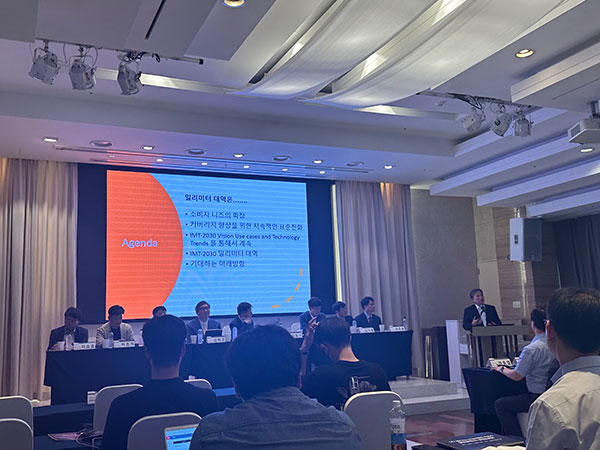
▲ Public Forum on 5G 28GHz Frequency Allocation Plan for New Operators
Professor Kim Bum-joon of the Catholic University of Korea argued, “Since it is difficult to proceed with a competitive structure based on existing subscribers, one must be able to provide value to customers through innovative ideas,” adding that “new business operators must discover business models with a spirit of challenge.”
In particular, Professor Kim emphasized the entry of venture businesses with a certain level of capability, stating, "As platform operators increase investment to attract subscribers, businesses without a sufficient subscriber base will face greater difficulties."
He also said, “The success of new entrants depends on whether they achieve a new cost structure compared to existing entrants.”
New operators must utilize budget phone networks while simultaneously investing in them to recoup their costs; however, since production costs are higher than those of budget phones, they require correspondingly innovative services. The explanation is that if the government is to expect price competition from these new operators, it must present strong support measures regarding wholesale rates.
Professor Kim Dong-gu of Yonsei University and Director Park Seung-geun of ETRI also mentioned the importance of mmWave in enabling the emergence of new services and emphasized the discovery of creative business operators. Professor Kim said, “Since 6G becomes possible when the characteristics of mmWave are realized, mmWave will serve as a stepping stone for this.” Director Park also said, “It is appropriate to allocate the 700 MHz and 1.8 GHz bands as anchor frequencies.”
CEO Shin Min-soo viewed the government's unconventional incentives positively from a consumer and social welfare perspective, but questioned whether local businesses could generate actual profits.
CEO Shin argued, “Businesses leasing networks have no incentive to compete on quality, and we need to consider whether the calculation of the minimum competitive price is reasonable,” adding, “To benefit consumers, who are the owners of the frequencies, the rights and responsibilities of new operators, including specific methods to enhance consumer welfare, must be clearly defined.”
In response to a question regarding the supply of mid-low band frequencies from a Future Mobile official attending the forum that day, Ha Jun-hong, Director of the Frequency Policy Division at the Ministry of Science and ICT, stated, “New operators must launch their businesses centered on the 28GHz band, and based on this, we will review the supply of mid-low band frequencies in stages.”
In addition, regarding whether business innovation and price competitiveness can coexist, he replied, “Theoretically, it may be difficult, but I do not think there is a hierarchy. If you secure competitiveness through upfront investment, you can also aim for price competitiveness.”
Manager Ha stated, “The compensation conditions are a key point in this allocation, and we are gathering opinions from experts. We will reflect the feedback presented today in the allocation announcement,” adding that “the government is developing policy directions to promote the market ecosystem.”
Comments
Related news
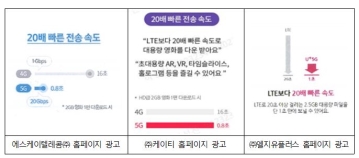
3 Telecom Companies 5G False Advertisement Fines 33.6 Billion Won
The Fair Trade Commission announced on the 24th that it has issued corrective orders, publication orders, and imposed fines totaling 33.6 billion won against SKT, KT, and LG Uplus for falsely exaggerating 5G service speeds, engaging in deceptive advertising practices, and making unfair comparative advertisements.
2023.05.24by 김예지 기자
SKT, 5G 28GHz final allocation cancellation… subway Wi-Fi exception
The Ministry of Science and ICT has finalized the contents of its disposition regarding the revocation of 5th Generation (5G) 28 GHz frequency allocation to SKT, following the completion of the opinion hearing procedure under the Administrative Procedures Act.
2023.05.31by 김예지 기자

ETRI Achieves Excellent Results in 5G Small Cell SW
The Ministry of Science and ICT held a meeting to review research and development (R&D) achievements in the telecommunications network field on the 2nd, encouraging award winners who received the best technology award for 5G Small Cell software (SW) together with related organizations including the Information and Communications Planning and Evaluation Institute (IITP).
2023.06.05by 김예지 기자
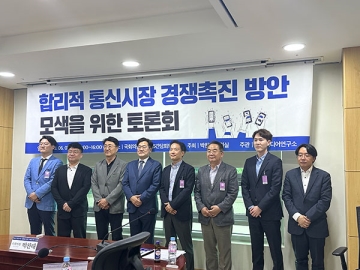
“Must Promote Competition in Telecom Market and Foster Budget Phones… 5G Wholesale Price Reduction is Essential”
A forum titled "Seeking Measures to Promote Rational Telecommunications Market Competition" was held on the 7th at Conference Room 5 of the National Assembly Members' Building, hosted by Rep. Park Chan-dae and organized by the Public Media Research Institute. Experts from various sectors explored ways to promote competition in the domestic telecommunications market, which is monopolized by the three major telecom carriers. Park Sang-ho, Director of Research at the Public Media Research Institute, stated, "MVNOs were launched with the aim of reducing household telecommunications costs and activating competition in the telecommunications market, but have yet to move beyond a supplier-focused policy framework." He argued that "rather than introducing a fourth telecom operator, measures should be established to enable MVNO operators to secure competitiveness, and in the long term, institutional improvements centered on consumer choice through Full MVNO development are urgently needed."
2023.06.08by 김예지 기자
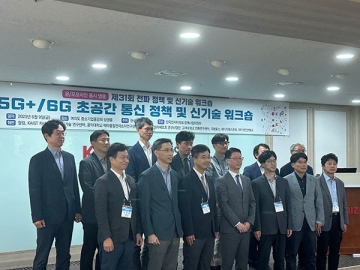
6G New Frequency Upper-mid Band Emerges
On the 8th, the Korea Electromagnetic Engineering Society held a radio policy and new technology workshop at the Korea Federation of Small and Medium Enterprises headquarters in Yeouido and presented on the theme of '5G+/6G Hyper-space Communication Policy and New Technology.' The government is establishing a vision for realizing a model nation in next-generation networks and accelerating efforts to lead in 6G. The Upper-mid band is becoming a viable alternative frequency for 6G.
2023.06.14by 김예지 기자











