


[Interview] Lee Kyung-soo, Advisor at Mirae Mobile: "There are no plans for a fourth mobile carrier, and we will officially request 2.3GHz."
 Published2023.07.24 15:58
28GHz: Densely populated areas, spatial experience services, and the foundation for 6G
Providing 2.3GHz-based 5G services with favorable return on investment
Achieving half-price fares through open-LAN technology and online distribution.
[Editor's Note] The Ministry of Science and ICT is focusing on finding a fourth mobile carrier based on the 28GHz band. New operators will be provided with 800MHz of dedicated 28GHz frequency and 20MHz of anchor frequency in the 700MHz band, excluding the three major mobile carriers. The government has adjusted the spectrum fee to 74.2 billion won and the network construction obligation to 6,000 units, citing a plan to ease the initial market entry burden for fourth mobile carriers. However, while industry experts agree that the 28GHz frequency is a resource for securing a lead in the next-generation communications market, they also unanimously agree that monetization is difficult. Furthermore, the government plans to review the previously discussed supply of mid- and low-band frequencies after the 28GHz project is completed.
Meanwhile, Mirae Mobile, which had previously announced its intention to become the fourth mobile carrier, has stated that it continues to plan to launch a fourth service. Mirae Mobile has announced its intention to request access to the 2.3GHz frequency band to gain a competitive edge over the three major mobile carriers. In a written interview with Lee Gyeong-su, Senior Advisor to Mirae Mobile (former Head of KT Network Strategy Headquarters), this magazine heard about his intention to launch a fourth mobile carrier.

▲ Mirae Mobile CEO Yoon Ho-sang
Mirae Mobile is the lead manager of the 4th mobile communications consortium established in 2012.
Based on the experience and expertise accumulated over the past 10 years in applying for the 4th mobile communication business license, we are responsible for the overall work of frequency allocation applications, business plan preparation, and SPC establishment for the 4th mobile communication business.
■ The reason Mirae Mobile took on the challenge despite the difficulties in commercializing the 28GHz frequency band is
It is true that the 28GHz frequency band requires a lot of cost to build a network, to the point that even the three major mobile carriers have given it up.
However, Mirae Mobile judged that it was one of the important frequency resources in its business plan.
Accordingly, we plan to provide fast communication services in densely populated areas such as concert halls and sports stadiums, implement spatial experience services such as AR and XR, and actively invest in the future 6G era.
■ If Mirae Mobile has a strategy to become competitive as a fourth mobile carrier
Mirae Mobile will launch a nationwide 5G network using the highly efficient 2.3GHz band.We have plans to build.
Initially, it will be difficult to generate revenue solely from the 28 GHz frequency. The 2.3 GHz frequency, previously used for WiBro but now an idle resource, has a longer frequency range than the three major mobile carriers' frequency bands, requiring less investment and facilitating a return on investment.
Therefore, by allocating this together and generating revenue by providing competitive nationwide 5G services, we will be able to continue investing in 28GHz.
Furthermore, by applying OpenLAN technology to the 28GHz band, network construction costs (CAPEX and OPEX) can be reduced, and subscriber acquisition costs can be minimized through online distribution. This will allow the company to secure competitive pricing with rates roughly half those of the three major mobile carriers.
Finally, Mirae Mobile is pursuing service innovations, including the launch of a terminal that combines satellite communications and mobile communications, in collaboration with participating shareholder companies. In particular, it is in ongoing discussions with SpaceX regarding strategic investments to address 6G, including the convergence of satellite and mobile communications.
■ In the 5G 28GHz allocation notice announced on the 20th, it appears that the allocation of mid-to-low bands will be delayed. Are there any changes to Mirae Mobile's 4th mobile carrier application plan?
Mirae Mobile plans to formally request the Ministry of Science and ICT to expedite the announcement of additional allocations for 2.3GHz, which can secure nationwide network coverage.
28GHz is an important frequency for developing 5G-specific services, but realistically, it is considered an impossible band to secure universal mobile communications coverage.
There are no other changes to the business plan or application plan.
■ Future plans for Mirae Mobile
Mirae Mobile is planning to launch a competitive fourth mobile carrier that will fulfill its role as a catalyst for promoting competition in the mobile communications market and reducing household telecommunications costs.
Meanwhile, the plan to launch as a budget phone operator is not being considered.
From the outset of the business, the company plans to address the insufficient network coverage through roaming with the three existing mobile carriers.
Mirae Mobile will challenge the fourth mobile carrier with a clear business plan.
thank you

Comments
Related news
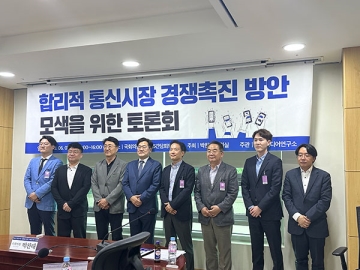
“Must Promote Competition in Telecom Market and Foster Budget Phones… 5G Wholesale Price Reduction is Essential”
A forum titled "Seeking Measures to Promote Rational Telecommunications Market Competition" was held on the 7th at Conference Room 5 of the National Assembly Members' Building, hosted by Rep. Park Chan-dae and organized by the Public Media Research Institute. Experts from various sectors explored ways to promote competition in the domestic telecommunications market, which is monopolized by the three major telecom carriers. Park Sang-ho, Director of Research at the Public Media Research Institute, stated, "MVNOs were launched with the aim of reducing household telecommunications costs and activating competition in the telecommunications market, but have yet to move beyond a supplier-focused policy framework." He argued that "rather than introducing a fourth telecom operator, measures should be established to enable MVNO operators to secure competitiveness, and in the long term, institutional improvements centered on consumer choice through Full MVNO development are urgently needed."
2023.06.08by 김예지 기자
.jpg)
[Interview] 6G Forum Executive Director Jang Kyung-hee - “6G to expand the entire industry by 2030… Leading global leadership”
6G, expected to be commercialized between 2028 and 2030, is anticipated to serve as a core technology in the hyper-connected era and accelerate the creation of new business markets in autonomous driving, UAM, smart cities, healthcare, VR, and other sectors. Building on its track record of supporting mobile communications industry revitalization, the 6G Forum is targeting the convergence of 5G with heterogeneous industries and securing global competitiveness in B5G/6G going forward. This publication arranged a meeting with Jang Kyung-hee, Executive Chairman of the 6G Forum, to discuss Korea's telecommunications policy and R&D strategy as well as the vision and objectives of the 6G Forum.
2023.07.03by 김예지 기자
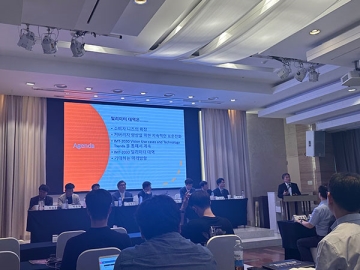
4th 5G 28GHz Carrier Must Find Their Own Revenue Sources
The Ministry of Science and Technology held a forum on the 5G 28GHz new business operator frequency allocation plan at El Tower in Yangjaein on the 11th. As the government introduced incentive measures for discovering new operators based on the 5G 28GHz frequency band, expert opinions were presented that an existing competitive operator would be suitable as the fourth mobile telecommunications business operator.
2023.07.12by 김예지 기자
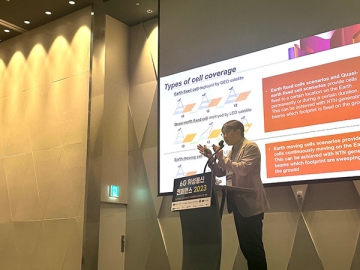
6G satellite communications, terrestrial-satellite network integration emphasized
On the 12th, a 6G satellite communication conference was jointly held at Dragon City in Yongsan by the Satellite Communication Forum, ETRI, Korean Institute of Communications and Information Sciences, Korean Institute of Electromagnetic Engineering and Science, and Korea Satellite Information and Communication Society. At the presentations that day, experts from industry, academia, and research institutions discussed 6G satellite communication policies and trends, as well as 6G satellite communication standardization activities. The ITU is a standardization body that establishes technical standards in the telecommunications field. In fact, it evaluates detailed technical standard proposals submitted by 3GPP, a standardization body, and adopts the final international standards. The key objective of the satellite IMT-2020 vision is to provide seamless services using terrestrial and satellite communication links. The 3GPP NTN standardization work for 5G satellite communications is evolving into 6G NTN.
2023.07.13by 김예지 기자

Why OpenLAN is a Perfect Match for 5G-Specific Networks
Open RAN is a technology that enables interoperability between equipment from different manufacturers by separating hardware and software in wireless communication devices and opening the fronthaul interface and base station operating systems to standardized specifications. Recently, industry experts have suggested that the advantages of Open RAN technology are well-suited for building 5G private networks. This is because it facilitates configuring communication equipment to specific environments according to the requirements of particular industries and enterprises, and allows small and medium-sized enterprises to achieve cost-effectiveness in equipment pricing, making it easier to deploy 5G private networks.
2023.07.19by 김예지 기자











