


[Interview] Vic Malyala, Supermicro Senior Vice President ②, “Expanding Server Rack Shipments, Collaborating on AI Chip Adoption”
 Published2023.08.03 08:30
"Cost savings of up to $10 billion as PUE approaches 1.0"
Introduction of the latest AI accelerators, continuous cooperation with domestic and international companies
High Growth in AI Inference Market, Expectations for NPU Utilization Value
 [Editor's Note] People unanimously agree that we have moved beyond global warming and reached tropicalization. Along with the scorching Earth, the craze for ChatGPT and various artificial intelligence services—topics that have heated up the IT industry—is also heating up data center servers. The already rising demand for data has been pushed up demand forecasts by the AI service boom, and the server market has triggered strong demands for Power Usage Effectiveness (PUE) in terms of both ESG and long-term operating costs.
Accordingly, through an interview with Big Malyala, Senior Vice President of Business Development at Supermicro, a global leader in server solutions, we heard about Supermicro's server market trends and server deployment solutions for the growing need for AI. In addition, Kim Seong-min, Director of Business Development at Supermicro Korea, joined in the response to share domestic news.
Please explain how difficult the task of achieving green computing is, and what efforts Supermicro is making to achieve it.
Big Malyala: Green computing is critical for today's data centers, which consume 1 to 1.5 percent of global electricity demand. However, transitioning data centers to more eco-friendly computing models presents challenges, and data center operators must view purchasing cycles and operating environments from a new perspective.
While the throughput of CPUs and GPUs per watt is increasing, a critical factor in achieving eco-friendly computing in data centers is purchasing power from sustainable suppliers. This can be difficult to achieve in some regions.
In addition, to improve the PUE of a data center, various options must be considered, such as separating the thermal and cold aisles, water cooling, selecting servers suitable for the application, and adopting the latest CPU and GPU technologies.
Supermicro's rack-scale liquid cooling solution significantly reduces the need for conventional cooling methods. The power supplies and pumps feature hot-swap and dual power capabilities, efficiently cooling the entire rack of servers optimized for high-performance AI and HPC in the event of a failure.
This solution uses cold plates custom-designed for both CPUs and GPUs to remove heat more efficiently than existing designs.
If the PUE is lowered to near 1.0, 30 fossil fuel power plants do not need to be built, and the resulting energy cost savings amount to up to $10 billion.
The core of Supermicro Green Computing is the ability to design and manufacture state-of-the-art server and storage systems using the latest processor technologies from NVIDIA, Intel, AMD, and others. Data center power usage costs can be reduced by up to 40% through rack-scale liquid cooling options.
Demand for Supermicro’s flagship GPU server, equipped with the NVIDIA HGX H100 8-GPU server, continues to rise due to AI workloads. Supermicro is capable of shipping 4,000 racks worldwide per month and expects to ship over 5,000 racks per month by the end of the year. Revenue is expected to grow toward reaching $20 billion.
Kim Seong-min: We have the industry's best multi-node system family that shares the same chassis (including power supply and fan) for Microcloud, Twin, and Blade, which enables improved power consumption and cooling efficiency.
These systems can effectively reduce capital and operating costs in the long run because companies and service providers contribute to protecting the planet by extending system lifespan and reducing electricity bills.
■ What are the expected benefits and considerations when introducing liquid-cooled servers in a local environment?
Big Malyala: Liquid cooling helps reduce power consumption in cloud-based or on-premises data centers. When customers decide whether to use rack-level liquid cooling, it is important to work closely with server vendors such as Supermicro to identify and optimize the server best suited for their expected workloads and Service Level Agreements (SLAs).
When selecting the correct server form factor, CPU performance, memory, storage, and networking requirements, it is possible to implement an ideal data center infrastructure and select the appropriate type of liquid cooling.
■ In response to the rapid rise of AI servers, strategies to reduce the burden on GPUs by incorporating AI accelerators or NPUs are being explored. How does Supermicro view this?
Big Malyala: Supermicro is continuously collaborating with leading technology companies to rapidly introduce the latest AI accelerators into its various server solutions. Supermicro's design philosophy is to build systems by rapidly integrating specialized hardware to perform specific tasks. We take pride in being the first to bring new technologies to market whenever they are developed, ranging from CPUs to GPUs and other acceleration technologies.
Kim Seong-min: We are also collaborating directly and indirectly with AI accelerator companies in Korea. As the AI inference market is expected to grow faster and on a larger scale than the AI learning market, the value of utilizing power-efficient NPUs is anticipated.
As an open hardware platform provider boasting the fastest time-to-market in the industry, we plan to contribute to the growth of the AI inference market by collaborating with various vendors.
■ Supermicro's Server Market Response Strategy and Future Outlook
Big Malyala: To support the rapidly increasing demand for AI total rack solutions, we have recently been steadily expanding our facilities in the U.S., Taiwan, and the Netherlands.
In addition, we possess the production capability for ultra-large servers and racks to support and service data center construction worldwide. We plan to expand our factories in Malaysia, Japan, and other countries in the future, which will support more business opportunities.
Supermicro’s One-Stop Shop Total IT strategy is to enable customers to focus more on their core business and trust Supermicro with IT hardware solutions from the cloud to the edge.
We currently have global manufacturing capabilities to support up to 4,000 racks per month, and we plan to accelerate our capacity to produce up to 5,000 racks per month within the year.
thank you

Comments
Related news
[Interview] Big Mallyalah, Senior Vice President of Supermicro①, “AI Scale Grows, Server Power and Cooling Demands ↑”
[Editor's Note] People are in agreement that we have moved beyond global warming into tropicalization. As the Earth heats up, the IT industry is also heating up, with ChatGPT and various artificial intelligence services creating a fever pitch that is warming up data center servers as well. Already-growing data demand has been further accelerated by the AI service boom, pushing demand forecasts considerably higher, and the server market has sparked strong demands for power usage effectiveness (PUE) both from an ESG perspective and in terms of long-term operational costs.
2023.08.01by 명세환 기자

[e4ds Tech Day 2026 ⑨] Sim Sang-gyu, Autocrypt CTO: "In the Physical AI Era, Automotive Security Must Extend Beyond the Vehicle"
At e4ds Tech Day 2026, Sim Sang-gyu, CTO of Autocrypt, explained automotive cybersecurity strategies in the era of Physical AI and SDV (Software-Defined Vehicle). Automobiles are evolving as part of an ecosystem connected to AI, cloud, chargers, IoT, and robots, and he emphasized that the scope of security must expand beyond the vehicle interior to the entire connected environment. In particular, AI model tampering, adversarial attacks, OTA updates, and EV charger hacking were identified as major threats. He explained that response measures require zero trust, AI model integrity protection, intrusion detection, Security by Design and Default, and full lifecycle security management, and that proactive security system establishment beyond regulatory compliance is critical for securing future mobility competitiveness.
2026.10.12by 배종인 기자
NVIDIA to Invest $1 Billion in U.S. Science Over Next Five Years
NVIDIA has announced plans to invest $1 billion over the next five years to strengthen U.S. scientific and technological competitiveness. The company will enhance cutting-edge artificial intelligence research and development capabilities in key areas including quantum computing, healthcare, and energy security, while expanding support for higher education research institutions and cloud service providers. NVIDIA is participating as a major industry partner in the White House Office of Science and Technology Policy's Genesis Mission, and is promoting supercomputer construction in collaboration with national laboratories including Argonne and Los Alamos.
2026.10.12by 배종인 기자
ETRI Unveils 3 Next-Generation Media Technologies Including AI-Dedicated Video Compression
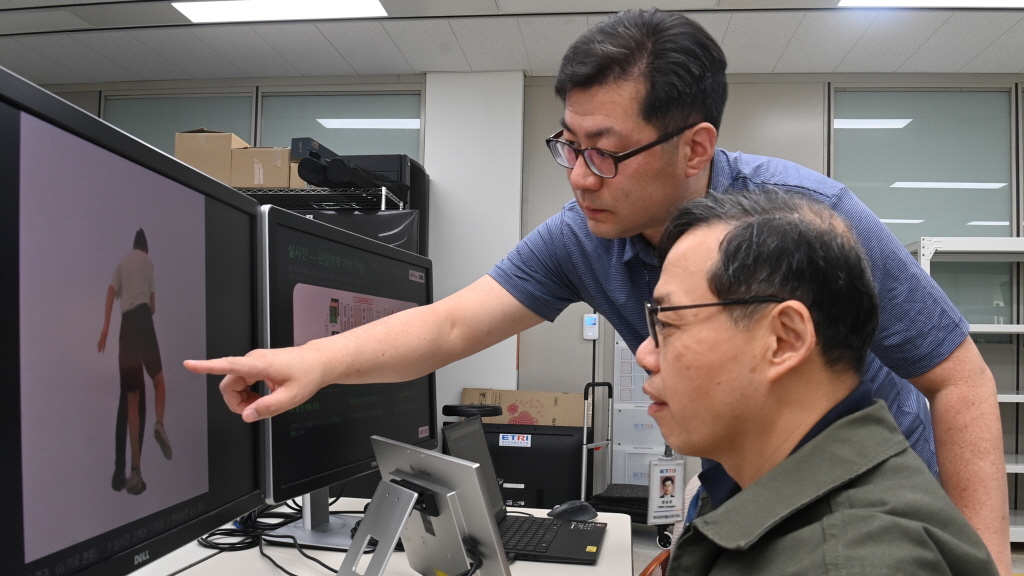
ETRI has unveiled three next-generation media technologies optimized for AI. These include AI-based video encoding (VCM), 3D human generation based on sparse cameras, and generative AI-based pre-visualization technology. In environments where AI directly processes video such as autonomous vehicles, robots, and drones, these technologies enable efficient compression and transmission of large-scale data, and can be applied across various industrial sectors including smart cities, video security, and sports broadcasting.
2026.10.12by 배종인 기자
KETI Connects Domestic and Uzbekistan Museums Through Robot Telepresence for Remote Exhibition
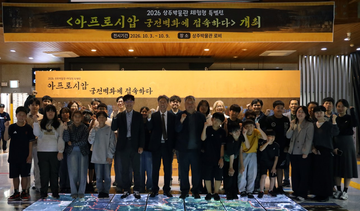
The Korea Electronics Technology Institute (KETI) has hosted a remote experiential exhibition that connects domestic museums with an Uzbekistan museum in real-time using robot telepresence technology. Elementary school students in the Sangju area were able to directly operate autonomous robots to remotely view 7th-century Goguryeo envoy palace murals at the Afrasiab Museum in Samarkand, and the exhibition provides spatial experience comparable to on-site visits by combining real-time high-quality video transmission, AI docent, and autonomous driving technologies.
2026.10.12by 배종인 기자











