


[Op-Ed] Infineon - Renewable Energy Illuminating the Future
 Published2023.08.10 15:40
“Semiconductors Optimized for Solar and Wind Power”
Improved power generation efficiency, meeting energy demand, and reduced carbon emissions
Infineon provides a wide range of inverters reaching several megawatts.
Solar panels generate the most electricity primarily during the day when people are away from home, and the sun begins to set by the time people return. This mismatch between supply and demand is a fundamental problem for solar energy, and other renewable energies, such as wind power, face a similar situation. The question is how to achieve higher performance while reducing energy loss. To solve these problems by increasing the energy storage efficiency of batteries and optimizing the entire system to balance the demand and actual supply of solar and wind energy, semiconductor-based technological solutions are required.
Increasing the generation efficiency of new and renewable energy is a critical task in global initiatives to reduce carbon emissions and boost overall energy efficiency. Wind and solar energy, in particular, play a significant role in climate protection efforts. Since both resources are naturally renewable and available in unlimited quantities, they can help reduce carbon emissions while simultaneously meeting increasing global demand.
Recently, solar, wind, and other renewable energy sources have increased significantly. Meanwhile, renewable energy has reached a point where its cost is equal to that of fossil fuels, playing a crucial role in the ambitious effort to move toward a greener planet. From the beginning, semiconductors have been essential for continuously increasing the efficiency of renewable energy to generate commercial profits. Furthermore, renewable energy is a key element in achieving the goal of zero carbon emissions for electric mobility.

Infineon ’s power module PrimePACK ™ supports various activities in the wind turbine engine room during efficient wind power generation. It supplies generated electricity to the grid, ensures grid safety, aligns the wind turbine and rotor blades with the wind, protects the wind turbine from overheating or freezing, and shuts down the wind turbine in emergencies.
The 1700V PrimePACK™ IGBT5, featuring XT interconnection technology, is set to lead the future wind market by achieving a longer lifespan with industry-leading power cycling performance. PrimePACK™ 3+ is an advanced power module package ideal for wind applications. PrimePACK™ 3+ housings increase the allowable current with the EiceDRIVER™ isolated gate driver for wind power converters. In addition to the IGBT5 .XT, there are also EconoDUAL™ and EconoPACK™ which utilize IGBT4 chip technology with the EiceDRIVER™ isolated gate driver for wind power converters.

Solar power generation systems install power generation devices in a modular fashion, ranging from single-family homes to plant-level facilities. However, similar to wind power, the use of solar energy presents the major challenge of balancing supply and demand. Since the power supplied by photovoltaic (PV) modules fluctuates significantly depending on weather conditions, the efficient combination of solar panels utilizing semiconductor technology and energy storage systems is one effective method for matching supply and demand.
Another technical challenge is that since solar modules supply power in the form of direct current (DC), the power must be converted to alternating current (AC) before being supplied to the grid for use or transmitted to the point of use. Power semiconductors and solar inverter technology must convert DC to AC and transmit power with minimal loss.
Depending on the exact point of application (such as PV cells or batteries), these inverters are classified as micro-inverters, power optimizers, string inverters, or central inverters. For example, batteries require a constant voltage level for charging, which means the voltage of the solar modules must be lowered or raised without energy loss. In this case, a special microchip acts as a switch to provide the precise voltage to the battery.
The Infineon portfolio consists of a wide range of inverters, ranging from a few watts and kilowatts for residential use to several megawatts for commercial and utility-scale markets. These include industry-leading discrete OptiMOS™, CoolMOS™, and CoolSiC™ MOSFETs and IGBTs, as well as highly integrated 3-level Easy 1B/2B modules, functionally integrated EiceDRIVER™ gate driver ICs, and XMC™ microcontrollers. Based on comprehensive application expertise, Infineon provides chip combinations that achieve the highest power density levels and industry-leading efficiency.
For more details, please visit https://www.infineon.com/cms/en/about-infineon/energy-efficiency-technologies/ .
※ writing
Infineon Technologies Korea

Comments
Related news

Intel Unveils Next-Generation 'Core Ultra Series 3' and vPro Platform for Enterprise PCs
Intel has officially unveiled the "Intel Core Ultra Series 3" for next-generation enterprise PCs and the latest vPro platform, addressing a wide range of demands from enterprise notebooks to high-performance workstations.
2026.03.26by 배종인 기자
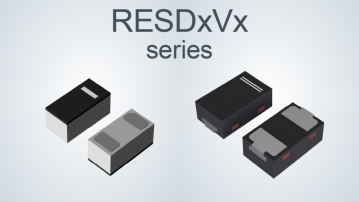
ROHM Launches ESD Protection Diode Compatible with High-Speed Interfaces of 10Gbps or Higher
Semiconductor specialist ROHM has developed the 'RESDxVx series' of ESD (electrostatic discharge) protection diodes capable of responding to next-generation high-speed data communication environments exceeding 10Gbps, simultaneously enhancing both signal quality maintenance required in high-speed interfaces and IC protection performance.
2026.03.26by 배종인 기자
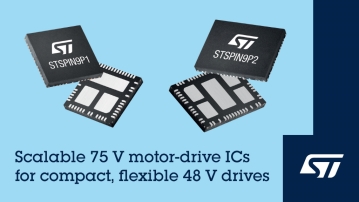
ST Launches 75V Drive IC Targeting 48V Industrial Motor Driving
ST Microelectronics has unveiled the 'STSPIN9P' series of 75V motor drive ICs tailored for 48V-class industrial drive system design. The new product family is characterized by half-bridge and full-bridge configurations that enable design scalability according to motor type and output conditions. Power supply circuits, protection functions, and current sensing circuits are integrated on-chip to simplify system configuration, and the devices are designed to support applications up to 500W maximum. The company plans to provide reference designs and demo boards to support development and evaluation in industrial automation, robotics, pumps, fans, lighting, and textile machinery.
2026.03.26by 배종인 기자
Nordic supports security updates for the entire lifecycle of IoT devices at a single fixed cost
Nordic Semiconductor, a global leader in low-power wireless connectivity solutions, has unveiled a single fixed-cost licensing model that delivers FOTA (Firmware Over-the-Air) and device management capabilities throughout the device lifecycle via nRF Cloud, and introduced a new firmware update solution to prepare for the enforcement of the European Union's Cyber Resilience Act (CRA).
2026.03.26by 배종인 기자
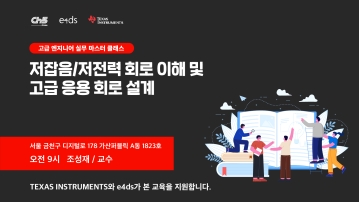
Practical Training in Low-Noise, Low-Power Circuit Design All in One Place… Training Fee Support
The "2026 Advanced Engineer Practical Masterclass" to strengthen competencies in high-sensitivity analog circuit and sensor-based system design will be held on April 16 at the e4ds Conference Center in Gasan-dong, Seoul. This program will be conducted as an offline paid hands-on training session, not online, and is targeted at engineers seeking on-site intensive learning. Texas Instruments will provide educational support for this training, allowing participation at 150,000 won, a 100,000 won discount from the original price of 250,000 won.
2026.03.26by 배종인 기자











