


[Op-Ed] Infineon - Smart Homes and Smart Buildings: Connectivity and Efficiency
 Published2023.08.22 08:06
30% Reduction in Energy Consumption with Intelligent Sensors
Sensor-based connected device perception and response to surroundings
Infineon provides comprehensive smart building products
Residential, public, and office buildings account for a large share of global energy demand. Even in the EU region alone, buildings account for 40 percent of energy consumption and 36 percent of CO2 emissions.
To achieve climate goals, it is necessary to make buildings eco-friendly. To this end, sensor systems play an important role along with energy-saving solutions. By utilizing intelligent sensors, energy consumption in smart buildings can be reduced by up to 30 percent.
○ Smart Building
Whether it be offices, schools, or train stations, buildings are becoming increasingly intelligent, connected, and digitized.
To make these things possible, software, communication networks, secure data, and dynamic interface management are required.
Smart buildings can reduce operating costs, enhance security, increase convenience, and use energy more efficiently .
○ Smart Home
The adoption of smart technology in private homes and residential buildings is increasing. Devices can be connected to a network and controlled centrally. Appliances, entertainment, lighting, and home automation can be monitored, communicated, and controlled. This makes life more convenient and eco-friendly.
■ Preparing for the Future – How Sensors Realize Eco-friendly and Intelligent Buildings
○ Operates only when needed: Energy saving using sensors
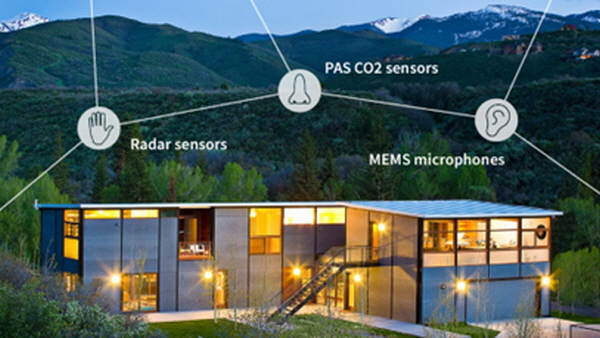
It is said that the number of smart homes worldwide will reach 500 million by 2025. Connected devices such as smart refrigerators and smart air conditioners make our lives convenient, but at the same time, they consume additional energy for their smart functions.
Faced with the climate crisis, humanity must find intelligent ways to reduce overall energy consumption .
Sensors can play a crucial role in this process. By utilizing sensors, connected devices can perceive their surroundings and respond accordingly.
This is called contextual awareness. It not only enhances the safety and convenience of smart home residents but also saves energy. By utilizing sensors, devices can be enabled to operate only when needed, rather than remaining constantly turned on. By doing so, you can reduce CO2 emissions, extend device lifespan, and save costs.
○ Radar sensor: Occupancy detection
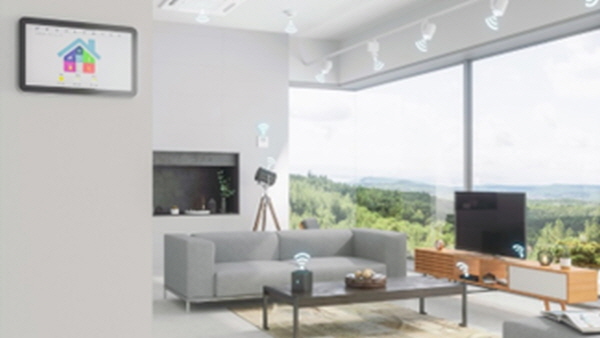
It is not reasonable to consume electricity when there is no one indoors.
Conversely, it would be very convenient if the device automatically turned on only when a person entered or approached the room. When a person enters, the air conditioner could automatically turn on, the lights could turn on, and music could play.
Energy consumption must be linked to whether or not there are people inside. How can this be achieved?
The XENSIV™ radar sensor can detect people and their movements indoors with high sensitivity. This allows the device to operate or switch to deep sleep mode as needed. By doing so, not only can the convenience and user experience of many smart home applications be enhanced (e.g., automatic music playback), but energy consumption can also be optimized.
○ Adoption of Radar Sensors in Samsung TVs - Intelligent Masterpiece Display
.jpg)
Do you know what innovations are taking place in TVs recently? A prime example would be Samsung Electronics' 'Frame' TV. When not in use, this TV can display masterpieces on the screen instead of a black background.
Samsung Electronics' 2021 models are equipped with Infineon's XENSIV™ 60GHz radar sensor. This sensor detects whether there is a person indoors and turns off Art Mode if no one is around for a specific period of time. By doing so, it not only protects the lifespan of the OLED but also saves energy.
○ CO2 Sensor: Energy saving through air quality control

Effective air quality measurement has become particularly important amidst the pandemic. Professional air quality control can not only improve health and comfort but also reduce energy consumption.
An intelligent ventilation system can use sensors to measure CO2 concentration when people gather and control it accordingly.
Based on the measurement results, you can calculate how much fresh air is needed and inject exactly that amount into the room.
Alternatively, the same effect can be achieved by opening or closing windows only when absolutely necessary. This also helps reduce the effort required for heating and cooling. In the EU, 50% of the energy consumed in the building and industrial sectors is used for heating and cooling. Therefore, there is significant potential to save energy.
For example, using the XENSIV™ PAS CO2 sensor with a ventilation system can save up to 55% of energy. Adding smart thermostats and building automation systems to this can save even more energy.
○ Microphone Sensor: Energy saving in low-power mode

Many smart devices, such as doorbells, video cameras, and smart speakers, use microphones to record sound, receive commands or input, and communicate.
These devices spend most of their time in standby mode until a specific input wakes them up.
Therefore, the XENSIV™ MEMS microphone supports two modes. In normal mode, the microphone enables clear audio input with optimal acoustic performance.
In low-power mode, it significantly reduces the microphone's energy consumption. At the same time, it keeps its ears open to detect triggers such as wake words like 'Alexa' or 'Siri' or the sound of a door opening.
When such input is detected, the microphone switches to normal mode, enabling audio pickup with optimal performance.
Smart speakers have great potential to save energy because they use four or more microphones and spend up to 90% of the time in low-power mode.
○ Prevent power loss through sensor-based status monitoring
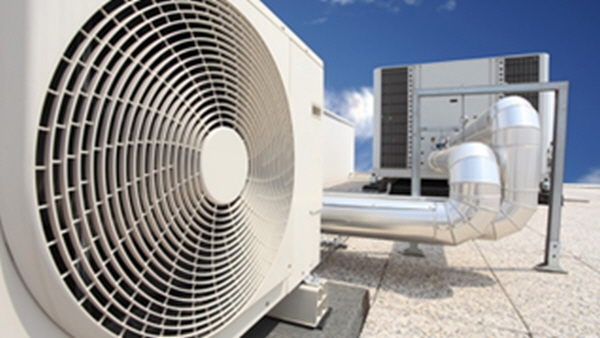
In an ideal world, a building's electrical equipment would operate without causing defects and use energy as efficiently as possible. However, in reality, this is not always the case.
The status of devices can be monitored by integrating sensors into key core elements of systems such as HVAC or lighting.
If the data collected in this way deviates from normal values, it indicates a degradation in performance or efficiency. This will cause unexpected shutdowns or increase power consumption.
Performance degradation due to aging prevents the device from operating at its best possible performance.
These anomalies can be detected using various sensors. For example, in an HVAC system, a DPS368 barometric pressure sensor can be used to detect reduced airflow caused by a clogged filter, a TLI4971 magnetorheological current sensor can be used to detect motor faults, and an IM69D130 microphone can be used to detect unusual noises coming from the compressor. Going a step further than condition monitoring, predictive maintenance utilizing sensors is also possible.
■ Infineon’s XENSIV™ Sensor: Mimicking Human Senses
.jpg)
Smart touch, smart nose, smart ears, smart eyes: Infineon's sensors are implemented by mimicking human sensory functions and can interpret the surrounding environment. This makes it possible to even grasp implicit intentions and context. By utilizing sensors, we can enable devices to intuitively understand what we expect from them. This type of intelligent technology is called 'Intuitive Sensing.' Sensors connect the real world with the digital world, making life more convenient, safer, and eco-friendly.
■ Self-aware, intelligent, and eco-friendly
Smart homes and smart buildings reduce energy consumption through various functions and enable more to be accomplished using less energy. It is semiconductors that make this possible. Significant energy savings can be achieved by using intelligent semiconductor systems composed of power management ICs, sensors, controllers, connectivity, and security solutions. Representative applications include home appliances, lighting, and HVAC (heating, ventilation, and air conditioning).
■ Providing a comprehensive product portfolio for smart buildings
Smart buildings reduce energy consumption and enable the sustainable use of resources. Intelligent sensor systems serve as the foundation that makes this possible. Actuators can be executed and appropriate actions taken based on sensor inputs. Power management ICs, microcontrollers, and security ICs also play a crucial role in connecting the real world and the digital world.
Predictive maintenance utilizing sensor systems reduces downtime and provides information on device status. This enables building owners or users to reduce costs and extend the lifespan of installed equipment and components.
Energy can be saved by introducing various innovative solutions in state-of-the-art buildings. By making buildings eco-friendly and intelligent, the challenges posed by urbanization and climate change can be overcome. Power semiconductors, microcontrollers, and various types of sensors play an important role in lowering energy consumption and enhancing the convenience and comfort of building occupants.
Infineon offers the following comprehensive product portfolio for use in smart building applications.
- CoolSiC™
- CoolGaN™
- Easy 1B/2B/3B
- CIPOS™
- CoolMOS™
- OptiMOS™
- EiceDRIVER™
- XENSIV™
- AIROC™
- XMC™
- OPTIGA™ Trust M
For more details, please visit https://www.infineon.com/cms/enYou can check it at /about-infineon/energy-efficiency-technologies/.
※ writing
Infineon Technologies Korea

Comments
Related news

[Op-Ed] Infineon - Renewable Energy Illuminating the Future
Infineon's technical team discusses methods for stable DC to AC conversion in wind and solar applications and power transmission with minimal losses.
2023.08.10by 명세환 기자

Intel Unveils Next-Generation 'Core Ultra Series 3' and vPro Platform for Enterprise PCs
Intel has officially unveiled the "Intel Core Ultra Series 3" for next-generation enterprise PCs and the latest vPro platform, addressing a wide range of demands from enterprise notebooks to high-performance workstations.
2026.03.26by 배종인 기자

ROHM Launches ESD Protection Diode Compatible with High-Speed Interfaces of 10Gbps or Higher
Semiconductor specialist ROHM has developed the 'RESDxVx series' of ESD (electrostatic discharge) protection diodes capable of responding to next-generation high-speed data communication environments exceeding 10Gbps, simultaneously enhancing both signal quality maintenance required in high-speed interfaces and IC protection performance.
2026.03.26by 배종인 기자
ST Launches 75V Drive IC Targeting 48V Industrial Motor Driving
ST Microelectronics has unveiled the 'STSPIN9P' series of 75V motor drive ICs tailored for 48V-class industrial drive system design. The new product family is characterized by half-bridge and full-bridge configurations that enable design scalability according to motor type and output conditions. Power supply circuits, protection functions, and current sensing circuits are integrated on-chip to simplify system configuration, and the devices are designed to support applications up to 500W maximum. The company plans to provide reference designs and demo boards to support development and evaluation in industrial automation, robotics, pumps, fans, lighting, and textile machinery.
2026.03.26by 배종인 기자
Nordic supports security updates for the entire lifecycle of IoT devices at a single fixed cost
Nordic Semiconductor, a global leader in low-power wireless connectivity solutions, has unveiled a single fixed-cost licensing model that delivers FOTA (Firmware Over-the-Air) and device management capabilities throughout the device lifecycle via nRF Cloud, and introduced a new firmware update solution to prepare for the enforcement of the European Union's Cyber Resilience Act (CRA).
2026.03.26by 배종인 기자











