This page was machine-translated and may differ from the original. View original
Samsung and LG to Unveil New Mobility Technologies at IAA 2023, Emphasizing "Experience" as Keyword

Samsung applies innovative system LSI technology to transform driving from a "doing" to a "experience."
LG presents a customer-centric future mobility theme, "experience," and names it "Alphable."
Samsung Display and LG Electronics are drawing attention for their innovative future display technologies.

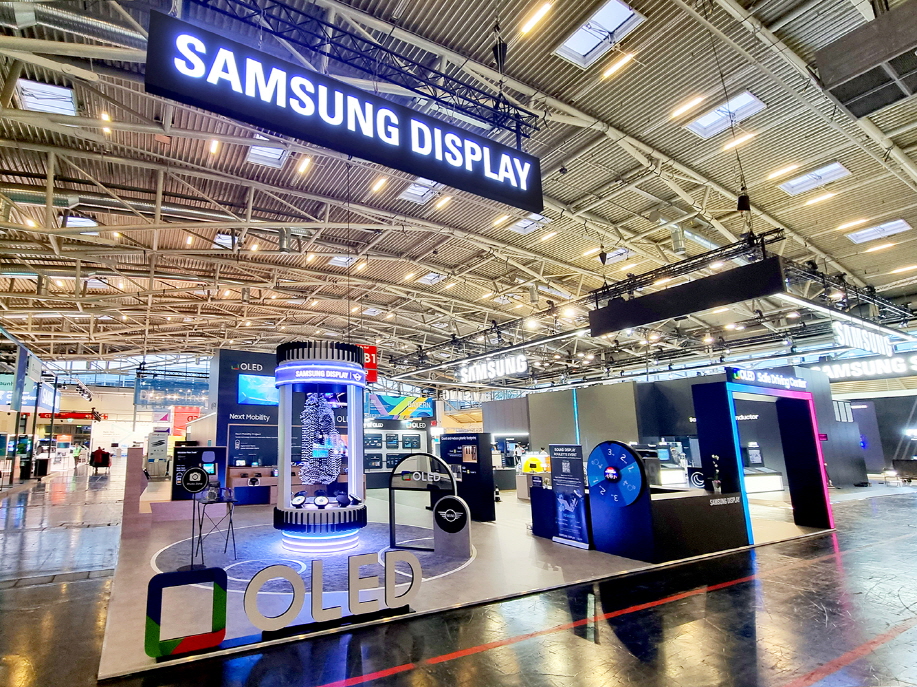
▲Samsung Display booth (Photo courtesy of Samsung Electronics)
LG presents a customer-centric future mobility theme, "experience," and names it "Alphable."
Samsung Display and LG Electronics are drawing attention for their innovative future display technologies.

▲Samsung Display booth (Photo courtesy of Samsung Electronics)
Samsung Electronics, Samsung SDI, Samsung Display, and LG Electronics attracted attention by revealing the latest battlefield technologies that will lead the future mobility market, led by the keyword “experience.”
Samsung Electronics, Samsung SDI, Samsung Display, and LG Electronics participated in the 'IAA Mobility 2023 (formerly Frankfurt Motor Show)' held in Munich, Germany from the 5th to the 10th (local time) and showcased a number of cutting-edge electric vehicle technologies that will lead changes in the mobility ecosystem.
■ Samsung Electronics Transforms Driving from a "Doing" to an "Experience" with System LSI Innovation Technology
At this exhibition, Samsung Electronics will showcase the Exynos Auto V920, a processor for premium infotainment (IVI, In-Vehicle Infotainment), and the ISOCELL Auto 1H1, an image sensor for vehicles.) is presented.
The Exynos Auto V920 is a processor optimized for premium IVI (In-Vehicle Infotainment), enabling high-definition multimedia playback on multiple screens within the vehicle or smooth operation of applications and games, providing the optimal mobility experience.
In addition, the 'ISOCELL Auto 1H1' for the front of the vehicle, following the existing 'ISOCELL Auto 4AC' for surround view or rear camera, provides a 360-degree field of view without blind spots, ensuring the safety of drivers and passengers even in rapidly changing road environments.
Meanwhile, Samsung Electronics will also showcase monitoring system technology that can detect and warn of potential in-vehicle hazards such as drowsiness, fatigue, and distraction that may occur while driving.
Samsung Electronics plans to continue developing cutting-edge system semiconductor solutions for future automobiles, contributing to the transition to the autonomous driving era and providing drivers with the best possible mobility experience.
Foundries Target the Automotive Market with Advanced Process Innovations
At this exhibition, Samsung Electronics will showcase its latest foundry technologies required for the production of power management semiconductors and battery management semiconductors, along with automotive infotainment and advanced driver assistance system (ADAS) SoCs.
Samsung Electronics' Foundry Division is strengthening the infrastructure necessary for product design and production, including analog, memory, and high-speed interface IP required for automotive solutions.
Samsung Electronics plans to complete production preparations for the 4nm automotive process in 2025 and the 2nm automotive process in 2026.
="font-size:14px;"> ■ Innovation in LED lighting solutions for future vehicles
Samsung Electronics will also showcase various LED lighting solutions optimized for future electric vehicles and autonomous vehicles, including PixCell LED, an LED module for intelligent headlamps, next-generation micro LED suitable for ultra-high-resolution head-up displays and AR glasses, and mini LED that can be used in the V2X field.
“IAA Mobility 2023 is a great opportunity to showcase the technological prowess and synergy of each business area of the DS Division to innovate the future automotive industry,” said Dermot Ryan, Executive Vice President and Head of Device Solutions Europe at Samsung Electronics. “Samsung Electronics’ vision is to create safer, more sustainable and differentiated automotive experiences for customers and communities around the world.”
Samsung Electronics plans to strengthen its position as a key solution provider for the future vehicle ecosystem by expanding collaboration with global automotive customers through its strengths as a comprehensive semiconductor company and differentiated competitiveness.
Samsung Display to Lead the Transition to OLED in the Next-Generation Battlefield Market
As OLED adoption increases, particularly in the premium automobile market, Samsung Display is expressing confidence that it will lead the transition to OLED in the next-generation automotive market, building on its experience leading the technological transition from LCD to OLED in the smartphone market.
The most eye-catching feature at the Samsung Display exhibition hall is the 'Safe Driving Center.'
Which display looks better on OLED or LCD, showing a black cat jumping around a car at night? Through tests comparing visibility, visitors can experience and see for themselves which displays are beneficial for safe driving.
LCDs with backlights always on cannot avoid light interference, which causes the boundaries to become unclear when displaying black objects (low-gray tones) on a dark background.
On the other hand, OLEDs, which are self-luminous, can express "true black" by turning off the pixels themselves, offering superior low-level gradation expression. This means that when the display needs to be viewed in a dark environment outside the vehicle, OLED's true black characteristics can enhance driver safety.
OLED displays can be bent or curved to fit the vehicle interior, and are lighter and thinner than LCDs, offering excellent design expandability.
The 'Next Mobility Project' space offers a glimpse into future OLED displays in various form factors.
‘Flex S’ is a representative example. The Flex S is a multi-foldable device that folds inward on one side and outward on the other, like an 'S' shape.
Normally, you can carry it around like a smartphone, but once you get in the car, you can unfold it to a 12.4-inch screen and use it as a dashboard, etc.
△ Innovative products such as a rollable that can be used as RSE (Rear Seat Entertainment) in the back seat with a vertical axis that expands more than five times, and a slideable that has a screen that expands to both sides, will also be available to visitors.
Samsung Electronics, Samsung SDI, Samsung Display, and LG Electronics participated in the 'IAA Mobility 2023 (formerly Frankfurt Motor Show)' held in Munich, Germany from the 5th to the 10th (local time) and showcased a number of cutting-edge electric vehicle technologies that will lead changes in the mobility ecosystem.
■ Samsung Electronics Transforms Driving from a "Doing" to an "Experience" with System LSI Innovation Technology
At this exhibition, Samsung Electronics will showcase the Exynos Auto V920, a processor for premium infotainment (IVI, In-Vehicle Infotainment), and the ISOCELL Auto 1H1, an image sensor for vehicles.) is presented.
The Exynos Auto V920 is a processor optimized for premium IVI (In-Vehicle Infotainment), enabling high-definition multimedia playback on multiple screens within the vehicle or smooth operation of applications and games, providing the optimal mobility experience.
In addition, the 'ISOCELL Auto 1H1' for the front of the vehicle, following the existing 'ISOCELL Auto 4AC' for surround view or rear camera, provides a 360-degree field of view without blind spots, ensuring the safety of drivers and passengers even in rapidly changing road environments.
Meanwhile, Samsung Electronics will also showcase monitoring system technology that can detect and warn of potential in-vehicle hazards such as drowsiness, fatigue, and distraction that may occur while driving.
Samsung Electronics plans to continue developing cutting-edge system semiconductor solutions for future automobiles, contributing to the transition to the autonomous driving era and providing drivers with the best possible mobility experience.
Foundries Target the Automotive Market with Advanced Process Innovations
At this exhibition, Samsung Electronics will showcase its latest foundry technologies required for the production of power management semiconductors and battery management semiconductors, along with automotive infotainment and advanced driver assistance system (ADAS) SoCs.
Samsung Electronics' Foundry Division is strengthening the infrastructure necessary for product design and production, including analog, memory, and high-speed interface IP required for automotive solutions.
Samsung Electronics plans to complete production preparations for the 4nm automotive process in 2025 and the 2nm automotive process in 2026.
="font-size:14px;"> ■ Innovation in LED lighting solutions for future vehicles
Samsung Electronics will also showcase various LED lighting solutions optimized for future electric vehicles and autonomous vehicles, including PixCell LED, an LED module for intelligent headlamps, next-generation micro LED suitable for ultra-high-resolution head-up displays and AR glasses, and mini LED that can be used in the V2X field.
“IAA Mobility 2023 is a great opportunity to showcase the technological prowess and synergy of each business area of the DS Division to innovate the future automotive industry,” said Dermot Ryan, Executive Vice President and Head of Device Solutions Europe at Samsung Electronics. “Samsung Electronics’ vision is to create safer, more sustainable and differentiated automotive experiences for customers and communities around the world.”
Samsung Electronics plans to strengthen its position as a key solution provider for the future vehicle ecosystem by expanding collaboration with global automotive customers through its strengths as a comprehensive semiconductor company and differentiated competitiveness.
Samsung Display to Lead the Transition to OLED in the Next-Generation Battlefield Market
As OLED adoption increases, particularly in the premium automobile market, Samsung Display is expressing confidence that it will lead the transition to OLED in the next-generation automotive market, building on its experience leading the technological transition from LCD to OLED in the smartphone market.
The most eye-catching feature at the Samsung Display exhibition hall is the 'Safe Driving Center.'
Which display looks better on OLED or LCD, showing a black cat jumping around a car at night? Through tests comparing visibility, visitors can experience and see for themselves which displays are beneficial for safe driving.
LCDs with backlights always on cannot avoid light interference, which causes the boundaries to become unclear when displaying black objects (low-gray tones) on a dark background.
On the other hand, OLEDs, which are self-luminous, can express "true black" by turning off the pixels themselves, offering superior low-level gradation expression. This means that when the display needs to be viewed in a dark environment outside the vehicle, OLED's true black characteristics can enhance driver safety.
OLED displays can be bent or curved to fit the vehicle interior, and are lighter and thinner than LCDs, offering excellent design expandability.
The 'Next Mobility Project' space offers a glimpse into future OLED displays in various form factors.
‘Flex S’ is a representative example. The Flex S is a multi-foldable device that folds inward on one side and outward on the other, like an 'S' shape.
Normally, you can carry it around like a smartphone, but once you get in the car, you can unfold it to a 12.4-inch screen and use it as a dashboard, etc.
△ Innovative products such as a rollable that can be used as RSE (Rear Seat Entertainment) in the back seat with a vertical axis that expands more than five times, and a slideable that has a screen that expands to both sides, will also be available to visitors.

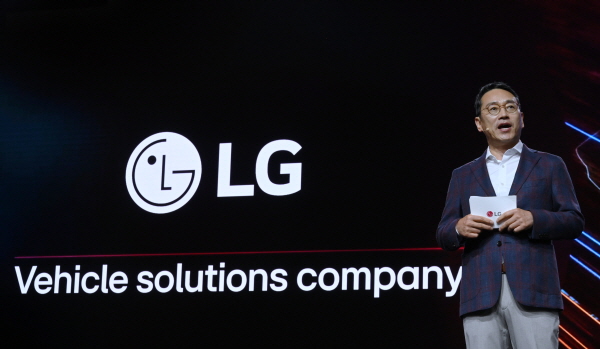
▲LG Electronics President Cho Joo-wan speaks at a press conference (Photo provided by LG Electronics)
LG Electronics President Cho Joo-wan held a press conference on the 4th ahead of the opening of 'IAA Mobility 2023' and revealed his vision to lead changes in the entire future mobility ecosystem by expanding the customer experience know-how accumulated in the home appliance business to the mobility sector.
President Cho Joo-wan introduced LG Electronics' vision for the mobility industry and future under the theme of 'Taking 'Life's Good' on the Road.'
■ Presenting a customer-centric future mobility experience theme: Alpha-able
LG Electronics recently conducted advanced user experience research assuming an autonomous driving environment, and is looking into how customers can use autonomous vehicles to 'play, stay, and work.It was confirmed that it was recognized as ‘my own space’.
In addition, LG Electronics conducted a survey of approximately 31,000 global customers on their perception of automobiles in daily life, and 72% of the respondents said that they enjoy the time they spend in their car as their own time rather than wasting it, and 43% considered their car to be a meaningful personal space beyond a simple means of transportation.
Based on these customer insights, LG Electronics redefined the automobile as a "Personalized Digital Cave." Furthermore, it developed three future mobility customer experience themes—Transformable, Explorable, and Relaxable—and named them "Alpha-able," signifying its commitment to making everything possible.
■ Transformable experience that can be freely transformed to meet customer needs
Just as a home has various spaces like a living room, study, and playroom, a car should be a personalized digital cave that can transform into a multi-purpose space depending on the situation and purpose. At times, it can be a cozy place to relax like a home, a place to work like an office, or a safe space to spend happy times with children.
LG Electronics can transform automobiles into transformable spaces that offer unique experiences by leveraging its innovative display technologies that enable diverse form factors, including rollable, flexible, and transparent, as well as its unrivaled home appliance technologies and solutions.
■ A new explorable experience through content
Now, vehicles will understand the context of the customer journey based on artificial intelligence algorithms.
It is essential to accurately determine the destination and travel time, and it even suggests customized content for customers.
Interesting video content and useful destination information that perfectly match the driving time, which ends upon arrival at the destination, make the customer's mobility experience more valuable.
XR (eXtended Reality) technology, combined with mobility technology, enriches the in-vehicle exploration experience. By projecting beautiful scenery beyond everyday scenes onto the vehicle's transparent OLED windows, the driving experience becomes entirely different. It's also possible to transform the vehicle's interior into something like your dream car.
In addition, the webOS platform, which plays a central role in strengthening LG TV's content competitiveness, is also an opportunity in the future mobility field. By applying the webOS platform to vehicles, customers will be able to enjoy a variety of content they watch on TV at home in their cars.
■ A more comfortable rest experience in the vehicle
The vehicle offers a variety of services designed to help customers find their own personal healing time through comfortable relaxation, both mentally and physically. Customers can enjoy a heated seat massage accompanied by soothing music in a peaceful garden recreated on the display. They can also receive AI-powered counseling to help them organize their day.
This is the future we can experience when LG Electronics expands the know-how it has accumulated in fields closely related to customers, such as home appliances, displays, and digital health, into the mobility sector.
LG Electronics anticipates that the three themes that comprise "Alpha-able" will become the core of the future mobility customer experience. Furthermore, customer-centric, innovative technologies, services, and content will make this a reality and become LG Electronics' distinguishing factor.
■ Accelerating the evolution toward SDV centered on the three main axes of the battlefield business
The current mobility industry is evolving into a software-centric automobile called 'SDV (Software Defined Vehicle).' Automobiles are transforming into moving spaces where customer experience is crucial and closer to electronic products.
LG Electronics is also quickly preparing for the future by prioritizing customer-specific designs and differentiated customer experiences in line with the trend of transitioning to SDV.
LG Electronics' advanced technologies, including telematics that transmits high-capacity data at high speeds, digital interfaces such as the Digital Cockpit, and big data and cloud that manage and analyze data generated within the vehicle, provide automakers with a differentiated approach to SDV and help customers enjoy an optimized mobility experience.
LG Magna plans to build a new production base in Europe to enhance the performance of e-powertrains, which play a central role in electric vehicles, and to expand product coverage and customer base.
The new plant, with a total floor area of 26,000 square meters, will be built in the city of Miskolc in northeastern Hungary. As the first plant to be built in a strategic European market, it is expected to contribute to expanding the company's influence in the European automobile market by increasing accessibility to customers.
President Cho concluded his speech by saying, “LG Electronics has always had a DNA of understanding customers and providing differentiated products and solutions,” and once again emphasized, “Please actively join us on our journey toward future mobility that provides a customer-centric experience.”
President Cho Joo-wan introduced LG Electronics' vision for the mobility industry and future under the theme of 'Taking 'Life's Good' on the Road.'
■ Presenting a customer-centric future mobility experience theme: Alpha-able
LG Electronics recently conducted advanced user experience research assuming an autonomous driving environment, and is looking into how customers can use autonomous vehicles to 'play, stay, and work.It was confirmed that it was recognized as ‘my own space’.
In addition, LG Electronics conducted a survey of approximately 31,000 global customers on their perception of automobiles in daily life, and 72% of the respondents said that they enjoy the time they spend in their car as their own time rather than wasting it, and 43% considered their car to be a meaningful personal space beyond a simple means of transportation.
Based on these customer insights, LG Electronics redefined the automobile as a "Personalized Digital Cave." Furthermore, it developed three future mobility customer experience themes—Transformable, Explorable, and Relaxable—and named them "Alpha-able," signifying its commitment to making everything possible.
■ Transformable experience that can be freely transformed to meet customer needs
Just as a home has various spaces like a living room, study, and playroom, a car should be a personalized digital cave that can transform into a multi-purpose space depending on the situation and purpose. At times, it can be a cozy place to relax like a home, a place to work like an office, or a safe space to spend happy times with children.
LG Electronics can transform automobiles into transformable spaces that offer unique experiences by leveraging its innovative display technologies that enable diverse form factors, including rollable, flexible, and transparent, as well as its unrivaled home appliance technologies and solutions.
■ A new explorable experience through content
Now, vehicles will understand the context of the customer journey based on artificial intelligence algorithms.
It is essential to accurately determine the destination and travel time, and it even suggests customized content for customers.
Interesting video content and useful destination information that perfectly match the driving time, which ends upon arrival at the destination, make the customer's mobility experience more valuable.
XR (eXtended Reality) technology, combined with mobility technology, enriches the in-vehicle exploration experience. By projecting beautiful scenery beyond everyday scenes onto the vehicle's transparent OLED windows, the driving experience becomes entirely different. It's also possible to transform the vehicle's interior into something like your dream car.
In addition, the webOS platform, which plays a central role in strengthening LG TV's content competitiveness, is also an opportunity in the future mobility field. By applying the webOS platform to vehicles, customers will be able to enjoy a variety of content they watch on TV at home in their cars.
■ A more comfortable rest experience in the vehicle
The vehicle offers a variety of services designed to help customers find their own personal healing time through comfortable relaxation, both mentally and physically. Customers can enjoy a heated seat massage accompanied by soothing music in a peaceful garden recreated on the display. They can also receive AI-powered counseling to help them organize their day.
This is the future we can experience when LG Electronics expands the know-how it has accumulated in fields closely related to customers, such as home appliances, displays, and digital health, into the mobility sector.
LG Electronics anticipates that the three themes that comprise "Alpha-able" will become the core of the future mobility customer experience. Furthermore, customer-centric, innovative technologies, services, and content will make this a reality and become LG Electronics' distinguishing factor.
■ Accelerating the evolution toward SDV centered on the three main axes of the battlefield business
The current mobility industry is evolving into a software-centric automobile called 'SDV (Software Defined Vehicle).' Automobiles are transforming into moving spaces where customer experience is crucial and closer to electronic products.
LG Electronics is also quickly preparing for the future by prioritizing customer-specific designs and differentiated customer experiences in line with the trend of transitioning to SDV.
LG Electronics' advanced technologies, including telematics that transmits high-capacity data at high speeds, digital interfaces such as the Digital Cockpit, and big data and cloud that manage and analyze data generated within the vehicle, provide automakers with a differentiated approach to SDV and help customers enjoy an optimized mobility experience.
LG Magna plans to build a new production base in Europe to enhance the performance of e-powertrains, which play a central role in electric vehicles, and to expand product coverage and customer base.
The new plant, with a total floor area of 26,000 square meters, will be built in the city of Miskolc in northeastern Hungary. As the first plant to be built in a strategic European market, it is expected to contribute to expanding the company's influence in the European automobile market by increasing accessibility to customers.
President Cho concluded his speech by saying, “LG Electronics has always had a DNA of understanding customers and providing differentiated products and solutions,” and once again emphasized, “Please actively join us on our journey toward future mobility that provides a customer-centric experience.”
본 기사에 대한 정정·반론·추후보도 청구는 보도 청구 안내를, 그간 게재된 보도문은 정정·반론보도 모아보기를 참고해 주세요.