



AnaFlash Receives $500K in Additional Funding from NSF
 Published2023.09.21 00:01
.jpg)
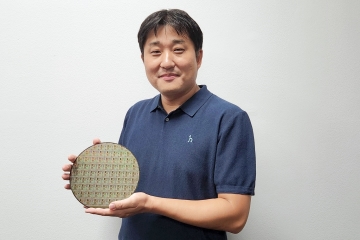
▲Song Seung-hwan, Co-founder and CEO of AnaFlash
Spurring the development of power-efficient neural network chips
AnaFlash announced on the 21st that it has received an additional $500,000 (approximately 660 million won in Korean currency) in Phase 2 Small Business Innovation Research (SBIR) funding from the U.S. National Science Foundation (NSF) to conduct research and development on energy-efficient non-volatile neural network microprocessors (MCUs) for battery-powered edge devices.
AnaFlash, a Silicon Valley-based developer of non-volatile smart MCUs for edge computing, expects to accelerate power efficiency in non-volatile solutions with the NSF support.
It is said to have benefits such as executing calculations in the location where necessary data is stored, executing complex artificial intelligence tasks energy-efficiently, and minimizing idle-mode power consumption. These solutions result in significantly extended battery life in edge devices.
“NSF accelerates the translation of emerging technologies into transformative products and services,” said Erwin Gianchandani, NSF’s associate director for Technology Innovation and Partnerships. “We are excited to fund deep-tech startups and small businesses that will transform science and engineering findings into meaningful solutions for today and the future.”
“We expect this additional funding from NSF to accelerate the commercialization of our laboratory-based technology,” said Song Seung-hwan, co-founder and CEO of AnaFlash. “We are grateful for the opportunity to turn our research into a real product.”

Comments
Related news
Fabless Special (3) - Song Seung-hwan, CEO of Semibrain, “Low power is essential, strengthening latency and security with embedded”
[Editor's Note] Song Seung-hwan, CEO of Semibrain whom we met this time, operates a fabless company developing embedded flash memory IP based on standard logic processes. He explained his vision for non-volatile flash memory solutions that align with energy consumption issues and low-power chip development trends, as he conducts global business including a U.S. subsidiary.
2022.09.14by 명세환 기자
.jpg)
AnaFlash to commercialize single-poly-based eFlash IP
With energy consumption issues recently coming to the forefront, power and cost-efficient solutions utilizing embedded flash (eFlash) memory are gaining considerable attention.
2023.03.14by 명세환 기자
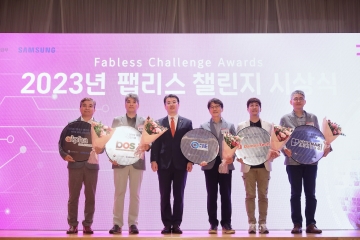
Fabless Challenge 5 Companies Selected...Samsung Foundry MPW Support
The Samsung Foundry will support five promising startups selected from the Fabless Challenge competition with MPW services to broaden the domestic ecosystem foundation of the system semiconductor industry.
2023.08.29by 명세환 기자

Intel Unveils Next-Generation 'Core Ultra Series 3' and vPro Platform for Enterprise PCs
Intel has officially unveiled the "Intel Core Ultra Series 3" for next-generation enterprise PCs and the latest vPro platform, addressing a wide range of demands from enterprise notebooks to high-performance workstations.
2026.03.26by 배종인 기자

ROHM Launches ESD Protection Diode Compatible with High-Speed Interfaces of 10Gbps or Higher
Semiconductor specialist ROHM has developed the 'RESDxVx series' of ESD (electrostatic discharge) protection diodes capable of responding to next-generation high-speed data communication environments exceeding 10Gbps, simultaneously enhancing both signal quality maintenance required in high-speed interfaces and IC protection performance.
2026.03.26by 배종인 기자











