


[2023 e4ds Automotive Conference] Professor Park Shin-hyung of Seoul City University: "ITS is the canvas, paint, and brush that will shape the future transportation system."
 Published2023.10.04 23:40
ITS concept, history, current status, application cases, and prospects will be introduced.
ITS, the physical foundation for implementing smart mobility
Active development of new transportation modes… ITS expected to continue its role
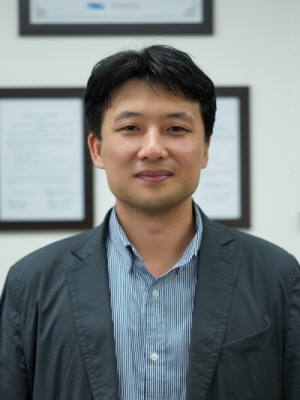 [Editor's Note] ITS aims to scientifically and automatically operate and manage transportation systems, ultimately improving transportation efficiency and safety. Professor Park Shin-hyung of the Department of Transportation Engineering at the University of Seoul, who serves as the Planning Director for the Korea ITS Society, stated that the role and contribution of ITS, as the physical foundation for implementing smart mobility, will continue as new transportation modes and systems continue to emerge. He then addressed the issue of government budget cuts in the ITS sector and emphasized the need to explore ways to ensure sustained investment from a long-term perspective. To advance the safety and convenience of 'mobility', our magazine invited Professor Park Shin-hyung, who is actively working in academia, as a speaker at the ' 2023 e4ds Automotive Conference ' and spoke with him ahead of the event.
■ Please tell us why ITS is receiving attention and what the ultimate goal of the system is.
The Ministry of Land, Infrastructure and Transport defines the intelligent transportation system as an environment-friendly, future-oriented transportation system that applies cutting-edge technologies in transportation, electronics, communications and control to transportation system components such as transportation facilities such as roads, railways and airports and transportation means such as automobiles and trains to manage and control transportation facilities and means in real time and collect and utilize traffic information in real time. It is a system that automates and scientificates the operation and management of transportation systems to maximize the use of transportation facilities and increase the transport efficiency of transportation means, while promoting transportation convenience and traffic safety for the public.
Since its introduction in Korea in the early 1990s, large-scale infrastructure construction projects have been implemented, and over the past 30 years, with the advancement of cutting-edge technology, more accurate and useful services have been developed and provided. The ultimate goal of ITS is to improve the efficiency and safety of the transportation system from the operator's perspective, and to enable users to use the transportation system safely and conveniently.
■ I am curious about the issues currently being actively discussed in academia regarding ITS and what is being said about them.
Currently, the development and commercialization of autonomous driving technology and the implementation of smart mobility are the top priorities in the transportation sector. In the autonomous driving field, various ITS technology elements are being utilized to realize autonomous cooperative driving based on V2X.
In fact, the term "ITS" has long been used to represent advanced transportation systems. However, with the establishment of the Cooperative-ITS Basic Plan in 2013 and the implementation of pilot projects since 2014, services are being defined and developed primarily around C-ITS (Cooperative-ITS, next-generation ITS), a next-generation system differentiated from existing ITS. This system aims to significantly improve the efficiency and safety of transportation by connecting objects on the road through vehicle-to-vehicle (V2V) and vehicle-to-road infrastructure (V2I) communication and enabling the exchange of useful information for movement. Therefore, this is a core technology area that can maximize system-level efficiency in the autonomous driving field, where research and development is actively underway.
Next, we need to implement smart mobility. Smart mobility aims to provide customized travel services focused on individual travel characteristics. To implement these services, a data collection system capable of collecting extensive data is required. Analysis technology is also needed to analyze this big data to derive personalized trip plans. These plans must then be provided to users in a timely manner. ITS is a system that encompasses the entire process from collecting, processing, and providing information, so it can be said to be the physical foundation for implementing smart mobility.
■ You are the planning director of the Korea ITS Society. Please tell us about your activities at the society and your ideals and goals.
The Korean ITS Society was established to promote technological advancement and talent development through smooth interdisciplinary information exchange in ITS-related fields, and to provide comprehensive and objective opinions on government policies and technology proposals. The society's key activities include publishing a journal, hosting seminars and academic conferences, establishing a collaborative system among government, industry, academia, and research institutions, and promoting international ITS-related exchanges and research projects.
The Planning Director assists the President and Senior Vice President in planning and implementing these various projects. Rather than performing specific tasks, the position involves overall involvement in the society's operations. I began my involvement with the ITS Society as a graduate student, participating in academic conferences and publishing academic papers. After being appointed as a professor, I gradually broadened my scope of involvement within the society. In particular, over the past three years, I have served as the Academic Committee Chair, Executive Director, and Planning Director, overseeing not only academic conferences and events but also various other initiatives within the society, broadening my understanding of the society's role and function.
The field of ITS is both the canvas, the paint, and the brush that will shape the future transportation system. Future transportation has no final destination. As long as humanity exists, new technologies will continue to be developed, leading to the constant emergence of new transportation methods and systems. Consequently, the role of ITS will continue.
Personally, I don't have any clear ideals or goals. However, in the process of developing human movement to be safer, more convenient, and more comfortable, I am striving to find my role as a transportation and ITS expert and contribute to its development.
■ What are the key issues that need to be discussed in relation to ITS?
A major current issue is the government budget cuts for the ITS sector next year. Due to the country's poor finances, budgets for not only the ITS sector but also other sectors with significant social needs, such as R&D, are facing significant cuts. Academic societies have been continuously striving to minimize budget cuts by highlighting the significant social contribution of ITS, but this issue appears unlikely to be resolved easily.
Nationally, advanced mobility has been selected as one of the 12 national strategic technologies, and its importance has been recognized to the extent that it has been selected as a "National Strategic Technology Mission-Centered Strategic Roadmap (Ⅰ) - Technological Hegemony Competition Field" along with secondary batteries, semiconductors, and displays. Therefore, cutting the budget for the ITS field, which is responsible for the technological foundation, could be a decision that does not align with the government's science and technology policy direction. From a long-term perspective, it is necessary to explore directions in which continuous investment is possible.
■ Please give a brief introduction of what you will present at the 2023 e4ds Automotive Conference.
Considering the other topics presented at the conference, we plan to cover topics that even the general public who are not familiar with ITS can easily understand, such as the concept, history, current status, application cases, and future prospects of ITS.
■ Please give a word to your readers.
The three fundamental elements of human life are often described as clothing, food, and shelter. Many transportation experts, myself included, add "movement." Since human life itself is comprised of activity, beyond clothing, food, and shelter, "movement" is an inseparable element of daily life.
ITS is a technology and technological system that enhances the quality of transportation. The various transportation information apps you use so familiarly—such as electronic maps, navigation, taxis, parking lots, and public transportation—are services built on ITS. As this field is so closely connected to our daily lives, we appreciate your continued interest in its future development.
Comments
Related news
Etiforce to showcase V2X technology at 5GAA international event
Etipos displayed 'V2X-AIR', a V2X communication device with two versions based on DSRC and LTE-based C-V2X, and a 5G V2X sidelink platform at the '26th 5GAA F2F Meeting Week' held at the Conrad Hotel in Yeouido from the 8th to 11th.
2023.05.22by 성유창 기자
Etiforce, world's first 5G V2X platform 'SIRIUS' first shipment
ETTIFOS has once again demonstrated its technological prowess through the first shipment of its 5G-V2X platform SIRIUS, while also confirming strong demand for 5G-V2X platforms.
2023.07.12by 성유창 기자
[2023 e4ds Automotive Conference] Lee Jae-eun, CEO of BitSensing – “BitSensing Radar Understands Overall Traffic Flow Through Spatial Sensing”
We invited BitSensing, which is expanding its radar-based ITS solutions nationwide, to the '2023 e4ds Automotive Conference' and spoke with Lee Jae-eun, CEO of BitSensing, who participated as a speaker.
2023.09.21by 성유창 기자

[e4ds Tech Day 2026 ⑨] Sim Sang-gyu, Autocrypt CTO: "In the Physical AI Era, Automotive Security Must Extend Beyond the Vehicle"
At e4ds Tech Day 2026, Sim Sang-gyu, CTO of Autocrypt, explained automotive cybersecurity strategies in the era of Physical AI and SDV (Software-Defined Vehicle). Automobiles are evolving as part of an ecosystem connected to AI, cloud, chargers, IoT, and robots, and he emphasized that the scope of security must expand beyond the vehicle interior to the entire connected environment. In particular, AI model tampering, adversarial attacks, OTA updates, and EV charger hacking were identified as major threats. He explained that response measures require zero trust, AI model integrity protection, intrusion detection, Security by Design and Default, and full lifecycle security management, and that proactive security system establishment beyond regulatory compliance is critical for securing future mobility competitiveness.
2026.10.12by 배종인 기자

Practical HIL Construction Strategy for Automotive and Off-Highway Controller Validation
As vehicle E/E architecture transitions to zonal structures and shifts to software-defined vehicles (SDV), the number of controllers (ECUs) requiring validation and software complexity are surging dramatically. Meanwhile, real vehicle testing cannot provide repeated verification under identical conditions and entails lead time and safety concerns. This white paper explains the principles of HIL (Hardware-in-the-Loop) validation and the structure of the NI platform composed of PXI, SLSC, and VeriStand, and through two actual implementation cases—Camera Record & Replay HIL for In-Cabin Monitoring Controller (ICMU) and Forklift Controller (VCU) HILS—describes how controller-level regression testing becomes possible. Additionally, it explicitly states application boundaries and limitations, such as lack of A2B support.
2026.10.12by 편집부











