


Prevents electric vehicle thermal runaway
 Published2023.10.27 12:32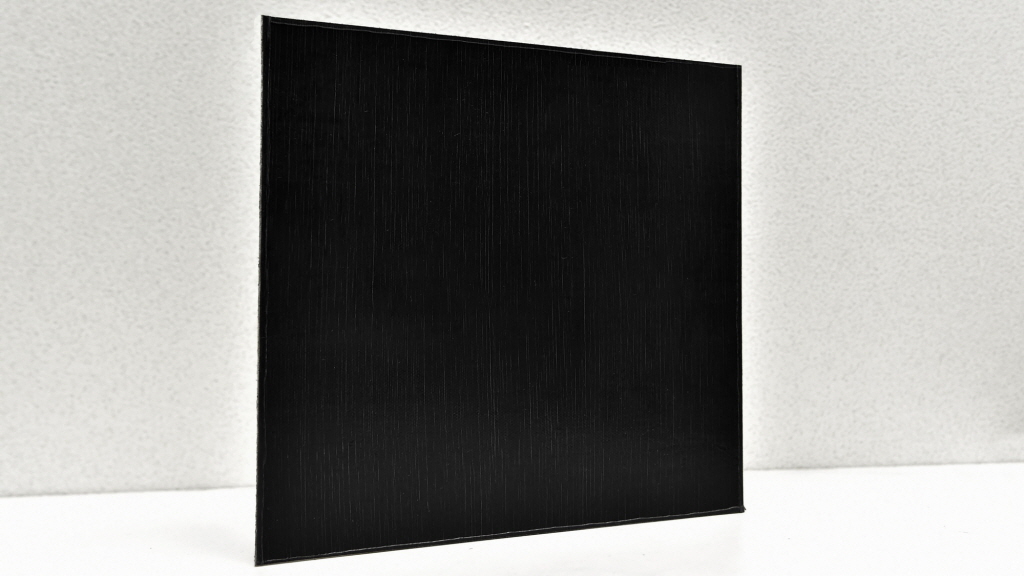
No dripping or holes even after 20 minutes at over 1,500℃
A material capable of delaying battery thermal runaway has been developed and is expected to contribute to driver evacuation in the event of future electric vehicle fires.
LG Chem announced on the 27th that it has developed a battery thermal runaway retardant material that withstands a 1,500℃ flame for more than 20 minutes, together with LX Hausys.
The 'special flame-retardant thermoplastic continuous fiber composite material (special flame-retardant CFT)' jointly developed by the two companies is characterized by its ability to withstand strong flames and high pressure for more than 14 times longer than existing composite materials.
According to LG Chem's internal Torch test results, when heat and pressure exceeding 1,500°C were applied to a thin, 1.6mm thick special flame-retardant CFT, it did not melt, run, or develop holes even after 20 minutes. This represents the industry's highest level of flame-blocking performance.
LG Chem's thermal runaway retardant material technology and LX Hausys' Continuous Fiber Thermoplastics (CFT) manufacturing technology were applied to the special flame-retardant CFT. The thermal runaway retardant material developed by LG Chem last year demonstrated the ability to block flames for over 10 minutes at temperatures above 1,000°C, which was the longest duration in the world at the time. LX Hausys improved blocking performance by using a manufacturing process that forms LG Chem's materials into tape form and laminates them.
Special flame-retardant CFTs are rigid and exhibit minimal deformation under force (high rigidity), making them suitable for use in large components of electric vehicle batteries, such as the top and bottom covers of battery packs. In the event of an electric vehicle fire, they are expected to effectively delay the spread of flames, helping to secure the time necessary for driver evacuation and fire suppression.
Thermal runaway, a major cause of electric vehicle battery fires, is a phenomenon in which heat is generated as stress is applied to battery cells due to various causes. Thermal runaway is one of the factors slowing down the popularization of electric vehicles and has been cited as a pain point for EV and battery customers. LG Chem and LX Hausys have resolved the heat and pressure of thermal runaway, which were difficult to withstand with conventional plastics alone, through the development of special flame-retardant CFTs.
LG Chem has been conducting research and development on thermal runaway retardant materials since 2009. Last year, the company completed the development of the material and established a mass production system. Thermal runaway retardant materials, which allow for precise molding, are primarily used in battery modules. As the special flame-retardant CFT developed this year is used in the large battery pack cover that encloses the module, using both materials together can provide a double layer of protection against the spread of flames.
"Since we announced the development of a battery thermal runaway delay material last year, we have been collaborating closely with LX Hausys. We are proud to have a total solution lineup for electric vehicle thermal runaway, including delay materials, glass mats, and CFTs," said Shin Jae-myung, Head of Marketing at LG Chem's Engineering Materials Business Division. "We will continue our research and development to keep the daily lives of electric vehicle drivers safer while addressing customers' pain points."

Comments
Related news
Future Thermal Management Technology for Electric Vehicles ① - "Electric Vehicle Thermal Runaway and Motor Lifespan Depend on Thermal Management Technology"
The importance of thermal management technology is increasing to prevent thermal runaway phenomena in electric vehicles and minimize the reduction in driving range during winter, and expert insights have been presented indicating that thermal management technology is also evolving in line with trends toward increased battery capacity and higher power density of inverters.
2023.07.18by 성유창 기자
Schneider Aims for Building Energy Savings and Operational Stability with Next-Generation HVAC Drives
Schneider Electric has unveiled its next-generation HVAC drive product line 'Altivar HVAC'. The new product line's key features center on enhanced energy savings, system operational stability, and building management system integration. The products are divided into 'ATH200' for OEM and small equipment applications, and 'ATH600' for environments requiring continuous operation and advanced control. The company plans to expand the application scope from commercial buildings to facilities where HVAC system stability is critical, such as hospitals, airports, and data centers. The announcement includes over 30% energy savings, operation from -10°C to +60°C, Modbus and BACnet support, and compatibility with low global warming potential refrigerants.
2026.03.26by 명세환 기자
Ecolab Expands AI Data Center Cooling Business Through Acquisition of CoolIT
Ecolab has agreed to acquire CoolIT Systems, a liquid cooling company for AI data centers, for approximately $4.75 billion. The transaction is expected to close by Q3 2026, subject to regulatory approvals. CoolIT has been supplying direct-to-chip cooling-based coolant distribution units, cold plates, and manifolds, serving hyperscale data centers and colocation operators as customers. This acquisition is a measure to address the high-heat and high-density server environments created by AI proliferation. Ecolab plans to combine its water management and digital monitoring capabilities with CoolIT's hardware technology to expand its data center cooling business.
2026.03.26by 명세환 기자

AI Semiconductor Era, Key is 'Materials Technology'… KIEC Holds Seminar on High-Performance Semiconductor Materials
With rapid growth in the global semiconductor market driven by expanded AI data center investments and increased demand for high-bandwidth memory (HBM), a specialized seminar examining next-generation semiconductor materials and packaging technologies will be held. The Korea Chemical Industry Institute will host a "High-Performance Semiconductor Materials Technology Seminar" on April 24 at the FKI Tower of the Korea Economic Association in Yeouido, Seoul. Applications to participate in the seminar are being accepted on a first-come, first-served basis through the Korea Chemical Industry Institute's official website, with early bird discounts available until March 27 and advance registration open until April 22.
2026.03.25by 배종인 기자
.jpg)
KIMS Shares Techniques for Industrial Application of Casting Technology
The Korea Institute of Materials Science held a casting technology seminar at its headquarters in Changwon, South Gyeongsang Province, and introduced core process technologies utilized in industrial applications. The seminar covered fundamental principles of casting processes and defect control methods, lightweight-oriented die-casting technology, and trends in aluminum casting alloys for mobility applications. At the conclusion of the event, consultations on industrial technical challenges were also conducted, providing an opportunity to expand the interface between research institutions and industry.
2026.03.25by 명세환 기자











