


NVIDIA Equipped UK Supercomputer with 5,448 GH200 AI Superchips
 Published2023.11.06 08:55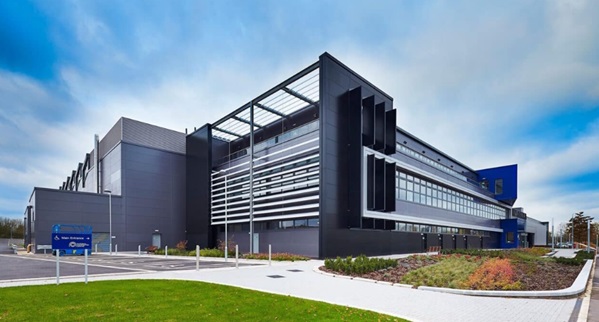
▲The UK's fastest supercomputer is equipped with the NVIDIA GH200 Grace Hopper superchip (Photo: NVIDIA)
GH200 Grace Hopper superchip to be installed in 5,448 units
AI development is heating up globally. The UK is accelerating its progress by adopting the NVIDIA GH200 AI superchip in its latest supercomputer.
NVIDIA announced on the 6th that the supercomputer Isambard-AI, which is being built in the UK, will be equipped with the NVIDIA GH200 Grace Hopper Superchip.
Named after a 19th-century British engineer, Isambard-AI is the world's most advanced supercomputer, located at the University of Bristol. When fully operational next year, Isambard-AI will feature 5,448 NVIDIA GH200 Grace Hopper superchips, providing researchers worldwide with over 21 exaflops of AI performance. The UK government has invested £225 million (approximately 360 billion won) to build one of the fastest AI supercomputers ever.
The announcement was made at the AI Safety Summit in the UK, bringing together more than 100 global governments and technology leaders.
At an AI Safety Summit designed to promote international cooperation, UK Chancellor Rishi Sunak said: "AI will be as transformative as the Industrial Revolution, the advent of electricity and the internet."
UK Science, Innovation and Technology Secretary Michelle Donelan has said AI contributes more than £3.7 billion to the UK economy and employs more than 50,000 people. She said the investment in Bristol's AI Research Resource would "spur scientific discovery and ensure the UK is at the forefront of AI development."
The system is expected to be used by a variety of organizations leveraging machine learning for robotics, data analytics, drug development, climate research, and other areas, along with AI technologies.
Simon McIntosh-Smith, Professor at the University of Bristol and Director of the Isambard National Research Facility, said: “Isambard-AI represents a huge leap forward in the UK’s AI computing capabilities. It is currently among the top 10 fastest supercomputers in the world, and when it becomes operational in late 2024, it will be one of the most powerful AI systems for open science in the world.”
The UK's Frontier AI Taskforce, a global research group dedicated to safely developing Frontier AI, will be a key user of this system. Hewlett Packard Enterprise is also partnering with the University of Bristol on energy efficiency initiatives that support the UK government's mandated net-zero carbon target.
A second system, slated for NCC next year, is said to showcase Arm-based energy efficiency for non-accelerated high-performance computing workloads.
Bod-3 delivers approximately 2.7 petaflops of FP64 peak performance and consumes less than 270 kilowatts of power, making it one of the world's three greenest non-accelerated supercomputers. The system, part of a research alliance between the Universities of Bath, Bristol, Cardiff and Exeter, features 384 Arm-based NVIDIA Grace CPU Superchips to support medical and scientific research.
At the announcement of Ijumbad-3 in March, Bristol University's McIntosh Smith boasted, "Ijumbad-3 delivers up to six times the application performance efficiency of its predecessor, rivaling the performance of the 50 fastest supercomputers in the TOP500." He added, "Ijumbad-3 will provide a revolutionary supercomputing platform that will enable scientists to conduct groundbreaking research."

Comments
Related news
.jpg)
NVIDIA Unveils GH200 Grace Hopper Superchip for Generative AI
As generative AI is disrupting industries and market landscapes, Nvidia, which leads the AI server market, has unveiled its next-generation AI-enabled platform.
2023.08.10by 명세환 기자
.jpg)
NVIDIA Provides Enterprise Generative AI Acceleration Server Solution
Nvidia announced on the 24th that it is providing NVIDIA AI-ready servers that support VMware Private AI Foundation, which was announced separately by major system manufacturers worldwide.
2023.08.24by 김예지 기자
.jpg)
NVIDIA Partners with the Korea Standards Association and Hancom Academy to Develop AI Talent
NVIDIA, a leading company in AI computing technology (CEO Jensen Huang), has newly established the 'NVIDIA AI Academy' in partnership with the Korean Standards Association and Hancom Academy to cultivate AI research and development personnel.
2023.10.13by 배종인 기자
Nvidia, Foxconn Join Hands for Electric Vehicle Innovation
Nvidia and Foxconn announced a partnership, with Foxconn moving forward to realize its EV vision through various Nvidia Drive solutions, including Nvidia DRIVE Orin and its successor, DRIVE Thor.
2023.10.23by 배종인 기자
Supermicro Launches Servers Based on NVIDIA GH200 Superchip
Super Micro Computer, Inc. (SMCI) announced on the 25th that it has launched a server based on the NVIDIA GH200 Superchip as the industry's first product in the NVIDIA MGX product line.
2023.10.25by 김예지 기자











