


AI Talk ③ - Kim Soo-hoon, CEO of Delta X, “Computer vision and cognitive technology essential for transition to software cars”_Part 1
 Published2023.11.09 14:54
“Computer vision and cognitive technology essential for transition to software-driven cars”
DeltaX, a computer vision source technology company
Technology stands out in the autonomous driving and automotive fields
"Software-defined vehicle perception, technology essential"
[Editor's Note] There are two axes that are driving the development of artificial intelligence. The one that is currently receiving the most spotlight in the market is definitely generative AI. The small ball that Chat GPT launched has become a snowball, and now there is a fierce competition for leadership in the development of ultra-large language models centered around big tech. And the remaining axis is edge AI or on-device AI. Edge AI is relatively less popular than the previous generative AI, but its practical use in industry and technology is rapidly expanding.
Here, we explored the cognitive solution, computer vision, which is the hottest area in edge AI and the starting point of all AI-based services. We met with Kim Soo-hoon, CEO of DeltaX, who has expertise in computer vision and edge AI, and talked.
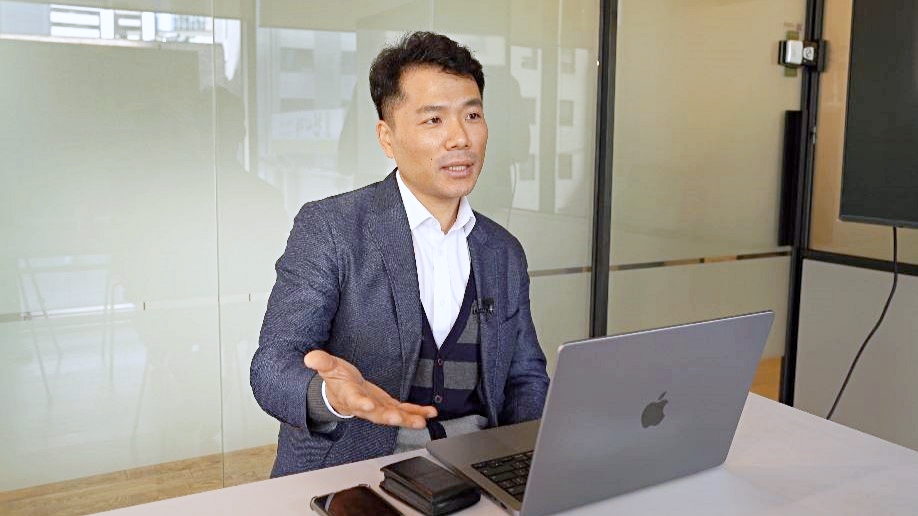
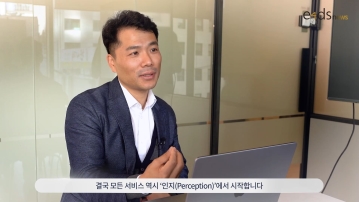
▲Kim Soo-hoon, CEO of Delta X
■ Introduction to Delta X
I am the CEO of Delta X. We are researching artificial intelligence, and among them, we are researching computer vision. Computer vision is a field that analyzes images or videos and develops related solutions. Among them, we are focusing on camera computer vision.
It is a technology that analyzes and understands images or videos coming from a camera. It is called cognitive technology, and in English it is called perception technology. These technologies are also widely used in autonomous driving.
These analysis technologies are also needed for various mobile devices equipped with camera sensors and other sensors, so they are necessary and already being utilized across various industries.
DeltaX is an AI startup with about 70 researchers. It has been about 3 years since its establishment, and it mainly develops camera recognition models. Our technologies are mainly used in the automotive sector, and we mainly work on projects with automobile OEMs.
In Korea, we are conducting technology development PoC with Hyundai Motor Company, Kia Motors, Mobis, and other Tier 1 companies in the automotive industry. In addition, there are projects that we are discussing with overseas companies and projects that are being discussed and researched in the early stages.
■ How are research personnel organized?
The proportion of foreign researchers is a bit high. Currently, there are researchers from 14 different nationalities, and most of them are software and computer experts who completed their master's and doctoral degrees in Korea. There are also cases where they joined after requesting interviews with companies while living abroad. Of course, the majority are Korean.
Since there are employees of various nationalities, the company atmosphere is very horizontal. As a company that focuses on research, artificial intelligence in particular is an area where discussion is extremely important from the planning stage before development, and open discussion is an important area, so there is a need for such discussion.
So, I prefer an atmosphere where we can comfortably discuss and negotiate in an open space. That's why the office atmosphere seems to be structured in an open manner.
■ Are you also developing algorithms and core technologies?
The characteristic of our company is that we study the algorithm itself. Rather than developing applications using algorithms created by others, I am much more interested in developing the algorithm itself and the original technology itself, and I have a strong tendency to do so. Our researchers also like that more.
Our company is quite unique in that it not only develops technology and solutions, but also publishes papers. Last year, two of my papers in the field of artificial intelligence were already approved as papers. The company operates in a slightly different way from companies that only sell general solutions.
■ Do you feel that the need for computer vision is gradually increasing in the market?
DeltaX has chosen computer vision so far, which is the hottest field in the artificial intelligence field, and looking at the current trend, autonomous driving, various entertainment that requires cameras, industry, and even smart factories are closely related to the technology we are developing, so we are receiving a lot of needs, requests, and proposals from the industry.
DeltaX is fortunate to have many PoC and research joint projects with large companies, so it seems to be well prepared as it is able to read industry trends well.
■ As a computer vision expert, what is your outlook on the market?
It is known that the market size is about 17 billion dollars (about 23 trillion won in Korean currency) in 2023. It is expected that the market will grow by more than 20% per year for the time being. Based on this prediction, we can roughly predict the vision market for 2030-40.
Now, new autonomous vehicles, now Level 3 autonomous vehicles, are being introduced to the market, but ultimately, the ultimate autonomous vehicles must be equipped with, and are equipped with, many more cameras.
When you look at this area, it's only natural that the market will grow. I think it will inevitably become the most important sensor beyond the automotive field, and will be used in home applications, safety, and smart factories.
As the market grows due to this trend, (in terms of the situation where vision development companies are increasing), the demand for such things naturally increases, and I think that among those who majored in artificial intelligence, those who understand the appeal of computer vision and the explosive growth potential of the industry are starting businesses and conducting research.
■ What about patent registration in artificial intelligence algorithms?
We are also diligently and aggressively applying for patents, and if you look at the IP strategy roadmap going forward, there are many targets that we plan to apply for or need to apply for. We are taking a quantitative and qualitative approach to IP and working hard to produce high-quality IP.
However, IP is a bit difficult in terms of software. When you open up software, it is composed of very long codes rather than intuitive products, so it is difficult to intuitively define what ideas should be accepted to what extent or what ideas should be patented.
Although it is difficult, we are developing our own algorithms and are continuously working to ensure that both our approach and new problem-solving methods are well expressed in IP.
■ DeltaX’s corporate vision is
I think I'll focus on cars for the time being. We will also be working hard on smart factories and home applications, but overall, we will still focus on automobiles in terms of sales and manpower.
The automobile industry is a huge market that produces 90 million passenger vehicles every year, and automobiles are changing from being a simple means of transportation to a new culture and a new space where people spend a lot of time.
As the definition of a car changes from the past when it was mechanical or electronic to an era where software defines the purpose of a car and its raison d'être, cognitive and computer solutions are increasingly required to do more.
The direction that automakers want to take with smart cars is also a solution based on cognition.
We believe that only then can we create smart cars, so we will focus on research and development related to cars for the time being.
■ Computer vision and artificial intelligence companies have a common interest in the need to optimize and automate workloads. What direction do they take in terms of management and human and material resource efficiency?
We have also been struggling with the same issue for a long time. We are still struggling with the same issue.
Every time, we analyze the customer's needs and start new coding from there. Of course, from planning ideas to coding, creating solutions, preparing data, training, testing and verifying the final solution, fine-tuning, and confirming that there are no problems, this is what typical companies do.
If this continues, there will be a limit to the amount of money that startups can receive, and because of these problems, it will be difficult to actually make a profit. In the end, it will be an environment where they will inevitably face financial pressure from continuous deficits.
We are solving this problem by modularizing technology. By organizing the team well and deploying key researchers who are developing core technologies in a modularized manner within the team, we can imagine in advance which modules would be well integrated to satisfy the client's requirements for the solution needs of Company A and define the technology.
Our first strategy is to define the area and scope of core technologies, place key researchers there, develop modular source technologies, assemble and bundle them, and deliver solutions that customers want.
Even so, we cannot avoid doing fine-tuning and such. I think that customization and fine-tuning are always essential for solutions to suit the customer.
Since we cannot develop the technologies needed for that level again and again, we are approaching it in a way that modularizes and combines them.
Even that can only be said to be ready once the company has accumulated some experience and the project has been completed to some extent. Of course, there is no company that can start a business by doing that from the beginning, and we certainly couldn't do that.
I think that as this goes on and 2, 3, or 5 years pass, the system will become more robust, and from then on, I think things like efficiency and solution costs will gradually improve.
(Continued in Part 2)

Comments
Related news
AI Talk ① - Kim Hyun-seok, CEO of AMC PLANET, “Fire Detection Solution, YOLO·GhostNet Based, Achieves 99% Recognition Rate”
[Editor's Note] As artificial intelligence (AI) technology continues to advance, commercialization trends are accelerating. While autonomous driving has received considerable attention and remains at the center of current trends, various services such as △facial recognition △object detection-based services and △AI chatbots are becoming increasingly sophisticated and gaining prominence in the market. In response, we met with Kim Hyun-seok, CEO of AI specialist AMC PLANET, to discuss fire detection solutions utilizing computer vision, as well as hear perspectives on related market prospects and AI development.
2023.01.27by 명세환 기자
AI Talk②-Kim Hyun-seok, CEO of AMC PLANET, “Object Tracking, ID Continuity Confirmation Required”
[Editor's Note] As artificial intelligence (AI) technology becomes increasingly sophisticated, commercialization trends are accelerating. While autonomous driving has garnered considerable attention and remains at the center of current trends, various services including △face recognition △object detection-based services and △AI chatbots are advancing and gaining market presence. Accordingly, we met with Kim Hyun-seok, CEO of AI specialist AMC PLANET, to discuss fire detection solutions utilizing computer vision, as well as to hear insights on the related market outlook and AI development perspectives.
2023.02.01by 명세환 기자
Computer Vision: A 60 Trillion Won Market Is Coming
Computer vision, which is mainly used in autonomous driving, intelligent CCTV, and facial recognition, is expected to function across various applications within the next five years, with market expansion anticipated.
2023.03.03by 명세환 기자
AI's Eye 'Computer Vision', Actively Introduced into the Market... Many Challenges to Solve
As artificial intelligence moves beyond the technology stage to be fully integrated into services and products, there is intense momentum around artificial intelligence in the global market. 'Computer Vision,' which can be called the eyes of artificial intelligence, is rapidly growing in markets worldwide.
2023.05.04by 명세환 기자
AI Talk ④ - Delta X CEO Kim Soo-hoon: "All services begin with 'perception'" - Part 2
[Editor's Note] There are two primary axes driving the advancement of artificial intelligence. The one currently receiving the most spotlight in the market is undoubtedly generative AI. The small spark ignited by ChatGPT has snowballed into fierce competition among major tech companies over the development and leadership of ultra-large language models. The remaining axis is edge AI, or on-device AI. While edge AI has received relatively less public attention compared to the generative AI mentioned earlier, its practical adoption and application in industry and technology sectors are rapidly expanding.
2023.11.14by 명세환 기자











